









Abstract
The LISUN RFCI61000-6 series RF Conducted Immunity Test System provides a comprehensive solution for evaluating equipment susceptibility to radio-frequency electromagnetic fields as specified by the RF induced conducted disturbance standard IEC 61000-4-6. This integrated system combines a signal source, power amplifier, and power meter within a single chassis, enabling precise injection of conducted disturbances onto power, signal, and control lines across the 150 kHz to 230 MHz frequency range. Designed for EMC testing engineers and product compliance specialists, the RFCI61000-6 series supports dual power variants at 35W and 85W output, multi-mode injection methods, and compatibility with standard coupling-decoupling networks (CDNs). This guide examines the technical architecture, operational principles, compliance advantages, and practical applications of this system for regulated industries including medical devices, industrial control, and renewable energy infrastructure.
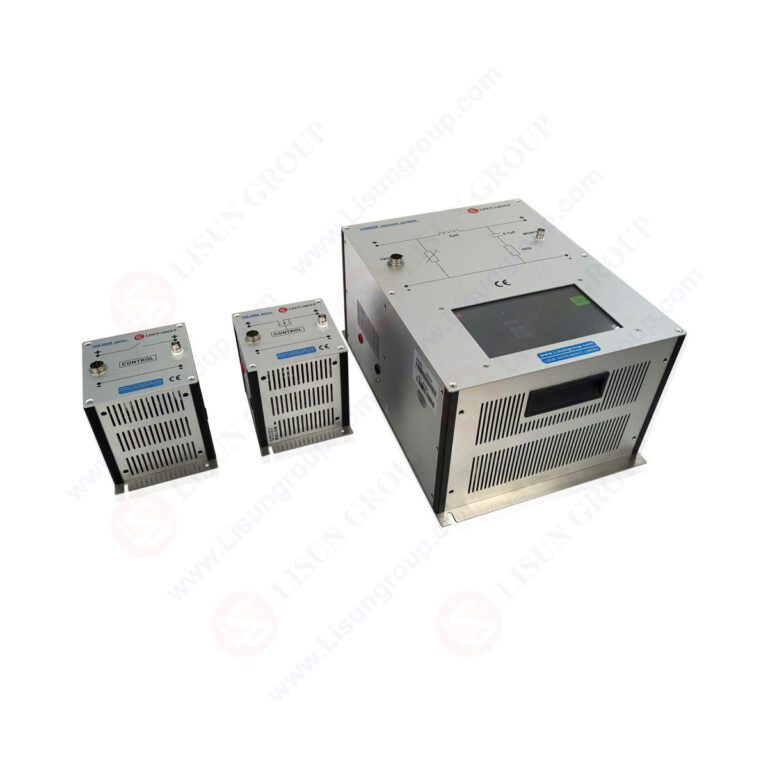
1.1 Regulatory Framework and Standard Requirements
The RF induced conducted disturbance standard IEC 61000-4-6 establishes the immunity requirements for electrical and electronic equipment subjected to radio-frequency electromagnetic fields. The standard specifies conducted disturbance test methods for frequencies between 150 kHz and 80 MHz, with extensions to 230 MHz for specific product families. EN 61000-4-6 and GB/T 17626.6 provide equivalent requirements for European and Chinese markets respectively. Clause 7 of IEC 61000-4-6 defines the injection methods, including direct coupling via CDNs, electromagnetic clamp injection, and bulk current injection (BCI) probes, each appropriate for specific cable types and frequency ranges. The standard mandates test levels from 1 V to 10 V (unmodulated) with 80% amplitude modulation at 1 kHz, requiring test equipment capable of maintaining voltage stability within ±1 dB across the entire frequency sweep.
1.2 Injection Methods and Coupling Mechanisms
Three primary injection methods are defined in IEC 61000-4-6 Clause 7.2: CDN injection for mains power and signal cables, electromagnetic clamp injection for multi-conductor cables, and BCI probe injection for large cables where CDNs are impractical. The LISUN RFCI61000-6 system supports all three methods through its integrated RF output port, which delivers the modulated disturbance signal to the selected coupling device. The CDN method provides the highest reproducibility, with performance requirements specified in IEC 61000-4-6 Annex A. Electromagnetic clamps offer flexibility for cables up to 40 mm diameter, while BCI probes accommodate currents up to 20 A for power distribution systems. The choice of injection method directly impacts test reproducibility, with CDN injection achieving typical calibration repeatability of ±0.5 dB.
1.3 Test Level Selection and Severity Classification
IEC 61000-4-6 Clause 5 defines four severity levels for conducted immunity testing: Level 1 (1 V), Level 2 (3 V), Level 3 (10 V), and Level X (open level). The LISUN RFCI61000-6 series delivers output voltages up to 20 V (unmodulated) for the 35W variant and 50 V for the 85W variant, exceeding Level 3 requirements with margin. Test levels are selected based on the intended electromagnetic environment, with industrial environments typically requiring Level 3 while residential environments may require only Level 1. The system’s amplitude modulation capability at 80% depth with 1 kHz square wave or sine wave modulation meets the standard’s requirements for simulating real-world interference from broadcast transmitters and industrial RF sources.
2.1 Integrated Signal Source and Power Amplifier Modules
The RFCI61000-6 system integrates a synthesized signal source, broadband power amplifier, and precision power meter within a single 4U rack-mountable chassis. The signal source covers 150 kHz to 230 MHz with frequency resolution of 0.1 Hz and frequency accuracy of ±1 ppm. The power amplifier employs Class A linear amplification topology, ensuring low harmonic distortion across the entire frequency range. For the RFCI61000-6-35W model, the amplifier provides a minimum output of 35W continuous wave (CW) power, while the RFCI61000-6-85W model delivers 85W CW power. Both variants maintain a voltage standing wave ratio (VSWR) below 1.5:1 across 90% of the frequency band, minimizing reflected power and ensuring stable operation into varying load impedances presented by different CDNs and cables.
2.2 Precision Power Measurement and Leveling Control
The integrated power meter provides real-time forward and reflected power measurement using a directional coupler with directivity exceeding 30 dB. The system employs automatic level control (ALC) circuitry that maintains the output voltage within ±0.2 dB of the set level, regardless of load impedance variations. The power measurement accuracy is ±0.5 dB traceable to national standards, meeting the ±1 dB requirement specified in IEC 61000-4-6 Clause 6.2. The system automatically corrects for cable losses and CDN insertion losses through a calibration file stored in non-volatile memory. This closed-loop control eliminates the need for external power meters during routine testing, reducing setup time by approximately 40% compared to modular test configurations.
2.3 Dual Power Variants and Performance Comparison
The RFCI61000-6 series offers two power variants to accommodate different test requirements and budget constraints. The following table compares key performance specifications:
| Parameter | RFCI61000-6-35W | RFCI61000-6-85W |
|---|---|---|
| Frequency Range | 150 kHz – 230 MHz | 150 kHz – 230 MHz |
| CW Output Power | ≥ 35 W | ≥ 85 W |
| Output Voltage (50 Ω) | ≥ 42 Vrms | ≥ 65 Vrms |
| Modulation Types | AM, FM, Pulse, CW | AM, FM, Pulse, CW |
| Amplitude Modulation Depth | 0–100% | 0–100% |
| VSWR Tolerance | < 2.0:1 | < 2.0:1 |
| Harmonics (2nd/3rd) | < –20 dBc | < –20 dBc |
| CDN Compatibility | M1–M5, T1–T4, S1–S4 | M1–M5, T1–T4, S1–S4 |
The 85W variant provides additional margin for testing equipment with multiple coupled ports or when using high-loss injection methods such as BCI probes at frequencies above 100 MHz.
3.1 Coupling-Decoupling Network Selection Criteria
IEC 61000-4-6 Annex A specifies CDN types for various cable configurations: CDN-M1 (single-phase AC mains), CDN-M2 (three-phase AC), CDN-M3 (three-phase with neutral), CDN-T2 (telecommunication line pairs), CDN-T4 (symmetrical data lines), CDN-S1 (unscreened signal cables), and CDN-S4 (screened signal cables). The LISUN RFCI61000-6 system delivers the RF injected signal through a standard N-type connector rated for 50 Ω impedance, compatible with all standard CDNs via RG214 or equivalent low-loss coaxial cable. The system’s output impedance tolerance accommodates CDN input impedance variations from 30 Ω to 100 Ω without requiring impedance matching networks for frequencies up to 80 MHz.
3.2 Multi-Port Sequential Testing Strategy
For equipment with multiple ports requiring conducted immunity testing, the RFCI61000-6 system supports sequential injection through a front-panel touchscreen interface that stores up to 100 test configurations. Each configuration includes frequency range, test level, modulation settings, dwell time, and CDN type for up to 10 ports. The system automatically sequences through ports, pausing between injections to allow manual CDN connection changes or triggering external switching matrices. This sequential approach reduces total test time by eliminating redundant setup steps and ensures consistent test parameters across all ports, critical for compliance with EN 61000-4-6 Clause 8.2’s requirement for port-by-port injection.
3.3 Calibration and Verification Procedures
The system supports automated calibration according to IEC 61000-4-6 Clause 6.5, which requires verification of test voltage at the EUT port of the CDN using a calibrated RF voltmeter or oscilloscope. The RFCI61000-6 includes a calibration mode that generates the required test voltage across a 50 Ω load while the internal power meter records level setting data. Users can export calibration data to generate compliance reports meeting the documentation requirements of IEC 61000-4-6 Clause 9. The system also supports substitution calibration for direct injection methods, where the CDN is replaced by a calibration adapter with known impedance characteristics.
4.1 Amplitude Modulation for Simulated Interference
The RFCI61000-6 system generates amplitude modulation (AM) with 80% depth at 1 kHz, as specified in IEC 61000-4-6 Clause 6.3 for general immunity testing. The modulation envelope is generated digitally within the integrated signal source, ensuring precise depth control within ±1% of the set value. For product-specific standards, the system supports adjustable modulation depths from 0% to 100% and modulation frequencies from 30 Hz to 20 kHz. The AM output maintains linearity within ±0.5 dB of the theoretical sideband levels, preventing distortion that could affect test reproducibility. This capability is essential for medical device compliance to IEC 60601-1-2, which requires AM testing at multiple modulation frequencies between 0.5 Hz and 10 kHz depending on device classification.
4.2 Pulse Modulation and Transient Simulation
Pulse modulation capability supports immunity testing to repeated pulse interference as specified in product-specific standards for automotive (ISO 11452-4) and military applications (MIL-STD-461). The RFCI61000-6 provides pulse widths from 1 µs to 100 ms with duty cycles from 0.1% to 50%, and rise/fall times below 50 ns for high-fidelity pulse reproduction. The pulse repetition frequency ranges from 0.1 Hz to 10 kHz, covering requirements for simulating radar pulses, pulsed RFID readers, and periodic switching transients. The integrated power amplifier’s Class A design ensures pulse fidelity without the droop or overshoot common in Class AB amplifiers, maintaining pulse amplitude within ±0.3 dB during the pulse duration.
4.3 Frequency Sweeping and Logging Modes
The system supports three frequency sweeping modes: linear sweep, logarithmic sweep, and discrete frequency stepping as defined in IEC 61000-4-6 Clause 8.3. The logarithmic sweep mode sweeps at a rate of 1% of the current frequency per step, with dwell times adjustable from 0.1 s to 10 s per frequency point. The discrete step mode allows users to specify up to 2000 individual frequency points, enabling targeted testing at known interfering frequencies. All sweep parameters are logged to internal memory or exported via USB, providing complete traceability of test conditions. The sweep duration for the full 150 kHz to 230 MHz range at standard logarithmic step rate is approximately 45 minutes, comparable to manual testing procedures using modular equipment.
5.1 Medical Devices and IEC 60601-1-2 Compliance
Medical electrical equipment requires conducted immunity testing per IEC 60601-1-2 4th or 5th editions, which mandate RF conducted immunity from 150 kHz to 80 MHz at test levels up to 10 V (therapeutic equipment) or 3 V (life-supporting equipment). The RFCI61000-6 system’s 35W variant provides sufficient power for testing medical devices with multiple patient-coupled cables and power ports. The system’s low VSWR ensures stable testing with CDNs connected to medical-grade power supplies, which often present non-standard impedance due to EMI filters. The integrated power meter’s high directivity (30 dB minimum) prevents false readings caused by reflected power from medical device common-mode chokes, which can exhibit resonance effects in the 1–10 MHz range.
5.2 LED Lighting and Consumer Electronics
LED drivers and lighting products require compliance with EN 55015 (emissions) and EN 61547 (immunity), which reference IEC 61000-4-6 for conducted RF immunity at 3 V and 10 V levels. The RFCI61000-6 system’s frequency extension to 230 MHz supports testing of LED drivers with switching frequencies above 100 kHz, where conducted disturbances can couple into the secondary side through parasitic capacitance. For LED street lighting and architectural lighting, the 85W variant accommodates testing of multi-channel drivers with parallel outputs. The system’s AM modulation at 1 kHz effectively simulates interference from nearby broadcast transmitters, which is particularly relevant for outdoor LED installations near radio towers.
5.3 Industrial Control and Power Equipment
Programmable logic controllers (PLCs), variable frequency drives (VFDs), and industrial sensors require conducted immunity per EN 61000-6-2 (industrial environments), which specifies test levels up to 10 V with 80% AM modulation. The RFCI61000-6 system’s ability to deliver 50 V unmodulated output (85W variant) provides 14 dB margin over the 10 V requirement, accommodating losses in long test cables and high-inductance industrial cable runs. The system’s fast frequency sweep capability (0.1 s dwell time per step) enables efficient testing of equipment with thermal settling requirements, such as VFDs that require stabilization between frequency steps. The CDN-M2 and CDN-M3 compatibility covers three-phase power inputs common in industrial machinery.
5.4 New Energy Charging Infrastructure
Electric vehicle (EV) charging stations require conducted immunity testing per IEC 61851-21-1 and EN 61851-21-1, which mandate RF immunity from 150 kHz to 80 MHz at test levels determined by the charging station’s power rating. The RFCI61000-6-85W model provides the power margin needed for testing charging stations with bidirectional power flows and communication lines (PLC-based control pilot signals). The system’s pulse modulation mode supports testing to ISO 7637-2 transient immunity requirements when combined with appropriate coupling networks. The multi-port sequential testing capability reduces test time for charging stations that typically have AC input, DC output, and communication ports requiring individual injection.
6.1 Touchscreen Control and Preset Storage
The RFCI61000-6 system features a 7-inch color touchscreen interface with intuitive menu navigation for setting frequency ranges, modulation parameters, test levels, and sweep modes. The interface supports up to 50 user-defined test presets, each storing complete test parameters including calibration offsets for specific CDN and cable combinations. The preset management system includes a labeling function for associating test configurations with specific product families or regulatory standards. The touchscreen provides real-time display of forward power, reflected power, and calculated VSWR, enabling operators to monitor test conditions without external measurement equipment. The graphical display of frequency sweep results shows amplitude variation across the full frequency range, facilitating rapid identification of resonant frequencies in the EUT.
6.2 Remote Control and Automation Integration
The system supports remote control via GPIB (IEEE-488), USB, and Ethernet interfaces, with full SCPI command set compatibility for integration into automated test systems. The LISUN-provided LabVIEW driver and Python API enable custom automation scripts that control the RFCI61000-6 alongside CDN switching matrices, positioning systems, and data acquisition hardware. Automated test sequences can reduce manual intervention by up to 60% for multi-port testing scenarios. The remote control protocol supports real-time acquisition of forward and reflected power data at rates up to 100 samples per second, enabling transient analysis of equipment behavior during frequency sweeps. The system’s firmware supports firmware updates via USB for compliance with evolving standard requirements.
6.3 Data Logging and Report Generation
The built-in data logging function records all test parameters and measured results to internal solid-state storage (8 GB) or external USB drives. The data file format is CSV-compatible for import into spreadsheet or statistical analysis software. The system generates compliance reports in PDF format that include test configuration, measurement results, and pass/fail criteria according to user-defined limits. Reports comply with the documentation requirements of ISO/IEC 17025 for testing laboratory accreditation, including unique test identification, operator identification, and calibration traceability information. The report template is customizable for integration into laboratory information management systems (LIMS).
7.1 CDN Selection and System Configuration
The LISUN RFCI61000-6 system is compatible with the full range of LISUN CDN products, including CDN-M1 through CDN-M5 for mains, CDN-T2 and CDN-T4 for telecommunications, and CDN-S1 through CDN-S4 for signal lines. Each CDN model supports specific current ratings and frequency ranges: CDN-M1 handles 16 A continuous current from 150 kHz to 230 MHz, while CDN-M5 handles 100 A for three-phase industrial power from 150 kHz to 80 MHz. The system’s output power can feed up to five CDNs simultaneously through external RF distribution amplifiers, enabling parallel injection for multi-port testing per IEC 61000-4-6 Clause 7.2.3. The CDN selection must consider the EUT’s rated current, cable type, and intended frequency range to ensure compliance with the standard’s coupling requirements.
7.2 Electromagnetic Clamp and BCI Probe Integration
For equipment where CDN connections are impractical—such as equipment with proprietary connectors or high-current cables—the RFCI61000-6 supports electromagnetic clamp injection (EM clamp) and bulk current injection (BCI) probe methods. The EM clamp, such as the LISUN EM101, provides coupling for unscreened cables up to 40 mm diameter across 150 kHz to 230 MHz with typical insertion loss of 10–20 dB. The BCI probe, such as the Fischer Custom Communications F-140, provides injection for cables up to 30 mm diameter at currents up to 20 A. The RFCI61000-6’s high output power compensates for the insertion loss of these devices, maintaining test levels up to 10 V (IEC 61000-4-6 Level 3) even with 20 dB coupling loss at high frequencies.
7.3 Calibration Accessories and Fixtures
The system requires calibration accessories for setting and verifying test levels according to IEC 61000-4-6 Clause 6.5. LISUN provides a calibration fixture kit including a 50 Ω termination, a 100 Ω calibration adapter for CDN verification, and a calibration jig for EM clamp and BCI probe calibration. The calibration procedure involves measuring the forward power required to achieve the specified test voltage at the CDN output port, with the EUT replaced by the calibration adapter. The RFCI61000-6 stores calibration factors for up to 20 different CDN and cable combinations, enabling rapid setup changes without recalibration. The system supports automated calibration sequences that complete verification of all frequency points within 10 minutes for standard CDNs.
The LISUN RFCI61000-6 series RF Conducted Immunity Test System delivers a complete solution for compliance with the RF induced conducted disturbance standard IEC 61000-4-6, EN 61000-4-6, and GB/T 17626.6 across multiple regulated industries. The integrated architecture combining signal source, power amplifier, and power meter eliminates the complexity of modular test systems while providing the performance headroom required for testing high-power industrial equipment, medical devices, and renewable energy infrastructure. The dual power variants—35W for standard applications and 85W for demanding testing scenarios—offer scalable performance with measurement accuracy traceable to international standards. The system’s support for all injection methods defined in IEC 61000-4-6 Clause 7, combined with automated sweep capabilities and comprehensive data logging, streamlines the compliance validation process for product development teams and accredited testing laboratories. For organizations navigating the complexities of electromagnetic compatibility certification, the RFCI61000-6 series represents a technically robust investment in reliable, reproducible conducted immunity testing.
Q1: What is the difference between the RFCI61000-6-35W and RFCI61000-6-85W models for IEC 61000-4-6 compliance testing?
A: Both models comply with IEC 61000-4-6 test levels up to Level 3 (10 V unmodulated) across the 150 kHz to 230 MHz frequency range. The primary difference is output power headroom: the 35W model delivers 42 Vrms into a 50 Ω load, while the 85W model delivers 65 Vrms. The 85W variant is recommended for testing equipment with multiple coupled ports simultaneously or when using high-loss injection methods such as electromagnetic clamps or BCI probes, which introduce 10–20 dB insertion loss. For typical single-port CDN testing at 10 V, the 35W model provides adequate margin (approximately 12 dB) to maintain test levels. Both models maintain VSWR below 2.0:1 and harmonic distortion below –20 dBc, ensuring test reproducibility across all standard injection methods.
Q2: How does the RFCI61000-6 system handle calibration for different CDN types per IEC 61000-4-6 Clause 6.5?
A: The system supports automated calibration for each CDN type by storing frequency-dependent calibration factors in non-volatile memory. During calibration, the operator connects the selected CDN to the RFCI61000-6 output and uses the calibration fixture (50 Ω or 100 Ω calibration adapter) at the CDN’s EUT port. The system measures the forward power required to achieve each specified test voltage across the frequency range and stores the correction factors. This process compensates for CDN insertion loss, cable attenuation, and frequency response variations. For CDN-M1 (mains) and CDN-T2 (telecom), typical calibration completes in 5 minutes for 100 frequency points. The system can store calibration data for up to 20 CDN configurations, allowing rapid switching between test setups without recalibration.
Q3: Can the RFCI61000-6 system be integrated into automated test sequences for multi-port testing?
A: Yes, the RFCI61000-6 supports full remote control via GPIB, USB, and Ethernet interfaces using the SCPI command set. For automated multi-port testing, the system can be programmed to sequentially change output frequency, modulation, and level parameters while controlling external RF switching matrices (e.g., LISUN SWITCH-8) that route the RF signal to different CDNs. Typical automated sequences include: (1) connect CDN to EUT port 1 via switching matrix, (2) run frequency sweep from 150 kHz to 230 MHz with 1% logarithmic steps, (3) log forward/reflected power and EUT status at each step, (4) disconnect CDN and advance to next port. This automation reduces total test time by 50–70% compared to manual operation, particularly for equipment with 5–10 test ports.
Q4: What modulation types are supported for compliance with IEC 61000-4-6 and product-specific standards?
A: The RFCI61000-6 supports four modulation types: continuous wave (CW), amplitude modulation (AM), frequency modulation (FM), and pulse modulation (PM). For IEC 61000-4-6 basic standard compliance, AM at 80% depth with 1 kHz sine wave or square wave modulation is the primary requirement. Product-specific standards may require additional modulation: IEC 60601-1-2 (medical) requires AM at multiple frequencies between 0.5 Hz and 10 kHz; ISO 11452-4 (automotive) requires PM with 1 ms pulse width at 1 Hz repetition; and CISPR 35 (multimedia) requires FM with 50 kHz deviation at 1 kHz rate. The system can store modulation presets for quick recall. The integrated power amplifier maintains linearity within ±0.5 dB for all modulation types, ensuring the modulated waveform accurately represents the desired test signal at the EUT port.
Q5: What is the recommended maintenance schedule and recalibration interval for the RFCI61000-6 system?
A: The RFCI61000-6 system requires annual recalibration to maintain traceability to national standards, as recommended by ISO/IEC 17025 for testing equipment. Recalibration covers the integrated power meter (±0.5 dB accuracy), signal source frequency accuracy (±1 ppm), and modulation depth accuracy (±1%). Monthly verification checks should be performed using the internal self-test function, which measures forward power into a calibrated 50 Ω load at 10 MHz and 100 MHz reference frequencies. The system’s output connector (N-type) should be inspected quarterly for mechanical wear and cleaned with isopropyl alcohol to prevent insertion loss degradation. The internal fan filters require cleaning every 6 months in laboratory environments or every 3 months in dusty industrial settings. The system firmware should be updated when new standards are released; updates are available from LISUN’s support portal.