









Here is the comprehensive technical article generated according to your specifications.
Abstract
This article provides a detailed technical analysis of the Temperature Chamber for IEC 60068-2-78 Humidity Testing | LISUN, specifically designed to validate LED reliability under damp heat conditions. It explores how LISUN’s LED Optical Aging Test Instrument integrates with these chambers to perform accelerated aging tests per IES LM-80 and IES LM-84 standards. The article covers the dual-system variants (LEDLM-80PL and LEDLM-84PL), the application of the Arrhenius Model for life projection, and the generation of TM-21 and TM-28 extrapolation reports. Technical professionals will gain insight into achieving precise L70/L50 metrics, configuring 6000-hour test cycles, and managing up to 3 connected chambers for high-throughput validation, ensuring compliance with global reliability benchmarks.
1.1 Defining the Test Environment with IEC 60068-2-78
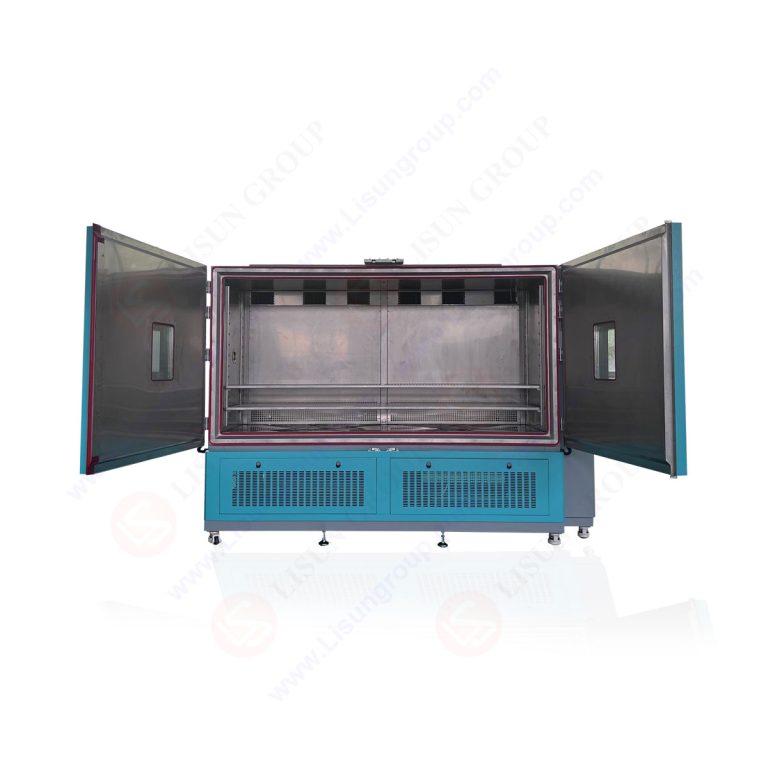
The Temperature Chamber for IEC 60068-2-78 Humidity Testing | LISUN is engineered to replicate the stringent conditions required by the IEC standard for damp heat, steady-state testing. This standard mandates exposure to a constant temperature of 40°C ± 2°C combined with a relative humidity of 93% ± 3% RH. For LED components, this environment accelerates failure mechanisms like corrosion of the phosphor layer, delamination of the silicone encapsulant, and degradation of the solder joints. LISUN chambers provide the precise, non-condensing humidity control necessary to observe these effects over the required 21 to 56-day test cycles, a prerequisite for calculating acceleration factors in lumen maintenance projections.
1.2 Linking Environmental Stress to Lumen Depreciation
A key challenge in LED reliability is correlating environmental stress with optical performance decline. The LISUN system directly addresses this by placing specimens inside the temperature chamber while simultaneously measuring photometric output. Unlike standard climatic tests that only check for functionality post-exposure, this integrated approach monitors real-time lumen depreciation. The data generated is not merely pass/fail; it forms the critical dataset for TM-21 extrapolation, allowing engineers to model how humidity-induced stressors impact the L70 and L50 life metrics. This direct correlation transforms a compliance test into a predictive reliability tool.
1.3 Addressing the Gap Between Standard and Application
While IEC 60068-2-78 provides a baseline, LED-specific standards like IES LM-80 require testing at specific case temperatures (e.g., 55°C, 85°C). The LISUN chamber bridges this gap by offering flexible temperature setpoints from 0°C to 100°C, allowing engineers to superimpose the damp heat profile from IEC 60068-2-78 onto the temperature conditions specified by LM-80. This hybrid approach is essential for automotive and outdoor lighting components, which must survive years of high-humidity, high-temperature exposure. The chamber’s capability to maintain stability within ±0.5°C ensures the validity of the resulting accelerated aging model.
2.1 Functional Overview of the LEDLM-80PL and LEDLM-84PL
The LED Optical Aging Test Instrument comes in two dedicated variants, each designed for a specific generation of testing standards. The LEDLM-80PL is the workhorse for IES LM-80 testing, supporting lumen maintenance data collection for packages, modules, and arrays. The LEDLM-84PL is tailored for IES LM-84 testing, which focuses on integrated LED lamps and luminaires. While both share a common hardware platform, the synchronization software and reporting modules differ to comply with the distinct data analysis requirements of their respective standards. This dual-system approach ensures our clients are not paying for unneeded functionality but are fully equipped for their target application.
2.2 Distinguishing LM-80/TM-21 vs. LM-84/TM-28 Workflows
The test methodology diverges significantly between the two systems. For the LEDLM-80PL, the workflow involves testing LED packages at three different case temperatures (e.g., 55°C, 85°C, and a selected third temperature) for a minimum of 6,000 hours. The resulting data is then processed using the Arrhenius Model to calculate the activation energy, forming the basis for TM-21 life projection. Conversely, the LEDLM-84PL operates at ambient or specific drive currents, collecting data to generate a TM-28 projection report, which uses a different mathematical approach for luminaires.
| Feature | LEDLM-80PL (LM-80) | LEDLM-84PL (LM-84) |
|---|---|---|
| Primary Standard | IES LM-80 / TM-21 | IES LM-84 / TM-28 |
| Test Specimen | LED Packages, Modules, Arrays | Integrated LED Lamps, Luminaires |
| Key Metric | L70/B10 Life (at CCT) | L70 Life (for Luminaires) |
| Extrapolation Model | Arrhenius Model (Activation Energy) | TM-28 Exponential Decay |
| Test Duration (min) | 6,000 hours (10,000 hrs recommended) | 6,000 hours (optional) |
| Temp. Requirement | 3x Case Temp. (55, 85, T3) | Ambient or Controlled Temp. |
2.3 Customizable Hardware for Varied Test Volumes
Scalability is a critical factor for production-level testing. The LISUN system is designed for modular expansion, supporting from 1 up to 3 connected Temperature Chamber for IEC 60068-2-78 Humidity Testing | LISUN units. Each chamber can accommodate multiple fixture boards, allowing for simultaneous testing of hundreds of LED samples. The system’s relay scanning matrix allows for sequential measurement without cross-talk, ensuring data integrity across all channels. This modularity allows a lab to start with a base configuration and expand throughput as validation demands grow, without requiring a complete system overhaul.
3.1 The Role of the 2M Integrating Sphere
Combined with the temperature chamber, LISUN utilizes a 2-meter integrating sphere to capture total spectral flux (lumen) and chromaticity coordinates. For humidity testing, this is crucial as moisture can cause shifts in correlated color temperature (CCT) before significant lumen drop is observed. The sphere is equipped with a high-speed spectroradiometer that meets CIE 084 and CIE 70 standards for accuracy. Data is collected at predefined intervals (e.g., every 2.4 hours or after stabilization), creating a high-resolution timeline of degradation, which is essential for accurate TM-21 curve fitting.
3.2 Adherence to CIE 127 and IES LM-79-19 for Photometry
The photometric accuracy of the integrated system is validated against CIE 127 and IES LM-79-19 standards. The arrangement of the sphere, baffle, and photometer ensures that the measurement of total flux from the sample inside the chamber is free from spatial response errors. This is particularly challenging when testing through the window of a humidity chamber, as condensation on the window can introduce measurement errors. LISUN employs a desiccated air purge system for the chamber window to prevent fogging, a critical engineering detail that ensures the photometric data reflects true LED degradation, not environmental artifacts.
3.3 Synchronized Data Logging for 6000-Hour Cycles
The control software manages the entire 6,000-hour test cycle autonomously. It sets the temperature and humidity profile inside the Temperature Chamber for IEC 60068-2-78 Humidity Testing | LISUN, controls the LED driver currents, and schedules the photometric measurements. The system can handle multiple “reset” events, where the sample is briefly removed from the chamber for measurement and then replaced, a common requirement for LM-80 testing. The software logs all environmental parameters alongside optical data, allowing engineers to correlate every photometric shift with the exact thermal-humidity history of the sample, providing an unprecedented view of failure acceleration.
4.1 From Lumen Depreciation Data to Activation Energy
The core of reliability projection in the LISUN system is the Arrhenius Model. The software analyzes the lumen maintenance data from the three different temperature sets to determine the activation energy (Ea) of the degradation process. In a damp heat environment, this Ea value is often higher than in dry heat, indicating that moisture is a powerful accelerator. The software automatically performs this calculation, filtering out early failures and fitting a curve to the steady-state depreciation phase. This is a highly complex statistical task that the LISUN software handles with full transparency, allowing engineers to review the statistical fit quality.
4.2 Projecting L70 and L50 Life Under Humidity Stress
Once the activation energy is established, the software uses the TM-21 standard to extrapolate from the 6,000-hour test data to predict minimal project life (L70/B10) and median life (L50). The Temperature Chamber for IEC 60068-2-78 Humidity Testing | LISUN provides the controlled stress environment, and the software calculates the performance under use conditions. For example, a test at 85°C/85% RH might show a projected L70 of 15,000 hours at use condition, versus 35,000 hours in dry heat, providing a stark quantification of humidity’s impact. This data is critical for product warranties and spec sheet claims.
4.3 Verification Against Industry Benchmarks
The final projection reports generated by the LISUN system are formatted for direct acceptance by industry bodies like the EPA for ENERGY STAR certification. The software outputs a full TM-21 report, including the data table, curve plot, and calculated L70 (k) and confidence intervals. It also allows for the application of the TM-28 standard for luminaires. By performing these tests within a single, validated system, manufacturers can bypass the cost and time of sending samples to multiple labs, accelerating time-to-market while providing the highest level of technical assurance.
5.1 Dual Testing Modes for Accelerated vs. Standard Data
The LISUN software offers two primary operational modes. Mode 1 (Standard) follows the traditional LM-80 protocol of measuring at specific intervals (e.g., 0, 1000, 2000, 3000, 6000 hours). Mode 2 (Continuous) allows for high-frequency data logging, useful for capturing rapid degradation events seen in extreme humidity tests. The software can switch between modes per test channel, allowing a user to run a standard qualification test on one set of samples while simultaneously running an exploratory high-frequency test on another set inside the same temperature chamber. This flexibility maximizes the utility of the hardware.
5.2 Generating Customizable Compliance Reports
Beyond raw data, the software excels at report generation. It includes pre-built report templates for all major standards (LM-80, TM-21, LM-84, TM-28). Users can add their company logo, project details, and technical notes. The software automatically populates the report with the required graphs: lumen maintenance vs. time, chromaticity shift (Δu’v’) vs. time, and the Arrhenius plot. For IEC 60068-2-78 testing, the software adds a specific section documenting the exact temperature and humidity profile during the test, ensuring full traceability.
5.3 Data Integrity and Traceability Features
To meet the strict requirements of third-party certification, the LISUN software includes a “Data Lock” feature. Once a test is initiated and data collection begins, the raw data files are hashed and cannot be altered by the user. Any analysis performed (e.g., curve fitting) is stored as a separate project file, leaving the original data unmodified. This audit trail is critical for proving compliance to regulators and reducing liability. The system also supports remote monitoring via a network interface, allowing engineers to check the status of a multi-chamber 6,000-hour run from anywhere in the facility.
6.1 Qualification of High-Power LED Packages for Outdoor Use
For manufacturers of street lighting or high-bay fixtures, qualification of the LED package is paramount. Using the Temperature Chamber for IEC 60068-2-78 Humidity Testing | LISUN, an engineer can test 100+ samples at 85°C/85% RH for 6,000 hours. The system can identify which batches show excessive lumen depreciation (>30%) or unacceptable chromaticity shift (>0.007 u’v’), which would fail a TM-21 projection. This provides a quantitative go/no-go gate before committing to full-scale production.
6.2 Validation of Driver and Phosphor Component Interactions
Humidity doesn’t just attack the LED die; it severely impacts the driver electronics and phosphor silicone. By testing a complete LED module (driver + board) inside the LISUN chamber, engineers can observe system-level failures. The high-frequency data logging mode can capture intermittent driver failures caused by corrosion. Simultaneously, the spectroradiometer can detect blue light leakage if the phosphor layer degrades. This systems-level view is a significant advantage over testing the LED package alone.
6.3 Streamlining R&D Iteration Cycles
In R&D, speed is critical. The LISUN system’s ability to support up to 3 connected chambers allows an engineer to run three different environmental profiles simultaneously. For example, one chamber at 85°C/85% RH, a second at 60°C/90% RH, and a third at 85°C/50% RH. By comparing the degradation slopes from these three profiles, the team can rapidly deconstruct the relative impact of temperature vs. humidity on the new material set. This accelerates the development of more robust silicone encapsulants and protective coatings.
7.1 Standard Chamber Specifications
The standard Temperature Chamber for IEC 60068-2-78 Humidity Testing | LISUN model features a working volume of 225 liters (or 408 liters for higher throughput), with a temperature range of -40°C to +150°C and a humidity range of 20% RH to 98% RH. The interior is constructed from stainless steel with a corrosion-resistant coating. It includes a dedicated power supply for the device under test (DUT) and a 10-inch touchscreen interface for local control. The chamber is also equipped with an RS-485 interface for integration with the main LEDLM-8X series controller.
7.2 Options for High-Temperature and Specialized Tests
For high-reliability applications, LISUN offers an optional Extreme Temperature Package (up to 200°C) and a Low-Humidity Purge system for testing at below 20% RH. These options are housed within the same physical chamber footprint. This allows the same hardware to be used for standard IEC 60068-2-78 damp heat testing and for specialized tests like TM-21 at 105°C case temperature (required for high-power automotive LEDs). The modular design ensures that the capital investment remains future-proof.
7.3 Integration with Existing Lab Infrastructure
LISUN provides a comprehensive installation service. The system is designed for standard 220V/50Hz or 110V/60Hz single-phase power. The integrating sphere and spectrometer require a stable, low-vibration platform. The software can be installed on a standard Windows-based PC that connects to the chamber controller via Ethernet. For labs already using a data management system (e.g., LIMS), the LISUN software can export data in CSV, XML, or SQL formats to ensure seamless data transfer and analysis integration.
The Temperature Chamber for IEC 60068-2-78 Humidity Testing | LISUN, when integrated with the LEDLM-80PL or LEDLM-84PL Optical Aging Test Instrument, represents a comprehensive solution for LED reliability validation. By combining the precise environmental control of the damp heat chamber with the photometric accuracy of the 2m integrating sphere and the analytical power of the Arrhenius Model software, engineers can generate defensible, high-resolution data for TM-21 and TM-28 projections. This integrated approach eliminates the errors associated with moving samples between separate test fixtures, ensuring data integrity over the critical 6000-hour test duration. For LED manufacturers and testing labs seeking to validate L70/L50 metrics under the most challenging environmental conditions, this system provides the accuracy, scalability, and compliance needed to certify products for global markets, directly addressing the requirements of IES LM-80, IES LM-79-19, and CIE standards.
Q1: How does the LISUN system ensure that condensation on the chamber window does not affect photometric measurements?
A: This is a critical concern. Our system incorporates a desiccated air purge system specifically for the chamber viewport. A small, continuous flow of dry, clean air is directed across the interior surface of the window, maintaining a temperature slightly above the dew point. This prevents fogging and ensures the optical path to the integrating sphere remains clear. The purge system is integrated into the main control loop and its status is logged to ensure that no measurement data is corrupted by condensation artifacts, a requirement for valid data under IEC 60068-2-78 conditions.
Q2: Can the LISUN system perform concurrent testing using both IEC 60068-2-78 and IES LM-80 standards?
A: Yes. The programmable temperature controller allows you to set dwell times that satisfy both standards. For example, you can set the chamber to maintain the 40°C/93% RH profile from IEC 60068-2-78 for a specific duration (e.g., 1000 hours) and then switch to a specific case temperature (e.g., 85°C) at 85% RH for the LM-80 portion. The software can manage this profile automatically and log which standard conditions were active for each data point, allowing a single test to generate data for multiple compliance reports.
Q3: What are the specific requirements for calibrating the humidity sensor in the LISUN chamber to ensure compliance with IEC 60068-2-78?
A: The sensor used is typically a capacitive type with high accuracy (±1.5% RH). Calibration must be performed using a two-point method at 40% RH and 90% RH using certified salt solutions (e.g., NaCl for 75% RH and K2SO4 for 97% RH) at a controlled temperature. We recommend annual calibration. The instrument’s software has a built-in “Sensor Calibration” menu that allows the user to input the offset for each reference point. An internal calibration certificate is generated and can be stored within the project file for full traceability in an audit.
Q4: What is the maximum number of individual LED modules that can be tested simultaneously in a single 225L chamber?
A: The number depends on the physical size of the modules and whether they require a heatsink. Using a standard 250mm x 250mm fixture board, one can typically mount 30-40 single-emitter LED packages on a starboard. The chamber’s internal design can hold up to 4 such boards. Realistically, you can test up to 120-160 individual components per chamber, depending on the required case temperature stability. The scanning matrix is designed to support up to 256 channels for the LEDLM-80PL system.
Q5: How does the software differentiate between a true LED failure and a test equipment malfunction?
A: The software continuously monitors both the electrical parameters (drive current) and the thermal parameters (chamber temperature). It automatically flags data points where a current interruption or a temperature excursion outside tolerances occurred. These flagged points are excluded from the curve-fitting algorithm. Additionally, if a measurement shows a sudden drop to zero lumens, the software checks the continuity of the power supply and the thermocouple reading. If those are normal, it logs the event as a “Catastrophic LED Failure” and does not include it in the standard TM-21 projection unless specifically requested for a B10 life calculation.