









Here is the comprehensive technical article generated according to your specifications.
Abstract
This technical article examines the critical role of the Temperature Humidity Chamber: Precision Testing for IEC 60068 Compliance in validating LED reliability. It details how LISUN’s integrated solutions, specifically the LEDLM-80PL and LEDLM-84PL Optical Aging Test Instruments, provide rigorous environmental stress screening. By leveraging the Arrhenius Model for accelerated aging and supporting standards like IES LM-80 and TM-21, these systems enable engineers to accurately predict L70/L50 lumen maintenance. The article provides a data-driven analysis of hardware configurations, dual testing modes, and software capabilities, offering a practical guide for achieving IEC 60068 compliance and ensuring long-term product durability in harsh operating conditions.
1.1 The Imperative of IEC 60068 Compliance for LEDs
Solid-state lighting (SSL) components are increasingly deployed in demanding environments—from automotive headlamps to industrial high-bay fixtures. The Temperature Humidity Chamber: Precision Testing for IEC 60068 Compliance is not merely a regulatory checkbox; it is a fundamental tool for predicting lifespan. IEC 60068 provides a standardized methodology for environmental testing, encompassing damp heat, thermal shock, and cyclic humidity. For LEDs, these tests are crucial for identifying failure mechanisms like phosphor thermal quenching and driver electrolytic capacitor degradation, which are accelerated under combined temperature and humidity stress.
1.2 Linking Environmental Stress to Lumen Maintenance Metrics
While IEC 60068 defines the environmental profile, the performance outcome is measured via photometric standards like IES LM-80 (lumen depreciation for LED packages) and IES LM-84 (for integral LED lamps). A temperature humidity chamber must therefore provide precise, stable conditions to generate valid data for TM-21 extrapolation. Engineers require chambers that can maintain ±0.5°C and ±2% RH to ensure that the resulting L70 (time to 70% lumen output) projections are statistically sound, bridging the gap between qualification testing and lifetime warranty validation.
2.1 Dual System Variants for Specific Standards
LISUN’s approach centers on two distinct instruments, each optimized for its respective standard:
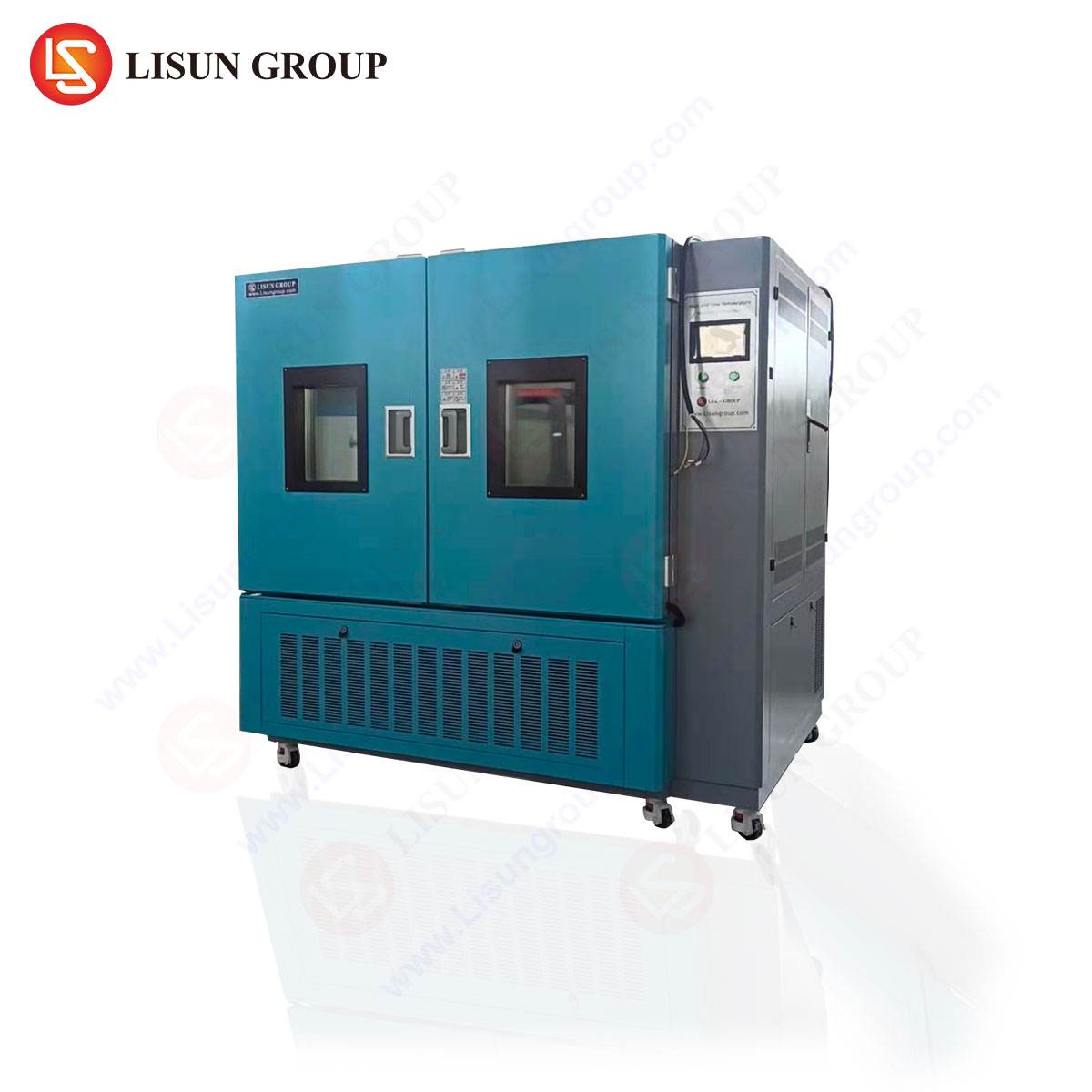
- LEDLM-80PL: Designed for IES LM-80-15 testing of LED packages, modules, and arrays. This system integrates the Temperature Humidity Chamber: Precision Testing for IEC 60068 Compliance with a goniometer or integrating sphere for absolute photometry.
- LEDLM-84PL: Tailored for IES LM-84-14 testing of integral LED lamps (e.g., A-lamps, PAR lamps). It uses a 2-meter integrating sphere for total luminous flux measurement, directly correlating environmental aging with photometric performance. Both systems share a common software platform, ensuring data consistency across package and component-level tests.
2.2 Core Hardware Configurations and Customization
The temperature humidity chamber within these systems can be customized for specific test protocols:
- Temperature Range: -40°C to +150°C (standard) or -70°C to +180°C (extended)
- Humidity Range: 20% RH to 98% RH
- Chamber Volume: 225L to 1000L
- Number of Connected Chambers: Supports up to 3 temperature chambers simultaneously, allowing parallel testing of multiple sample sets at different temperatures (e.g., 55°C, 85°C, and 85°C/85%RH).
This modularity is critical for generating the multi-temperature data required by TM-21 extrapolation. A comparison of the base systems is provided below.
| Feature | LEDLM-80PL (Package/Module) | LEDLM-84PL (Integral Lamp) |
|---|---|---|
| Primary Standard | IES LM-80, TM-21 | IES LM-84, TM-28 |
| Photometric Measurement | Goniometer or 1m Integrating Sphere | 2m Integrating Sphere |
| Sample Quantities | Up to 30 samples per chamber | Up to 10 samples per chamber |
| Core Chamber Type | Temperature Humidity Chamber: Precision Testing for IEC 60068 | Temperature Humidity Chamber: Precision Testing for IEC 60068 |
| Data Output | Flux, CCT, CRI vs. Time | Total Luminous Flux vs. Time |
3.1 Arrhenius Model-Based Lumen Depreciation Analysis
The software embedded in LISUN’s systems is a key differentiator. It uses the Arrhenius Model to correlate accelerated aging data with real-world usage. By plotting Ln(Test Temperature) against the inverse of the absolute temperature, the software calculates the activation energy (Ea) for the specific LED sample under test. This allows engineers to predict performance at lower, application-relevant temperatures (e.g., 40°C Ta) from data collected at 85°C/85%RH. This model is essential for estimating L70 and L50 metrics over 60,000+ hour projected lifespans from actual 6000-hour test durations.
3.2 Dual Testing Modes: Constant vs. Cyclic Conditions
To satisfy both IEC 60068-2-78 (Damp Heat, Steady State) and IEC 60068-2-30 (Damp Heat, Cyclic), the software supports two distinct modes:
- Constant Mode: Maintains fixed temperature and humidity (e.g., 85°C/85%RH) for the entire test duration, ideal for LM-80 basic data.
- Cyclic Mode: Programmable profiles with variable ramp rates and dwell times (e.g., 25°C to 55°C at 95%RH within 3 hours). This simulates condensation effects and thermal expansion fatigue, providing a more comprehensive assessment of lumen maintenance under realistic climatic conditions.
4.1 Integration with IES LM-79-19 and CIE 127
While the aging process is conducted within the chamber, photometric measurements must be performed under stable, controlled electrical conditions. LISUN’s systems are designed to interface seamlessly with:
- IES LM-79-19: The standard for electrical and photometric measurements of solid-state lighting. The system’s integrating sphere and goniometer are calibrated to LM-79-19 requirements (e.g., 4π or 2π geometry).
- CIE 127: The technical report for LED measurement. The software compensates for self-absorption and flux calibration using CIE 127 guidelines, ensuring accuracy within ±2% for total luminous flux. This integration ensures that data from the Temperature Humidity Chamber: Precision Testing for IEC 60068 Compliance is photometrically valid for TM-21 extrapolation.
4.2 Addressing Color Shift (CIE 084 and IES TM-30)
Lumen maintenance is only one axis of reliability. Color shift (Δu’v’) is equally critical, especially for lighting quality. The software tracks chromaticity coordinates per CIE 084 (Measurement of Luminous Flux) and IES TM-30 (Color Rendition). By monitoring spectral power distribution (SPD) at predetermined intervals (e.g., every 1000 hours), engineers can correlate phosphor degradation with humidity ingress. A Δu’v’ shift exceeding 0.007 over 6000 hours often indicates a humidity reliability failure, even if lumen output remains above the L70 threshold.
5.1 Accelerated Aging Protocols: From 6000 Hours to L70 Prediction
A standard LM-80 test requires a minimum of 6000 hours (approximately 8.5 months). LISUN’s chamber software automates the process, logging data every 15 minutes. Using the Arrhenius Model, the software extrapolates to L70 (70% lumen maintenance) and L50 (50% lumen maintenance) using TM-21 projection methodology. For example, data from a test at 85°C/85%RH showing 95% lumen maintenance at 6000 hours might project to an L70 of 36,000 hours at 55°C. This predictive capability is invaluable for R&D engineers evaluating new phosphor or die-attach materials.
5.2 Real-World Validation: Automotive and Horticultural LED Testing
The Temperature Humidity Chamber: Precision Testing for IEC 60068 Compliance is critical for emerging applications:
- Automotive LEDs: AEC-Q102 qualification requires combined temperature and humidity bias (THB) testing. LISUN’s chamber with active load control ensures drivers are tested under realistic current densities.
- Horticultural LEDs: These devices operate at high junction temperatures in humid greenhouses. Testing per LM-84 with 85°C/85%RH is standard. The system can be configured to measure photon flux (PPFD) using a specialized horticultural sensor, linking IEC 60068 pass/fail criteria to plant-growth efficacy.
6.1 Parallel Testing and the TM-21 Extrapolation Requirement
TM-21 requires data from at least three different case temperatures (e.g., 55°C, 85°C, and 85°C/85%RH). LISUN’s ability to connect up to 3 temperature chambers to a single control system is a significant efficiency gain. An engineer can initiate tests at all three conditions simultaneously, reducing total test cycle time by 67% compared to sequential testing. Each chamber operates independently, while the master software aggregates data for a unified Arrhenius plot.
6.2 Scalable Capacity for High-Throughput Labs
For third-party testing labs, throughput is paramount. A single LISUN controller can manage multiple chambers, each holding up to 30 LED modules (LEDLM-80PL) or 10 lamps (LEDLM-84PL). This allows for batch processing of different customer samples under identical environmental conditions, ensuring repeatability. The system generates per-sample reports compliant with ISO 17025 accreditation requirements, including uncertainty budgets and raw data logs.
7.1 Maintaining Chamber Specifications Over Time
The precision of the Temperature Humidity Chamber: Precision Testing for IEC 60068 Compliance degrades without proper maintenance. LISUN recommends:
- Quarterly Calibration: Using a traceable Pt100 RTD and a chilled-mirror hygrometer to verify ±0.5°C and ±2% RH accuracy.
- Software Validation: Running a known standard LED (e.g., LISUN LED Standard Lamp) every 500 hours to check for systematic drift in photometric measurement.
7.2 Impact on Reliability Predictions
A 1°C error in chamber temperature can alter the Arrhenius-based L70 prediction by 5-10%. Therefore, the chamber’s stability directly dictates the confidence interval of the warranty. LISUN systems include an automatic over-temperature protection (OTP) circuit and humidity saturation alarm (HSA) to prevent data corruption from equipment malfunction. For critical R&D projects, the system can log environmental parameter deviations to the nearest second, flagging invalid data points.
The Temperature Humidity Chamber: Precision Testing for IEC 60068 Compliance is not just a piece of environmental stress equipment; it is the central nervous system of modern LED reliability validation. LISUN’s integrated LEDLM-80PL and LEDLM-84PL systems bridge the gap between mandatory IEC 60068 climatic tests and predictive standards like IES LM-80, LM-84, TM-21, and TM-28. By combining Arrhenius Model-based software, dual constant/cyclic testing modes, and multi-chamber scalability (up to 3 units), these systems deliver the accuracy and throughput demanded by R&D and quality control professionals. The ability to precisely control temperature and humidity while simultaneously capturing photometric data—including L70/L50 projections and color shift per CIE 084—enables engineers to make data-driven decisions about product design, warranty, and field performance. For any organization committed to producing long-lifetime SSL products, investing in a precision Temperature Humidity Chamber: Precision Testing for IEC 60068 Compliance system like LISUN’s is a fundamental requirement for market leadership and regulatory trust.
Q1: How does the LISUN system ensure that the TM-21 extrapolation from the temperature humidity chamber data is accurate?
A: The accuracy of TM-21 extrapolation depends entirely on the quality of input data. LISUN’s LEDLM-80PL and LEDLM-84PL systems maintain the Temperature Humidity Chamber: Precision Testing for IEC 60068 Compliance at ±0.5°C and ±2% RH, which minimizes noise. The software automatically filters anomalous data points (e.g., from a power outage) and then applies the Arrhenius Model to calculate activation energy. TM-21 requires data from at least three temperatures (e.g., 55°C, 85°C, and 85°C/85%RH). Our multi-chamber control allows you to run these three conditions in parallel, generating synchronized data sets. The software then validates the fit using an R² correlation coefficient, rejecting projections where the R² is below 0.95, ensuring statistical confidence in the reported L70 or L50 value.
Q2: Can I test automotive LEDs (AEC-Q102) using LISUN’s temperature humidity chamber?
A: Yes. The Temperature Humidity Chamber: Precision Testing for IEC 60068 Compliance configured with LISUN’s systems is well-suited for AEC-Q102 testing. For automotive, the critical tests are Temperature Humidity Bias (THB, Test E) and Temperature Cycling (Test C). Our chamber supports both constant (85°C/85%RH with bias) and cyclic humidity profiles. We offer an optional active load board (ALB) that allows you to run the LEDs at their rated drive current (e.g., 350mA) while inside the chamber, simulating real-world operating conditions. The software logs forward voltage (Vf) drift, which is a key failure indicator for automotive die-attach delamination. Performance at 1000 hours under THB is a common pass/fail criterion, and our system provides the traceability required for a PPAP submission.
Q3: What is the difference between the LEDLM-80PL and LEDLM-84PL regarding the chamber interface?
A: Both instruments use the same core Temperature Humidity Chamber: Precision Testing for IEC 60068 Compliance hardware, but the sample interface differs based on the device under test (DUT). The LEDLM-80PL is designed for LED packages and modules. It typically uses a removable test tray that connects via an edge connector to feed power and signals through a sealed port in the chamber wall. This allows up to 30 modules (e.g., on aluminum PCBs) to be aged simultaneously. The LEDLM-84PL, for integral lamps, requires a different approach. It uses a customized AC/DC socket plate inside the chamber, rated for the lamp’s full power (up to 3kW total). This plate is wired through high-temperature silicone cables to an external power supply and meter. The software adjusts for the thermal mass of the lamp base, which introduces a time lag in reaching equilibrium, a factor not present with small module testing.