









This technical article examines the critical role of Thermal Chamber: precise IEC 60068 temperature testing solutions in LED reliability validation, focusing on LISUN’s integrated LED Optical Aging Test Instrument. The system combines thermal chamber technology with photometric measurement capabilities to enable accurate lumen maintenance testing per IES LM-80 and LM-84 standards. By incorporating the Arrhenius Model for accelerated aging projections, engineers can predict L70 and L50 lifetimes over 6000-hour test durations. The article provides detailed analysis of dual system variants—LEDLM-80PL and LEDLM-84PL—and their respective compliance pathways for TM-21 and TM-28 extrapolation methods. Technical professionals will gain insights into customizable hardware configurations, dual testing modes, and multi-chamber connectivity for high-throughput validation. This comprehensive overview serves as a practical guide for implementing robust temperature testing protocols in LED manufacturing and third-party laboratory environments.
1.1 Thermal Stress and Lumen Depreciation Mechanisms
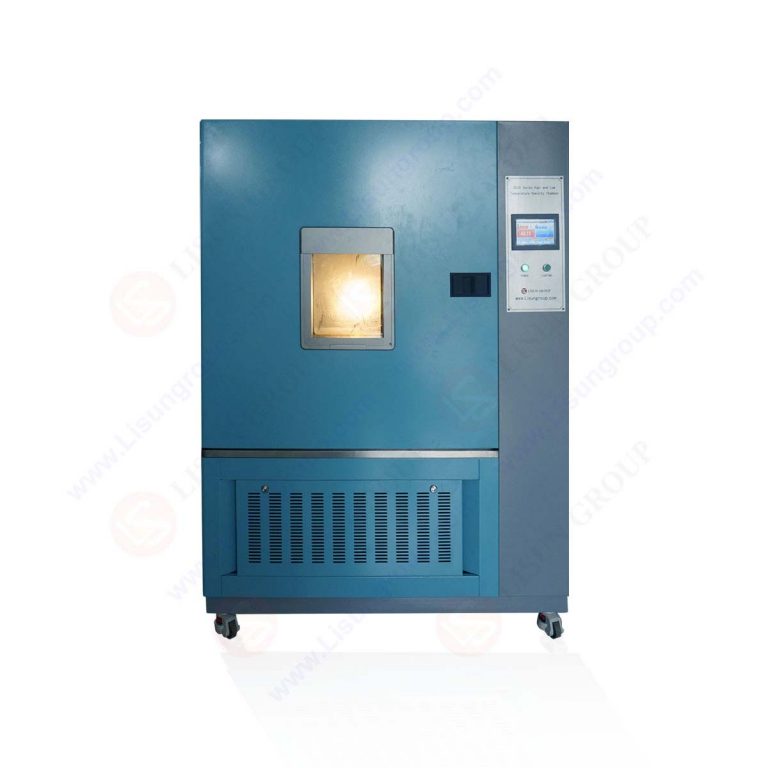
LED performance degradation is fundamentally driven by thermal stress at the junction level, where elevated temperatures accelerate phosphor degradation, solder joint fatigue, and encapsulant discoloration. The Thermal Chamber: precise IEC 60068 temperature testing solutions provides controlled environmental conditions that isolate temperature effects from other variables. IEC 60068-2-1 and IEC 60068-2-2 define the cold and dry heat test procedures, respectively, which are essential for establishing baseline performance at specified ambient temperatures. For LED testing, thermal chambers must maintain temperature uniformity within ±1°C across the test volume, ensuring that all samples experience identical stress conditions during the 6000-hour qualification period.
1.2 Integration with Photometric Measurement Systems
LISUN’s LED Optical Aging Test Instrument addresses the historical separation between temperature exposure and optical measurement by combining both functions within a single automated platform. The integrating sphere setup enables real-time monitoring of luminous flux, color temperature, and chromaticity coordinates without removing samples from the thermal chamber. This integration eliminates measurement uncertainty associated with sample handling and thermal recovery periods. The system supports up to three connected temperature chambers, allowing concurrent testing of multiple LED populations at different stress temperatures, which is critical for generating Arrhenius Model data across a minimum of three temperature points as required by IES LM-80.
2.1 Temperature Test Procedures and Severity Levels
IEC 60068-2-14 specifies thermal shock testing with defined temperature change rates (1°C/min to 15°C/min) and dwell times, while IEC 60068-2-78 addresses damp heat cyclic tests for humidity resistance. The Thermal Chamber: precise IEC 60068 temperature testing solutions must accommodate these varying profiles through programmable temperature ramping and humidity control. For LED testing, the standard 55°C, 85°C, and 105°C stress temperatures align with IEC 60068 severity levels, though custom profiles can be programmed for application-specific requirements. The thermal chamber’s air velocity must be controlled between 1-3 m/s to prevent localized heating effects that could skew test results.
2.2 Chamber Performance Verification
Calibration and verification protocols per IEC 60068-3-5 require temperature mapping with a minimum of 9 sensors for chambers up to 2m³ volume. The LISUN system incorporates automated logging of chamber parameters at 1-minute intervals, providing traceable data for audit compliance. Key performance metrics include:
- Temperature accuracy: ±0.5°C across the range -40°C to +150°C
- Temperature uniformity: ≤1.0°C within the test volume
- Ramp rate capability: 3-5°C/min for thermal cycling tests
These specifications ensure that the thermal chamber meets the rigorous demands of LED lumen maintenance testing while maintaining compatibility with global accreditation requirements.
3.1 Dual System Variants for Standard Compliance
| Parameter | LEDLM-80PL (LM-80/TM-21) | LEDLM-84PL (LM-84/TM-28) |
|---|---|---|
| Primary Standard | IES LM-80-15 | IES LM-84-19 |
| Extrapolation Method | TM-21-19 (exponential decay) | TM-28-14 (exponential fit) |
| Minimum Test Duration | 6000 hours | 6000 hours |
| Temperature Points Required | 3 (55°C, 85°C, 105°C) | 3 (specified temperature) |
| Sample Size per Temperature | 20 units minimum | 10 units minimum |
| Measurement Interval | 1000 hours | 1000 hours |
| L70/L50 Projection Capability | Up to 36,000 hours | Up to 36,000 hours |
3.2 Hardware Customization and Connectivity Options
LISUN’s modular approach allows engineers to configure systems according to their specific throughput requirements. The base configuration includes one thermal chamber with integrated integrating sphere, while expansion options support:
- Up to 3 thermal chambers for multi-temperature testing
- 300mm or 500mm integrating sphere diameters for different LED package sizes
- Optional auxiliary photometric heads for spatial distribution measurements
The control system manages all connected chambers simultaneously, synchronizing temperature profiles with measurement schedules. This architecture enables a single operator to manage 60+ samples across multiple stress conditions, significantly reducing labor costs and improving data consistency. The software automatically assigns sample identifiers, tracks test hour accumulation, and generates standard compliance reports without manual intervention.
4.1 Theoretical Foundation and Activation Energy Determination
The Arrhenius model establishes the relationship between temperature and reaction rate: ( L = A exp(E_a / kT) ), where ( L ) is lifetime, ( A ) is a constant, ( E_a ) is activation energy, ( k ) is Boltzmann’s constant, and ( T ) is absolute temperature. For LED systems, the Thermal Chamber: precise IEC 60068 temperature testing solutions provides the controlled temperature environment necessary to determine activation energy values ranging from 0.3 eV (solder joint degradation) to 1.0 eV (phosphor thermal degradation). The LISUN software automatically calculates ( E_a ) from the lumen maintenance data collected at three temperatures, using linear regression analysis of the logarithmic lifetime versus inverse temperature relationship.
4.2 Software Implementation and Data Analysis
The Arrhenius Model-based software within the LED Optical Aging Test Instrument performs real-time analysis as data accumulates during the 6000-hour test duration. The system generates preliminary projections at 2000-hour intervals, allowing engineers to assess testing progress and identify anomalous samples early. Key software features include:
- Automatic outlier detection using Chauvenet’s criterion
- Confidence interval calculation (90% and 95%) for L70/L50 estimates
- TM-21 and TM-28 compliant reporting templates
- Data export in CSV, PDF, and XML formats for regulatory submission
The software also supports batch analysis of multiple test runs, enabling comparison of different LED designs or manufacturing processes under identical thermal stress conditions.
5.1 Continuous Operation Mode
The continuous operation mode subjects LED samples to constant temperature stress with periodic photometric measurements at specified intervals (typically every 1000 hours). This mode complies with IES LM-80 requirements, where samples must remain powered on and maintained at the test temperature throughout the 6000-hour duration. The thermal chamber maintains the setpoint temperature within ±1°C while the integrating sphere measures luminous flux without interrupting power to the samples. This mode is preferred for qualification testing where the goal is to establish baseline lumen maintenance characteristics under standard conditions.
5.2 Cycling Temperature Mode
The cycling temperature mode introduces thermal shock profiles to test LED robustness under real-world operating conditions where power cycling and ambient temperature variations occur. The Thermal Chamber: precise IEC 60068 temperature testing solutions can execute temperature cycles ranging from -40°C to +125°C with programmable dwell times at each temperature extreme. This mode is particularly relevant for automotive LED applications where thermal cycling accelerates failure mechanisms such as solder joint cracking and wire bond fatigue. The system automatically performs photometric measurements at the end of each cycle, capturing both the immediate and cumulative effects of thermal stress on optical performance.
6.1 IES LM-79-19 and CIE 127 Requirements
IES LM-79-19 establishes methods for electrical and photometric measurements of solid-state lighting products, requiring an integrating sphere with diameter at least 2.5 times the largest dimension of the test sample. The LISUN system’s integrating sphere design meets these requirements while maintaining thermal chamber integration. CIE 127 provides guidelines for LED measurements including spectral correction and spatial distribution considerations. The software incorporates these standards by applying spectral mismatch correction factors and temperature-dependent calibration coefficients that are automatically updated based on chamber sensor readings.
6.2 CIE 084 and CIE 70 Luminance Measurement
For applications requiring luminance rather than luminous flux measurements, the system can be configured with additional optical probes that meet CIE 084 and CIE 70 specifications. These standards define measurement geometries for luminance and illuminance measurements respectively. Configurations include:
- Far-field goniometer for spatial luminance distribution
- Near-field measurement head for localized luminance analysis
- Baffled integrating sphere for illuminance compliance
The thermal chamber environment is designed to accommodate these additional optical components while maintaining temperature uniformity, ensuring that luminance measurements are performed under precisely controlled thermal conditions.
7.1 Sample Preparation and Chamber Loading
Proper sample preparation is critical for achieving reliable test results. LED samples must be mounted on thermal test boards with controlled thermal resistance, typically using metal-core PCB (MCPCB) with measured junction-to-board thermal resistance. The Thermal Chamber: precise IEC 60068 temperature testing solutions includes standardized mounting fixtures that ensure consistent thermal contact across all sample locations. Each test position includes individual power connections with current monitoring, allowing the system to detect open circuits, short circuits, or current drift during the test duration.
7.2 Data Management and Reporting
The system’s data management capabilities include automated backup to network storage, preventing data loss during extended test durations. Cloud-based monitoring options allow engineers to view real-time test status from remote locations, receiving alerts for abnormal conditions such as chamber over-temperature or sample failure. At test completion, the software generates comprehensive reports including:
- Lumen maintenance curves with confidence intervals
- Arrhenius plot with activation energy calculation
- TM-21 or TM-28 extrapolation results
- Failure analysis summary with time and temperature at failure
These reports satisfy the documentation requirements for UL, CE, and other regulatory certifications, streamlining the product qualification process.
The Thermal Chamber: precise IEC 60068 temperature testing solutions represents an essential tool for LED reliability engineering, providing the controlled environmental conditions necessary for accurate lumen maintenance testing and lifetime prediction. LISUN’s LED Optical Aging Test Instrument integrates thermal chamber technology with photometric measurement capabilities, enabling compliance with IES LM-80, LM-84, TM-21, and TM-28 standards within a single automated platform. The dual system variants—LEDLM-80PL and LEDLM-84PL—accommodate different testing requirements while maintaining consistent measurement accuracy across the 6000-hour test duration. The Arrhenius Model-based software transforms raw test data into actionable lifetime projections, supporting L70 and L50 metrics that guide product development and warranty decisions. For engineers seeking to implement robust LED reliability testing protocols, this integrated solution offers significant advantages in throughput, data quality, and standard compliance. By combining precise temperature control with automated photometric measurement, the system addresses both the technical and practical challenges of LED accelerated aging validation.
Q1: What is the minimum sample size required for LM-80 testing using the LEDLM-80PL system?
A: IES LM-80-15 specifies a minimum of 20 test samples per temperature condition, though the LISUN system can accommodate up to 30 samples per chamber depending on the integrating sphere configuration. For TM-21 extrapolation, the software requires at least 10 valid samples after outlier removal to generate statistically significant L70/L50 projections. The system automatically tracks sample status and flags any units that fail prematurely or show abnormal degradation patterns. Engineers should plan for an initial sample size of 25-30 units per temperature to account for potential failures during the 6000-hour test duration. The thermal chamber can maintain consistent temperature across all sample positions, ensuring that each unit experiences identical stress conditions throughout the test.
Q2: Can the thermal chamber accommodate different LED package types (SMD, COB, through-hole) simultaneously?
A: Yes, the Thermal Chamber: precise IEC 60068 temperature testing solutions is designed with modular mounting fixtures that can accommodate various LED package types within a single test run. However, it is recommended to group samples by similar thermal characteristics to avoid temperature interference between high-power and low-power devices. The system includes adjustable current sources for each sample position, allowing individual power control from 0.1 mA to 3.0 A. For accurate lumen maintenance measurement, all samples within a test position must use the same integrating sphere geometry, typically requiring either a 300mm sphere for individual components or a 500mm sphere for multiple sample arrays. The software allows users to define different test parameters for each sample group within the same chamber, enabling mixed-package testing when production flexibility is required.
Q3: How does the Arrhenius Model-based software handle data from tests that do not reach L70 failure within 6000 hours?
A: The TM-21-19 standard allows extrapolation up to 6 times the test duration, meaning a 6000-hour test can project L70 lifetimes up to 36,000 hours. The software performs this extrapolation using the exponential decay model, calculating the degradation rate from the lumen maintenance data collected during the test period. For samples that show minimal degradation after 6000 hours, the software automatically calculates confidence intervals that become wider with increasing extrapolation time, reflecting the higher uncertainty in longer-term projections. The system provides warnings when extrapolation exceeds 3x test duration, recommending that users consider extended testing for more accurate predictions. Activation energy values are calculated from the temperature-dependent degradation rates, and the software validates that the Arrhenius relationship holds across the tested temperature range before generating lifetime estimates.
Q4: What maintenance procedures are required for the thermal chamber and integrating sphere system?
A: Regular maintenance ensures measurement accuracy and system reliability. The integrating sphere requires periodic recalibration using a standard lamp traceable to NIST standards, typically every 6-12 months depending on usage frequency. The thermal chamber’s temperature sensors should be verified against a calibrated reference at 6-month intervals, and the chamber seals should be inspected quarterly for integrity. Air filters require monthly cleaning or replacement to maintain proper airflow and temperature uniformity. The software includes automated calibration reminders and diagnostic routines that check for sensor drift, power supply stability, and optical alignment. For laboratories operating continuous test schedules, LISUN recommends annual preventive maintenance visits from certified technicians to perform comprehensive system verification and component replacement as needed.
Q5: Can the system integrate with existing laboratory information management systems (LIMS)?
A: Yes, the LISUN LED Optical Aging Test Instrument supports integration with most commercial LIMS platforms through standardized data export formats including XML, JSON, and CSV. The software provides an API for real-time data streaming to external databases, allowing engineers to monitor test progress within their existing quality management workflows. Custom integration scripts can be developed to automate data transfer at user-defined intervals, ensuring that test results are immediately available for review and analysis. The system also generates reports in PDF format that include all required metadata for regulatory compliance, including chamber calibration dates, measurement uncertainty budgets, and traceability information. For laboratories requiring 21 CFR Part 11 compliance, the software includes electronic signature and audit trail functionality to support regulated environments.