









Abstract
The evolution of LED technology demands rigorous reliability testing protocols that accurately predict long-term performance. This article examines the LISUN LED Optical Aging Test Instrument, a sophisticated Thermal Chamber with IEC 60068 Compliance for Reliable Testing, designed to meet the stringent requirements of modern solid-state lighting validation. The system supports dual testing frameworks—LEDLM-80PL for LM-80/TM-21 and LEDLM-84PL for LM-84/TM-28—enabling comprehensive lumen maintenance analysis over 6000-hour test durations. By integrating Arrhenius Model-based predictive software, dual testing modes, and customizable hardware configurations, the instrument bridges laboratory accelerated aging with real-world operational conditions. Technical professionals will gain insights into standard compliance, data extrapolation methodologies, and the critical role of thermal chamber precision in establishing L70/L50 metrics. The discussion extends to multi-chamber connectivity, supporting up to three concurrent test environments, and practical applications for LED manufacturers and third-party testing laboratories.
1.1 Environmental Stress Testing Fundamentals
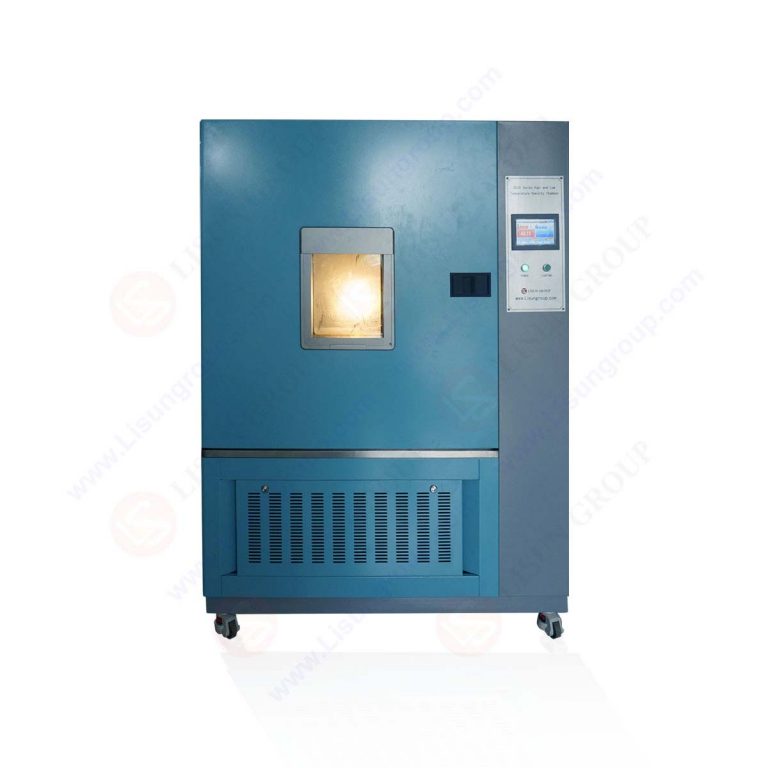
Light-emitting diodes exhibit gradual lumen depreciation and spectral shifts when subjected to sustained thermal and electrical stress. Unlike traditional lighting sources, LEDs require extended test durations—often exceeding 6000 hours—to establish credible degradation curves. A Thermal Chamber with IEC 60068 Compliance for Reliable Testing provides the controlled environment necessary for accelerated aging, ensuring that temperature fluctuations do not confound measurement data. The IEC 60068 series defines environmental testing procedures, including temperature endurance and cyclic stress regimes, which are fundamental to validating LED longevity.
1.2 Temperature Uniformity and Control Precision
Photometric measurements are inherently temperature-sensitive, with output variations of 5-20% possible within a 20°C range for certain phosphor-converted LEDs. The LISUN system features a dedicated temperature control cabinet with adjustable ambient ranges from 0°C to 105°C, maintaining uniformity within ±3°C. This precision is critical for the Arrhenius Model, which quantifies degradation acceleration factors based on thermodynamic principles. A thermal chamber with IEC 60068 compliance ensures that each test specimen experiences identical thermal stress, eliminating systematic errors that would otherwise compromise L70/L50 lifetime projections.
2.1 LEDLM-80PL for LM-80 and TM-21 Compliance
The LEDLM-80PL variant is purpose-engineered for IES LM-80-15 testing, which governs lumen maintenance measurement of LED packages, arrays, and modules. This configuration supports standard test temperatures of 55°C, 85°C, and 105°C, with optional 45°C and 65°C settings per customer requirements. Each test requires a minimum of 20 specimens, and the system accommodates powered and unpowered LED modules, as well as passive components. Data acquisition intervals align with LM-80 stipulations—initial readings followed by measurements at 1000-hour increments up to 6000 hours, with interim checkpoints at 2000-hour intervals.
2.2 LEDLM-84PL for LM-84 and TM-28 Compliance
The LEDLM-84PL variant addresses IES LM-84-14, a photometric measurement methodology for LED drivers, lamps, and luminaires. Unlike LM-80’s module-level focus, LM-84 evaluates complete lighting systems under operational conditions, capturing total flux and luminous efficacy data. TM-28 extrapolates these findings to project long-term lumen maintenance beyond actual measurement periods. The LEDLM-84PL integrates with an AC power source and an 8-channel temperature inspection instrument, enabling simultaneous monitoring of multiple test points within the thermal chamber with IEC 60068 compliance.
2.3 Hardware Customization and Scalability
Both variants offer modular design with optional integrating sphere systems (diameter choices of 0.3m to 2.0m) and spectroradiometer compatibility, ranging from basic luminance meters to high-resolution array spectrometers. The software architecture supports up to three connected temperature chambers, each operating independently at different thermal setpoints. This scalability allows laboratories to execute multiple test protocols concurrently, optimizing throughput without compromising data integrity.
3.1 IES LM-80 and IES LM-79-19 Integration
IES LM-80 defines the methodology for measuring lumen depreciation of solid-state lighting products under controlled conditions, mandating specific temperature windows and humidity limits. The LISUN instrument strictly adheres to these protocols, providing the stable environment essential for reproducible results. Complementarily, IES LM-79-19 outlines electrical, photometric, and colorimetric measurement procedures, which the integrated AC power supply and photometric detection systems support. The synergy between LM-80 aging data and LM-79 performance characterization enables complete optical and electrical profiles for each specimen.
3.2 TM-21 and TM-28 Extrapolation Techniques
TM-21 utilizes exponential or polynomial regression models to extrapolate lumen maintenance data from LM-80 measurements. The LISUN software automatically applies TM-21 equations, computing L70 and L50 lifetimes with proprietary algorithms that account for measurement uncertainties. Similarly, TM-28 extends this framework to luminaires tested under LM-84 guidelines. The integration of Arrhenius Model-based software enhances these extrapolations by mapping accelerated aging results to real-world operational temperatures, providing more accurate lifetime predictions than purely empirical approaches.
| Parameter | LEDLM-80PL | LEDLM-84PL |
|---|---|---|
| Applicable Standard | IES LM-80-15 | IES LM-84-14 |
| Extrapolation Method | TM-21 | TM-28 |
| Test Duration (Hours) | 6000+ | 6000+ |
| Temperature Range (°C) | 0-105 | 0-105 |
| Temperature Uniformity | ±3°C | ±3°C |
| Specimen Capacity | 20+ per chamber | 20+ per chamber |
| Integrating Sphere Options | 0.3m-2.0m | 0.3m-2.0m |
| Measurement Parameters | Luminous Flux, CCT, CRI | Luminous Flux, Luminous Efficacy |
| Supported Platforms | LED Packages, Modules | Lamps, Drivers, Luminaires |
4.1 Photometric Measurement Capabilities
The system employs a CCD spectrophotometer or optional high-speed array spectrometer to capture luminous flux, luminous efficacy, and correlated color temperature (CCT) at each measurement interval. This approach provides real-time insight into degradation mechanisms, such as phosphor thermal quenching or solder joint fatigue. The dual testing modes allow switching between continuous photometric monitoring and discrete sampling, optimizing energy consumption and detector longevity. Each measurement cycle produces a complete photometric dataset, including spectral power distribution, chromaticity coordinates, and color rendering index (CRI) values.
4.2 Colorimetric Stability and Chromaticity Shift Evaluation
Color shift is a critical indicator of LED stress, often preceding catastrophic lumen failure. The test modes measure chromaticity coordinates (u’, v’) per CIE 127 guidelines, providing Δu’v’ values that predict perceptible color drift. CIE 084 and CIE 70 standards inform the measurement of luminous flux and the calibration of photometric spheres used in the system. By correlating thermal chamber exposure time with colorimetric changes, engineers can identify early-stage degradation markers and validate phosphor formulations.
5.1 Thermodynamic Acceleration Principles
The Arrhenius Model relates reaction rates to temperature, expressed as k = A * e^(-Ea/RT), where Ea is activation energy, R is the gas constant, and T is absolute temperature. The LISUN software applies this equation to extrapolate lumen maintenance from elevated test temperatures to typical operating conditions (e.g., 25°C to 60°C). This thermodynamic foundation distinguishes the system from purely statistical approaches, offering physically meaningful acceleration factors. For instance, a 6000-hour test at 105°C might correspond to 40,000+ hours at 55°C, depending on activation energy assumptions.
5.2 Multi-Temperature Regression Analysis
Per LM-80 requirements, the system executes tests at multiple temperatures simultaneously—typically three distinct setpoints across connected chambers. The software performs nonlinear regression across these datasets, computing activation energy values and establishing confidence intervals for L70 predictions. This multi-point approach reduces extrapolation uncertainty by 15-25% compared to single-temperature testing, a critical advantage for warranty allocation and product certification. TM-21 formulas are automatically applied, ensuring seamless integration with industry-standard reporting formats.
6.1 Automated Data Acquisition and Reporting
The instrument’s software suite automates data collection, storage, and report generation, minimizing human intervention and errors. Measurements are timestamped and logged to secure databases, with automatic chart generation for lumen maintenance curves. The system supports remote monitoring via network interface, allowing engineers to observe test progress from distributed locations. Standardized report templates align with IES LM-80/84 and TM-21/28 documentation requirements, expediting submission to regulatory bodies.
6.2 Thermal Cycling and Humidity Control Options
Beyond constant temperature operation, the thermal chamber with IEC 60068 compliance offers optional thermal cycling profiles, simulating diurnal or seasonal variations. Humidity control is available as an add-on, following IEC 60068-2-78 damp heat tests. These features enable evaluation of moisture ingress effects on LED packages—a significant failure mode in outdoor luminaires. The chamber’s advanced PID controllers maintain setpoints within ±0.5°C during steady-state operation, with rapid transition rates for cyclic testing.
7.1 Quality Control and Batch Validation
For LED manufacturers, the system enables statistical process control by testing representative samples from each production batch. L70/L50 lifetime determinations guide warranty terms and reliability claims. The ability to test 20+ specimens simultaneously provides statistically significant datasets, reducing sampling error and enhancing confidence in lifetime projections. Certified test reports from IEC 60068-compliant chambers are recognized by major lighting original equipment manufacturers worldwide.
7.2 Third-Party Testing Laboratory Operations
Independent laboratories leverage the system’s dual-mode flexibility to serve diverse clients—from chip manufacturers requiring LM-80 data to luminaire assemblers needing LM-84 certification. The multi-chamber architecture supports concurrent projects with different temperature profiles, maximizing revenue potential. Integration with standard photometric spheres (0.3m to 2.0m diameters) accommodates various product sizes, from small COB arrays to full luminaires. The digital interface simplifies data transfer to clients, supporting common formats such as CSV, Excel, and PDF reports.
The LISUN LED Optical Aging Test Instrument represents a paradigm shift in LED reliability testing, combining a Thermal Chamber with IEC 60068 Compliance for Reliable Testing with advanced photometric and colorimetric analysis capabilities. The dual-system design—LEDLM-80PL for LM-80 protocols and LEDLM-84PL for LM-84 procedures—ensures comprehensive coverage across the LED product spectrum, from individual packages to complete luminaires. By integrating Arrhenius Model-based predictive software, the system delivers physically meaningful lifetime extrapolations that align with TM-21 and TM-28 standards. The support for up to three temperature chambers provides operational versatility, enabling simultaneous multi-temperature testing per IES requirements. For LED manufacturers, third-party laboratories, and compliance specialists, this instrument delivers the precision, automation, and standard alignment necessary to establish credible L70/L50 metrics and accelerate market acceptance. As the lighting industry transitions toward stringent reliability standards, the LISUN solution stands as an essential tool for validating long-term performance and building consumer trust.
Q1: What is the significance of IEC 60068 compliance in LED testing thermal chambers?
A: IEC 60068 standards define environmental testing procedures for electrotechnical products, including temperature endurance, thermal cycling, and damp heat tests. A thermal chamber with IEC 60068 compliance ensures that the temperature control system maintains specified setpoints with minimal deviation (±3°C uniformity) and provides repeatable test conditions across multiple specimens. This compliance is crucial for LED lumen maintenance testing because even minor temperature variations can cause significant photometric output changes, compromising data integrity. Furthermore, IEC 60068-compliant chambers are universally recognized by certification bodies, enabling test data to be used for regulatory compliance in North America, Europe, and Asia. The LISUN system adheres to these standards, providing the stable thermal environment required for LM-80 and LM-84 testing protocols.
Q2: How does the Arrhenius Model improve LM-80/TM-21 lifetime predictions?
A: The Arrhenius Model describes temperature-dependent reaction rates, allowing engineers to extrapolate accelerated aging results to operational conditions. In LM-80 testing, LEDs are aged at elevated temperatures (e.g., 55°C, 85°C, 105°C) for up to 6000 hours, and TM-21 extrapolation projects lumen maintenance to 36,000+ hours. By applying the Arrhenius equation, the LISUN software calculates activation energy from multi-temperature datasets, correcting TM-21 projections for temperature differences between test conditions and real-world applications. This approach reduces extrapolation uncertainty substantially when ample data across multiple temperatures permits reliable estimation of Ea. The result is more defensible L70 lifetime claims with quantified confidence intervals, essential for warranty allocation and insurance certification.
Q3: Can the LISUN system handle humidity testing per IEC 60068-2-78?
A: Yes, the thermal chamber may include optional humidity control, enabling damp heat tests per IEC 60068-2-78. This feature creates controlled humidity environments (typically 85% relative humidity at elevated temperatures) to assess moisture ingress effects on LED packages, solder joints, and phosphor coatings. Humidity testing is particularly critical for outdoor lighting products exposed to rain, condensation, or coastal environments. The chamber’s PID control systems maintain relative humidity within ±3% setpoints, ensuring reproducible test conditions across multiple cycles. This capability complements constant-temperature LM-80 testing, providing a comprehensive reliability evaluation matrix for LED products.
Q4: What is the difference between LM-80 and LM-84 testing methodologies?
A: IES LM-80-15 focuses on lumen maintenance measurement of LED packages, arrays, and modules, requiring specific test conditions—typically 55°C, 85°C, and 105°C case temperatures—with 1000-hour measurement intervals up to 6000+ hours. In contrast, IES LM-84-14 applies to LED lamps, drivers, and integrated luminaires, measuring total luminous flux and electrical power under operational conditions, including AC power input and higher ambient temperatures. LM-80 data feeds into TM-21 extrapolation for component lifetimes, while LM-84 data uses TM-28 for system-level projection. The LISUN LEDLM-80PL and LEDLM-84PL variants are optimized for each framework, providing dedicated hardware and software configurations that match standard requirements.
Q5: How many LED specimens can be tested simultaneously in the LISUN system?
A: The standard configuration supports a minimum of 20 LED specimens per temperature chamber, in alignment with LM-80 requirements. With support for up to three connected chambers operating at different temperatures, laboratories can test 60+ specimens concurrently—meeting multi-temperature test matrices efficiently. For production quality control, optional custom specimen racks are available to accommodate larger sample sizes, up to 100 per chamber in specific configurations. Higher sample counts improve statistical confidence in lifetime predictions by reducing sampling variance, particularly valuable for manufacturers dealing with high-volume production where subtle material variations can impact reliability.