









Here is the comprehensive technical article based on your specifications.
Abstract
For LED manufacturers and testing labs, validating product longevity under extreme thermal gradients is critical. This article explores the Therml Shock Chamber: IEC 60068-Compliant Temperature Cycling, focusing on its role in accelerated aging for solid-state lighting. We detail how LISUN’s integrated systems, including the LEDLM-80PL and LEDLM-84PL, leverage the Arrhenius Model to predict L70/L50 metrics over standard 6000-hour test durations. The text explains how compliance with IEC 60068 and IES standards ensures robust data integrity. Engineers will gain practical insights into combining thermal shock with photometric measurement, enhancing reliability validation for LED components and modules.
1.1 Defining Thermal Shock vs. Thermal Cycling
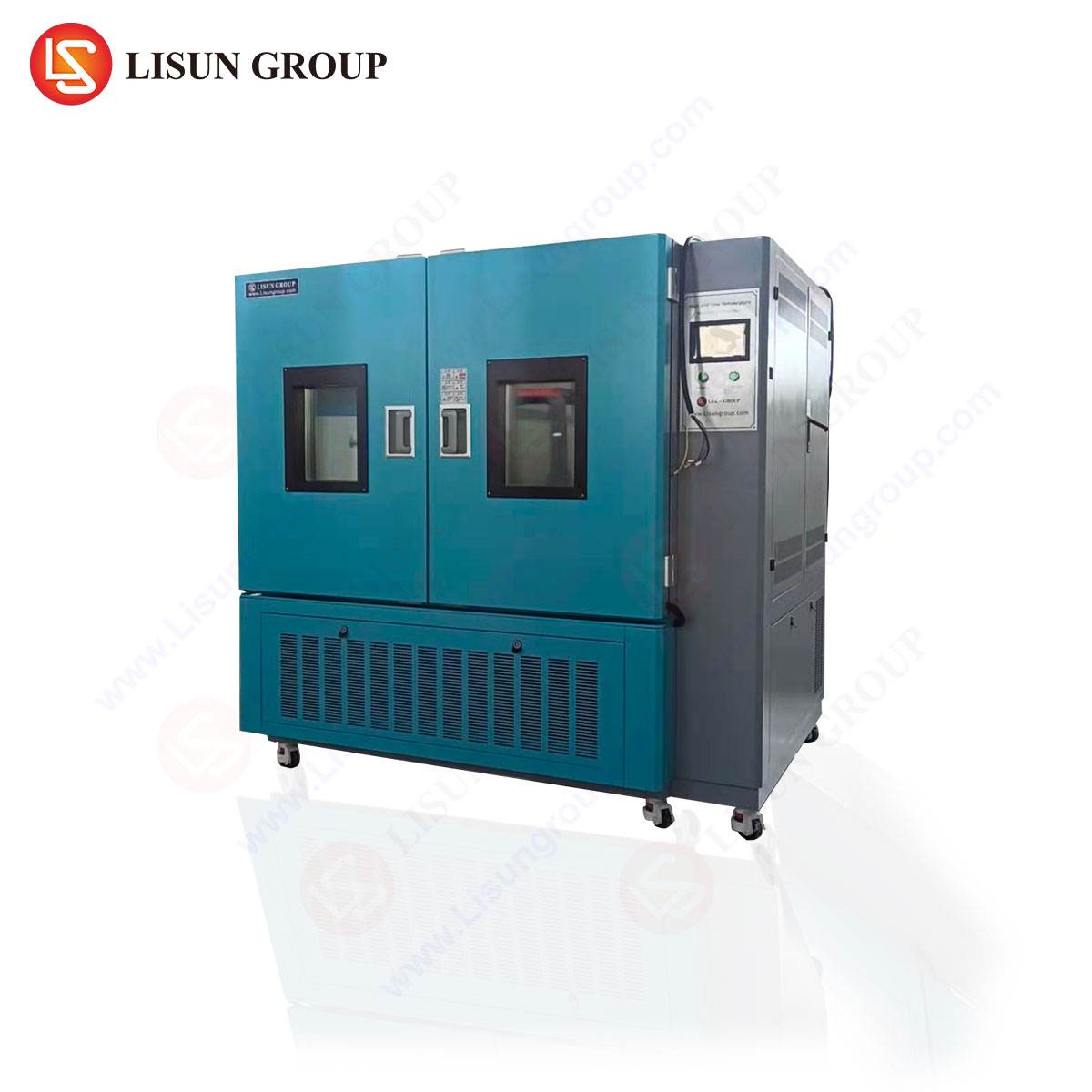
Thermal shock testing subjects components to rapid temperature transitions, unlike standard thermal cycling (which uses slower ramp rates). The Therml Shock Chamber: IEC 60068-Compliant Temperature Cycling simulates the extreme mechanical stress caused by sudden expansion and contraction of materials. This is essential for identifying failures in solder joints, encapsulation resins, and phosphor coatings that standard aging tests might miss.
1.2 Relevance to IES LM-80 and TM-21 Methodologies
While IES LM-80 focuses on lumen maintenance at constant temperatures, real-world LEDs experience sudden temperature spikes. Integrating a Therml Shock Chamber: IEC 60068-Compliant Temperature Cycling into the test protocol allows engineers to correlate short-term mechanical stress with long-term lumen depreciation. The data derived from these tests feeds directly into TM-21 extrapolation models, providing a more accurate prediction of L70 life under field-like conditions.
2.1 Dual System Variants: LEDLM-80PL and LEDLM-84PL
LISUN offers two primary optical aging test instrument variants tailored to specific standards:
- LEDLM-80PL: Designed for IES LM-80 and TM-21 testing of LED packages and modules. It supports simultaneous testing of multiple samples at controlled temperatures up to 105°C or higher.
- LEDLM-84PL: Configured for IES LM-84 and TM-28 testing, focused on LED lamps and luminaires. This system handles higher power loads and maintains photometric integrity for larger form factors.
2.2 Arrhenius Model-Based Software for Lumen Depreciation Prediction
The core software utilizes the Arrhenius Model to accelerate failure mechanisms. By inputting data from the thermal shock chamber, the system calculates activation energy (Ea) for specific failure modes. This allows for projection of L70 and L50 metrics beyond the physical 6000-hour test duration, as required by TM-21 and TM-28.
3.1 6000-Hour Test Duration and L70/L50 Metrics
The standard test protocol mandates a minimum of 6000 hours of data collection. The system automatically logs luminous flux at intervals defined by IES LM-80-15 (typically 1000-hour readings). Based on this data, the software calculates the time to reach 70% (L70) and 50% (L50) of initial lumen output. The thermal shock chamber ensures that these degradation metrics are tested under realistic thermal stress conditions.
3.2 Support for Up to 3 Connected Temperature Chambers
LISUN’s system architecture allows the main control unit to interface with up to three independent temperature chambers. This configuration enables simultaneous testing at three distinct temperature profiles (e.g., 55°C, 85°C, and cyclic shock). A comparison of the two primary system variants is provided below:
| Feature | LEDLM-80PL (LM-80/TM-21) | LEDLM-84PL (LM-84/TM-28) |
|---|---|---|
| Primary Standard | IES LM-80 (LED Packages) | IES LM-84 (LED Lamps/Luminaires) |
| Extrapolation Model | TM-21 | TM-28 |
| Typical Sample Count | Up to 30 modules (per chamber) | Up to 8-10 lamps (per chamber) |
| Maximum Chamber Temp | 85°C (ambient) / 105°C (case) | 85°C (ambient) |
| Driver Support | External (sockets) | Internal (lamp base) |
| Measurement Method | DC Pulsed drive (LM-79-19) | AC/DC continuous drive |
4.1 Continuous Light-ON Mode (LM-80 Typ.)
In this mode, the LED is continuously powered throughout the Therml Shock Chamber: IEC 60068-Compliant Temperature Cycling process. This simulates the thermal stress of a device operating in a hot environment, where heat generation from the LED itself compounds the chamber temperature. This is the standard mode for evaluating long-term phosphor degradation.
4.2 Cyclic Light-OFF Mode (Thermal Shock Emphasis)
This advanced mode turns the LED off during the rapid cooling phase and on during the heating phase, or vice-versa. This creates the most extreme mechanical stress on the die-attach and wire bonds. It directly validates the physical robustness of the LED against thermal expansion mismatch, providing data required for IEC 60068-2-14 (Test Nb) compliance.
5.1 Integration with IES LM-79-19 and CIE 127
To ensure accuracy, the measurement system within the thermal shock chamber must comply with:
- IES LM-79-19: Defines the electrical and photometric measurement methods for LED sources, including the use of an integrating sphere (typically 2m or 1m) for total flux measurement.
- CIE 127: Provides the standard for measuring LED intensity, ensuring that the measurement geometry does not introduce errors when samples are subjected to thermal stress.
5.2 Application of CIE 084 and CIE 70
- CIE 084 (Measurement of Luminous Flux): The software applies correction factors for self-absorption, which is critical when taking measurements through the thermal shock chamber’s observation window.
- CIE 70 (Light Source Color Rendering): While not the primary focus of aging, the system monitors color shift (Δu’v’) over the 6000-hour test, a requirement for TM-28 reporting.
6.1 Configuration for Automotive Electronics
Automotive headlight LEDs require rigorous thermal shock testing (e.g., -40°C to +125°C). Using the LISUN system configured per IEC 60068-2-14:
- Step 1: Mount samples on a custom heat sink to simulate vehicle thermal management.
- Step 2: Program the chamber for a 5-minute transfer time (critical for shock).
- Step 3: Integrate the LEDLM-84PL to measure flux recovery after 1000 cycles.
6.2 Data Analysis and Failure Mode Identification
The software plots three key graphs:
- Lumen Depreciation Curve: Shows gradual decay.
- Δu’v’ Chromaticity Shift: Indicates phosphor stability.
- Failure Rate (Weibull): Defined when an LED fails catastrophically due to thermal shock (e.g., open circuit).
This triple analysis helps distinguish between lumen depreciation and actual mechanical failure.
7.1 Accelerated Testing Times
Without a model, a 6000-hour test provides direct data up to 6000 hours. Using the Arrhenius Model and data from multiple thermal shock cycles, LISUN’s software can extrapolate a 50,000-hour L70 value. This reduces the need for long real-time testing.
7.2 Determining Activation Energy (Ea)
The system calculates the Activation Energy (Ea) by comparing degradation rates at different thermal shock profiles. A low Ea (0.4-0.6 eV) suggests the failure is driven by mechanical stress (solder joint fatigue). A high Ea (>0.8 eV) points to chemical degradation (phosphor aging). This insight helps engineers focus on specific failure mechanisms.
The integration of a Therml Shock Chamber: IEC 60068-Compliant Temperature Cycling with LISUN’s LEDLM-80PL and LEDLM-84PL systems provides a holistic approach to LED reliability testing. By combining the mechanical stress of thermal shock with the photometric precision required by IES LM-80, IES LM-84, and TM-21/TM-28, engineers can achieve a higher degree of confidence in L70/L50 predictions. The ability to support up to three chambers and utilize the Arrhenius Model for extrapolation solidifies this setup as a critical tool for R&D and quality assurance. This method ensures that products not only age gracefully under constant heat but also survive the harsh thermal gradients of real-world operation, from outdoor lighting to automotive applications. The data-driven approach, compliant with CIE 127 and CIE 084, ensures every test cycle provides actionable intelligence for product improvement.
Q1: What is the difference between a standard Thermal Cycle test and a Thermal Shock test of the LISUN Chamber regarding LED failures?
A: Standard thermal cycling uses a slow ramp rate (e.g., 1°C/min) and primarily tests the system’s thermal management over time. The Therml Shock Chamber: IEC 60068-Compliant Temperature Cycling utilizes a very rapid transfer time (<5 minutes), causing high mechanical stress due to thermal expansion mismatch. For LEDs, thermal shock is critical for detecting solder joint cracks on SMD packages or delamination of silicone encapsulants. A standard cycle might show a gradual increase in thermal resistance, while a shock test can immediately reveal an open circuit or a sudden 70% drop in luminous flux due to a cracked bond wire. LISUN’s cyclic Light-OFF mode is specifically designed to maximize this thermal gradient stress during the cooling phase.
Q2: How can I use the 6000-hour test data from the LEDLM-80PL to predict L70 life if I am also running Thermal Shock profiles?
A: First, run your standard constant temperature test (e.g., 85°C for 6000 hours) per IES LM-80 to establish a baseline degradation rate. Then, run a separate batch on the same system but within the Therml Shock Chamber. After 6000 hours, you will have two datasets. The LISUN software performs TM-21 extrapolation on both. By comparing the TM-21 projected lifetimes, you can calculate a “Severity Factor” (e.g., Shock Test L70 / Standard L70). If the Shock Test L70 is 80% of the Standard L70, you can then use a safety factor of 0.8 on future standard tests to account for real-world thermal shock stress, without needing to run the shock test every time.
Q3: What is the standard procedure for integrating the integrating sphere measurement with the Thermal Shock Chamber for LM-79-19 compliance?
A: Integration must be done without moving the LED from the shock chamber to a separate sphere to avoid thermal recovery. LISUN’s system uses a fixed measurement port. The procedure is: 1) Bring the chamber to the defined test temperature (e.g., 25°C). 2) Allow the LED to stabilize for 30 minutes (dark environment). 3) Perform a self-absorption correction per CIE 084 using a reference lamp inside the chamber. 4) Pulse the LED (if LM-80) or drive at rated current (if LM-84) and measure total flux. The Therml Shock Chamber: IEC 60068-Compliant Temperature Cycling system is calibrated to ensure the window transmittance does not degrade over time, maintaining LM-79-19 traceability.
Q4: Can the LISUN system test high-power automotive LEDs under the extreme temperature ranges of -40°C to +150°C?
A: Yes, but the hardware configuration must be adjusted. The standard LEDLM-80PL handles up to 105°C case temperature. For -40°C to +150°C applications (common for Automotive LED testing per AEC-Q101), you require the optional high-temperature/low-temperature variant of the chamber. The system supports up to three chambers, so you can dedicate one chamber specifically for this extreme range. The key challenge is avoiding condensation; the chamber uses a nitrogen purge system to dry the air before the cooling cycle begins, protecting the LED samples and optical sensors.
Q5: How does the LISUN software handle data if a sample fails catastrophically (open circuit) during a Thermal Shock cycle?
A: The system is designed to handle failures gracefully. If the software detects a zero-current condition (open circuit) or a luminous flux below 1% of initial value, it marks that sample as “Failed” at that specific hour. It removes that data point from the average lumen depreciation curve but keeps the individual sample’s data in a separate “Failure Analysis” log. This is critical for Weibull analysis. The Therml Shock Chamber: IEC 60068-Compliant Temperature Cycling software will continue to run the remaining samples. The final report will include a secondary graph showing cumulative failure percentage over the 6000-hour period, allowing you to define a specific L70 value not just for flux but for product survivability.