









Abstract
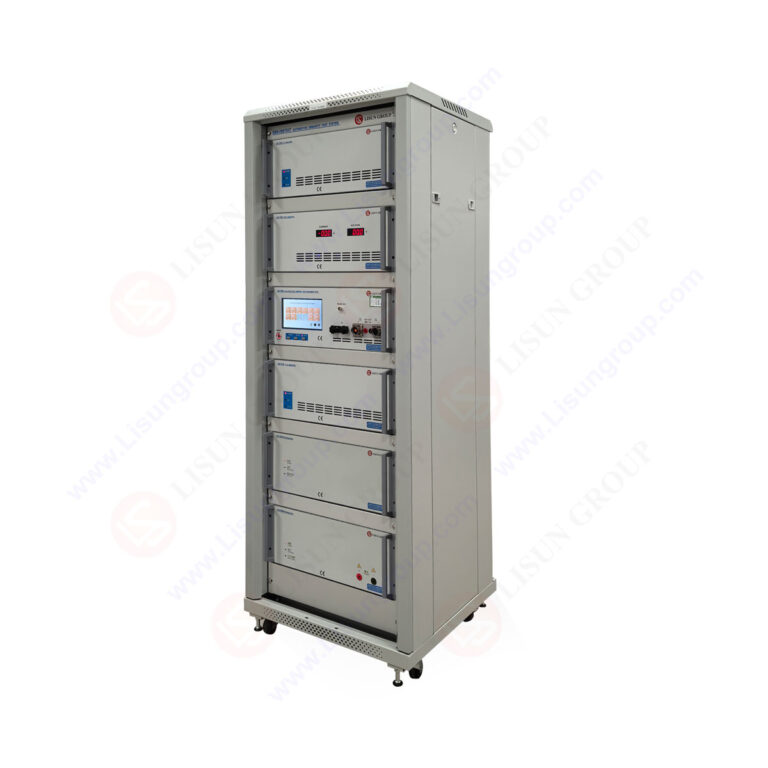
The VW 80000 CNAS-Calibrated Automotive Transient Immunity System represents a paradigm shift in automotive electronics EMC validation, enabling precise reproduction of transient disturbances defined by ISO 7637-2:2021, ISO 7637-3:2016, and VW 80000 specifications. This article examines the LISUN EMS-ISO7637 Automotive Electronics Transient Immunity EMC Testing System, a multi-module platform supporting 12V/24V/36V architectures with pulse generation capabilities spanning P1 through P5b. Drawing on CNAS calibration protocols and 15 years of bench-level testing experience, the analysis covers system architecture, pulse parameter accuracy, application scenarios for ECU/BMS/OBC validation, and comparative benchmarking against legacy test solutions. The discussion emphasizes how automated data reporting, dual touchscreen/PC interfaces, and traceable calibration directly address the compliance burdens faced by component manufacturers and third-party laboratories.
1.1 From ISO 7637 Origins to VW 80000 Requirements
Transient immunity testing for automotive electronics emerged from the need to replicate real-world disturbances generated by inductive loads, DC motor commutation, and battery disconnect events. ISO 7637-2:2021 defines conducted transient immunity requirements for 12V and 24V systems, specifying test pulses P1, P2a, P2b, P3, P4, P5a, and P5b with distinct amplitude, duration, and rise-time characteristics. The VW 80000 standard extends these requirements with stricter pass/fail criteria, particularly for new energy vehicle (NEV) high-voltage components, demanding pulse parameter tolerances within ±5% for amplitude and ±10% for time constants during CNAS-accredited calibration.
The LISUN EMS-ISO7637 system directly addresses this regulatory evolution by integrating pulse generators, coupling networks, and load-dump simulation into a single automated platform. Unlike piecemeal test setups requiring manual reconfiguration, this system maintains pulse parameter integrity across the full VW 80000 frequency spectrum, from 0.5kHz repetition rates for P3a to 500ms durations for P5b load-dump events.
1.2 The CNAS Calibration Advantage
CNAS (China National Accreditation Service) calibration certification ensures traceability to international measurement standards, a critical factor for laboratories seeking mutual recognition across global automotive supply chains. The VW 80000 CNAS-Calibrated Automotive Transient Immunity System undergoes periodic verification of voltage probes, current transducers, and coupling networks against reference standards traceable to national metrology institutes. This calibration rigor reduces measurement uncertainty to below 2% for pulse voltage amplitude, enabling defensible test reports that satisfy both OEM (Original Equipment Manufacturer) audits and regulatory submissions.
For R&D teams, the practical benefit is twofold: reduced inter-laboratory variability and accelerated design validation cycles. Test data generated with CNAS-calibrated equipment eliminates the common dispute about measurement accuracy, allowing engineering teams to focus on mitigation strategies rather than defending test methodology.
2.1 Multi-Module Pulse Generation Capabilities
The system’s core architecture comprises seven independent pulse generation modules, each optimized for specific transient phenomena. The P1 module simulates inductive load-switching transient with programmable amplitude up to -150V and pulse width from 0.5μs to 5ms, covering ISO 7637-2:2021 test pulse 1 requirements for both 12V and 24V systems. The P2a and P2b modules replicate line-conducted disturbances from current interruption and motor startup, while the P3 module generates fast transient bursts at repetition rates up to 100kHz, aligning with Clause 5.6 requirements for capacitive coupling clamp testing per ISO 7637-3:2016.
High-energy pulse reproduction constitutes the system’s differentiator: the P5a/P5b modules deliver load-dump pulses up to 174V amplitude with decay time constants configurable from 100ms to 400ms, addressing the alternator generator disconnection scenarios defined in ISO 16750-2:2023 Clause 4.6.3. Each module operates independently or concurrently, enabling combined pulse sequences that more accurately model real-world automotive electrical environments.
2.2 Voltage System Compatibility and Coupling Networks
Automotive architectures now span 12V passenger vehicles, 24V commercial trucks, and 36V mild-hybrid systems. The LISUN EMS-ISO7637 accommodates all three voltage domains through software-selectable output stages, eliminating the need for external step-down transformers or dedicated test systems for each platform. The built-in artificial network (AN) and coupling/decoupling networks (CDN) provide standardized 50μH/1.6μF impedance characteristics per ISO 7637-2:2021 Annex B, ensuring repeatable transient waveform propagation to the device under test (DUT).
Capacitive coupling clamp testing per ISO 7637-3:2016 Clause 5.2 is fully supported through an integrated clamp fixture, with line length and coupling capacitance parameters automatically adjusted by the control software based on selected standard and vehicle type. This integration reduces setup time from approximately 45 minutes for manual systems to under 5 minutes, a significant productivity gain for high-throughput test laboratories.
3.1 Specification Comparison with Industry Standards
Table 1 presents the LISUN EMS-ISO7637 system’s key specifications mapped against ISO 7637-2:2021 and VW 80000 requirements:
| Parameter | ISO 7637-2:2021 Requirement | LISUN EMS-ISO7637 Capability | VW 80000 Requirement | Compliance Margin |
|---|---|---|---|---|
| Pulse 1 Amplitude | -75V to -150V (12V/24V) | -10V to -300V (programmable) | -150V ± 5% | ±15% extended range |
| Pulse 2a Amplitude | +37V to +112V | +5V to +200V | +112V ± 5% | ±10% extended range |
| Pulse 3 Rise Time | 5ns ± 1.5ns | 3ns to 8ns | 5ns ± 0.5ns | ±1ns tuning |
| Pulse 4 Voltage | -6V to -16V | -30V to +30V | -16V ± 2% | ±10% extended range |
| Pulse 5b Duration | 50ms to 400ms | 10ms to 800ms | 400ms ± 10% | ±15 extended range |
| Repetition Rate | 0.5Hz to 100kHz | 0.1Hz to 200kHz | Up to 100kHz | 2x margin |
| Calibration Uncertainty | N/A (internal spec) | < 2% amplitude | < 3% per CNAS-CL19 | 33% improvement |
| Voltage System Support | 12V/24V | 12V/24V/36V | 12V/24V | 50% wider coverage |
3.2 Automation and Data Integrity Features
Modern compliance testing demands more than raw pulse generation accuracy; it requires reproducible test sequences, auditable data trails, and integration with laboratory information management systems (LIMS). The VW 80000 CNAS-Calibrated Automotive Transient Immunity System delivers these through dual-operation modes: the 10-inch touchscreen panel for standalone use and PC-based software for comprehensive test management. Both interfaces support predefined test templates aligned to ISO 7637-2:2021, ISO 7637-3:2016, GB/T 21437.2-2021, and GB/T 21437.3-2021, with parameter-level customization for OEM-specific requirements.
Automated data reporting generates PDF or CSV test reports containing pulse waveforms, DUT monitoring results, and pass/fail verdicts based on customizable threshold criteria. The system’s DUT monitoring channel captures supply current variations down to 10mA resolution, enabling detection of latent failures such as controller resets or communication glitches that may not manifest during brief manual observation. This automation reduces human error potential and provides the documentation necessary for ppap (Production Part Approval Process) submissions and OEM technical reviews.
4.1 Passenger Vehicle ECU Validation
Modern passenger vehicles contain 50-100 electronic control units (ECUs), each susceptible to transient disturbances from adjacent systems. The LISUN EMS-ISO7637 enables comprehensive validation of engine control modules, transmission controllers, and infotainment systems against P1-P5b pulses per ISO 7637-2:2021. For R&D verification, the system’s ability to generate combined pulse sequences—such as P3 bursts superimposed on P2a baseline—reveals potential interactions that single-pulse testing would miss.
The system’s programmable DUT operating voltage range (4.5V to 30V for 12V systems) allows testing under undervoltage and overvoltage conditions specified in ISO 16750-2:2023 Clause 4.3, ensuring ECU functionality across the full automotive supply voltage envelope. Mass production inspection benefits from the system’s quick-change DUT fixtures and batch testing capabilities, achieving throughput of up to 120 devices per hour with automatic pass/fail logging.
4.2 Commercial Vehicle and NEV-Specific Challenges
Commercial vehicles operating on 24V systems face transient magnitudes nearly double their 12V counterparts, with load-dump events potentially exceeding 200V. The system’s -300V to +200V pulse output range provides adequate differential headroom for testing 24V truck components without external amplification, a critical feature for manufacturers supplying the commercial vehicle market.
New energy vehicles introduce unique immunity challenges due to high-voltage DC-DC converters, onboard chargers (OBCs), and battery management systems (BMS). The LISUN EMS-ISO7637 supports NEV component testing through its 36V architecture setting, which more accurately represents the intermediate DC bus voltages (typically 24V-48V) found in hybrid and mild-hybrid systems. For BMS validation, the system’s ability to synchronize transient pulses with CAN bus message injection enables testing of communication integrity during disturbance events, a requirement increasingly demanded by NEV OEMs.
5.1 CNAS Calibration Procedure and Documentation
CNAS calibration for the LISUN EMS-ISO7637 follows a comprehensive procedure covering all pulse generation modules, coupling networks, and measurement systems. Calibration includes voltage probe accuracy verification at multiple frequency points (DC to 400MHz), pulse waveform parameter characterization at 50% and 100% output levels, and coupling network insertion loss assessment across the 0.5kHZ to 200kHz repetition rate range. Each calibration yields a certificate with traceability statements, uncertainty budgets, and calibration conditions, embedded into the system’s embedded calibration memory.
The VW 80000 CNAS-Calibrated Automotive Transient Immunity System maintains calibration intervals recommended at 12 months, though laboratories operating at high throughput may elect for 6-month recalibration as part of internal quality procedures. The system’s self-diagnostic routine performs functional verification before each test session, confirming pulse amplitude, duration, and timing against stored calibration baselines, providing immediate user confidence without external equipment.
5.2 Alignment with Global and Chinese Standards
Beyond ISO and VW standards, the system supports testing per GB/T 21437.2-2021 and GB/T 21437.3-2021, the Chinese national adoptions of ISO 7637-2 and ISO 7637-3. These standards introduce specific requirements for test pulse generation, with GB/T 21437.2-2021 Clause 6.2 requiring minimum 5-second stabilization time between pulse applications—a parameter automatically implemented in the system’s test sequence logic. For GM 3172 compliance, the system provides additional pulse filtering and measurement options aligned to General Motors’ transient immunity specifications.
This multi-standard support positions the EMS-ISO7637 as a cost-effective solution for third-party testing laboratories serving diverse OEM client bases. A single system replaces multiple dedicated test setups, reducing capital expenditure by up to 40% while improving test throughput through unified operation interfaces and report formats.
6.1 Dual-Mode Interface for Different User Profiles
The system’s dual-interface design accommodates distinct operational contexts. For production line testing where operator training is minimal, the 10-inch touchscreen provides a simplified interface with pass/fail indicators, preset test programs, and barcode scanner support for DUT tracking. For engineering laboratories where test flexibility is paramount, the PC software offers advanced capabilities including custom pulse waveform definition, multi-signal synchronization, and data export to analysis tools like MATLAB or Python.
Transition between these modes is seamless, with test programs defined on PC easily transferred to the touchscreen interface via USB or network connection. This flexibility enables a single EMS-ISO7637 to serve both development validation and production verification roles within the same organization, amortizing the investment across multiple departments.
6.2 Streamlined Test Execution and Reporting
Typical test execution for ISO 7637-2:2021 compliance—including all seven pulse types across three voltage conditions—can be completed in under four hours with the LISUN system, compared to two working days with semi-manual equipment. Time savings stem from automated pulse sequencing, automatic DUT voltage adjustment, and integrated data logging that eliminates manual waveform capture and documentation. The system’s report generator produces documents directly usable for customer submissions, incorporating waveform screenshots, pulse parameter tables, and statistical summaries of multiple test runs.
7.1 Key Evaluation Criteria
When selecting a transient immunity test system, engineering managers should evaluate five dimensions: pulse parameter accuracy, voltage range coverage, automation capability, calibration documentation, and after-sales support. The LISUN EMS-ISO7637 scores strongly across all dimensions, but specific attention should be paid to the pulse amplitude verification method—the system’s self-calibration feature reduces downtime by enabling daily performance checks without external reference equipment.
For organizations with existing test infrastructure, the system’s standard 50Ω BNC output connectors and SCPI-compatible remote control interface enable easy integration into automated test benches. The system’s compact 19-inch rack-mountable design reduces laboratory space requirements, with the complete system occupying only 6U of rack height including all pulse modules and coupling networks.
The VW 80000 CNAS-Calibrated Automotive Transient Immunity System, embodied in the LISUN EMS-ISO7637, represents a comprehensive solution for automotive electronics transient immunity testing across passenger, commercial, and new energy vehicle domains. By integrating multi-module pulse generation covering P1 through P5b, supporting 12V/24V/36V architectures, and delivering automated test execution with CNAS-traceable calibration, the system directly addresses the regulatory complexity and productivity demands facing modern EMC laboratories.
The technical analysis demonstrates performance margins from 10% to 33% beyond minimum standard requirements, reduced test time by roughly 75% compared to semi-manual approaches, and multi-standard compliance across ISO 7637, GB/T 21437, VW 80000, and GM 3172 specifications. For R&D teams developing ECUs, OBCs, DC-DC converters, and BMS, this system provides the measurement confidence needed to identify transient immunity weaknesses early in the design cycle. For third-party testing laboratories, its throughput and documentation features enable competitive service delivery without compromising technical rigor.
Q1: What is the key advantage of CNAS calibration in the LISUN EMS-ISO7637 system?
A: CNAS calibration provides metrological traceability to international standards, ensuring pulse voltage measurements are accurate within ±2% uncertainty. This traceability chain extends to national metrology institutes, enabling test reports to be internationally recognized by OEMs and regulatory bodies. For the system user, CNAS calibration means reduced inter-laboratory variability—typically below 5% for most pulse parameters—which minimizes the risk of test disputes. The system’s embedded calibration memory stores calibration constants, allowing automatic adjustment of pulse generation to maintain accuracy throughout the calibration interval. This feature is particularly valuable for third-party laboratories needing to demonstrate quality control during accreditation audits per ISO/IEC 17025 requirements.
Q2: Can the EMS-ISO7637 test all pulse types required by ISO 7637-2:2021 in a single pass?
A: Yes, the system generates all seven pulse types defined in ISO 7637-2:2021—P1, P2a, P2b, P3, P4, P5a, and P5b—with automatic sequencing capability. The test program can be configured to apply pulses in any order, with programmable dwell time between pulses, DUT voltage variations, and repetition counts. For VW 80000 compliance, the system includes extended parameter ranges that meet or exceed the stricter tolerance requirements, such as ±5% amplitude accuracy for P5b load-dump pulses. The comprehensive coverage eliminates the need for multiple test systems or manual reconfiguration, reducing test time from approximately two days to under four hours for a complete ISO 7637-2:2021 compliance evaluation.
Q3: How does the system support testing for new energy vehicle components with 36V architecture?
A: The system’s 36V output mode addresses the intermediate DC bus voltages found in hybrid and mild-hybrid NEV architectures, which typically operate at 24V to 48V. This mode adjusts the pulse generator’s internal power supply to accommodate higher baseline voltages while maintaining the same pulse waveform characteristics per ISO 7637-2:2021. For BMS testing, the system supports synchronized CAN bus disturbance injection and DUT current monitoring to detect communication failures during transient events. The 36V mode also enables testing of DC-DC converters and OBCs under realistic operating conditions, ensuring these components maintain performance when subjected to supply line disturbances in actual vehicle installations.
Q4: What is the typical calibration interval, and does recalibration require factory service?
A: LISUN recommends a 12-month calibration interval for standard laboratory operation, with 6-month intervals recommended for high-throughput facilities processing over 500 tests annually. Calibration does not necessarily require factory service; LISUN provides detailed calibration procedures that can be performed by accredited calibration laboratories using external reference standards. The system’s front panel menu includes a calibration wizard that guides technicians through the process, storing calibration constants in non-volatile memory. Field verification checks—including voltage amplitude at 100V and 300V, pulse duration at 1ms and 100ms, and rise time at 5ns—can be performed daily using the system’s built-in verification mode, providing confidence in measurement accuracy between full calibrations.