









Abstract
This article examines the requirements and practical implementation of VW 80000 Transient Immunity Testing for 12V 24V 36V Systems, focusing on the technical capabilities of the LISUN EMS-ISO7637 Automotive Electronics Transient Immunity EMC Testing System. As automotive electrical architectures evolve across passenger cars, commercial fleets, and new energy vehicles (NEVs), transient immunity validation becomes increasingly complex. The EMS-ISO7637 system provides multi-module pulse generation covering P1 through P5b waveforms, with full support for 12V, 24V, and 36V nominal voltage systems. This article analyzes standard compliance pathways (ISO 7637-2:2021, ISO 7637-3:2016, GB/T 21437.2-2021, GB/T 21437.3-2021, ISO 16750-2:2023, VW 80000, GM 3172), technical specifications, and application scenarios for R&D verification, production inspection, and third-party testing laboratories.
1.1 The Regulatory Landscape for Automotive Transient Immunity
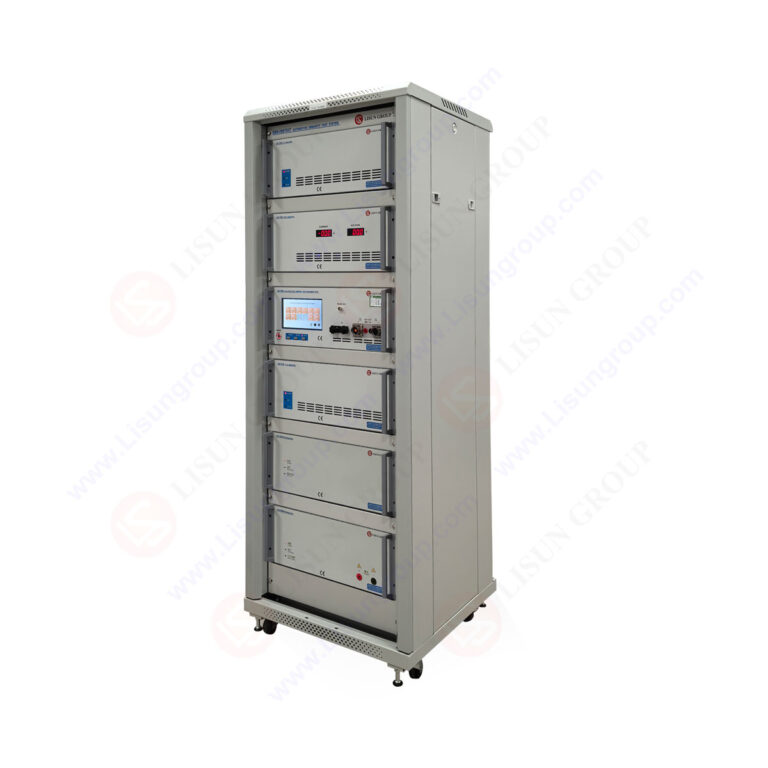
The VW 80000 transient immunity testing for 12V 24V 36V systems establishes the electrical stress environments that electronic control units (ECUs) must withstand under real-world vehicle conditions. This specification, developed by Volkswagen Group, defines pulse shapes, amplitudes, and test methodologies that align closely with ISO 7637-2:2021 and ISO 7637-3:2016. The standard covers conducted transient disturbances along supply lines, including load-dump pulses (P5a/P5b), inductive switching spikes (P1/P2a/P2b), and fast transient bursts (P3/P4). For 24V commercial vehicles and emerging 36V mild-hybrid architectures, the voltage amplitudes scale proportionally, demanding test systems with wide dynamic range. The LISUN EMS-ISO7637 system addresses this by generating precise pulse parameters across all voltage classes, ensuring compliance without requiring separate test platforms for each system voltage.
1.2 Key Differences Between 12V, 24V, and 36V Testing
The transition from 12V passenger car platforms to 24V commercial vehicle systems introduces significant changes in transient immunity testing parameters. Table 1 compares the critical pulse amplitudes for each voltage class under VW 80000 and ISO 7637-2:2021 guidelines. For instance, the load-dump pulse P5a in a 12V system typically reaches 65V to 87V, while in 24V systems the amplitude can exceed 123V. The 36V systems used in mild-hybrid and start-stop applications require even higher headroom, with test levels potentially reaching 180V. The LISUN EMS-ISO7637 system’s dual power supply design and high-voltage pulse generation modules (up to 200V) ensure accurate reproduction of these stress conditions without clipping or waveform distortion, which is critical for repeatable testing and reliable validation.
1.3 The LISUN EMS-ISO7637 System Architecture Overview
The LISUN EMS-ISO7637 automotive electronics transient immunity EMC testing system is engineered as an integrated platform combining pulse generation, coupling networks, and automated control. It supports the complete ISO 7637-2 and ISO 7637-3 waveform suite, including P1, P2a, P2b, P3, P4, P5a, and P5b pulses. The system features a modular design that allows users to configure up to eight different pulse modules simultaneously, eliminating the need to swap hardware between test sequences. With dual operation modes—touchscreen panel or PC-based software—the system provides flexibility for lab technicians and automated production environments. The built-in artificial network (AN) and capacitive coupling clamp (CCC) ensure proper coupling of transients to DUTs, complying with the coupling methods prescribed in VW 80000 and ISO standards.
2.1 Mapping VW 80000 Requirements to ISO 7637-2:2021 Pulse Types
The VW 80000 transient immunity testing for 12V 24V 36V systems references ISO 7637-2:2021 for conducted transient immunity along supply lines, with additional stipulations specific to Volkswagen’s vehicle platforms. The standard mandates testing with specific pulse parameters, including rise times, duration, and source impedances. For example, the P1 pulse (inductive load switching) requires a rise time of 1μs, duration of 2ms, and source impedance of 10Ω in 12V systems. For 24V systems, the amplitude increases from -75V to -150V. The LISUN EMS-ISO7637 system stores these predefined parameters in its firmware, allowing operators to select system voltage and pulse type with minimal configuration effort. This automation reduces the risk of human error during critical compliance testing, which is essential for certification bodies.
2.2 ISO 7637-3:2016 Coupling Methods for Transient Immunity Testing
For signals and data lines, ISO 7637-3:2016 defines capacitive coupling clamp (CCC) and direct coupling methods to inject transient pulses into DUT ports. The VW 80000 transient immunity testing for 12V 24V 36V systems requires compliance with these coupling techniques to simulate real-world interference on communication buses like CAN, LIN, and FlexRay. The LISUN EMS-ISO7637 system includes an integrated coupling network that supports both capacitive and direct coupling. The CCC approach uses a 100pF coupling capacitance to transfer fast transients without galvanic connection, while direct coupling requires a 10nF capacitor for pulse injection. The system’s built-in measurement port allows technicians to verify coupling voltage and ensure waveform fidelity, meeting the measurement requirements of ISO 7637-3:2016 clause 6.3.
2.3 GB/T 21437.2-2021 and GB/T 21437.3-2021 for the Chinese Market
For manufacturers targeting the Chinese automotive market, compliance with GB/T 21437.2-2021 (equivalent to ISO 7637-2:2004) and GB/T 21437.3-2021 (equivalent to ISO 7637-3:2007) is mandatory. The LISUN EMS-ISO7637 system is pre-configured to support both international and Chinese national standards, allowing seamless switching between test regimes. This dual-standard compliance is particularly valuable for component suppliers who need to satisfy multiple OEM requirements. The system automatically adjusts pulse parameters according to the selected standard, ensuring that a single test platform serves global markets. The integration of GB/T reference data into the PC software enables automated test report generation that meets Chinese certification body expectations, saving significant time during the R&D verification phase.
3.1 Multi-Module Pulse Generation Capabilities
The LISUN EMS-ISO7637 system’s core strength lies in its multi-module architecture for pulse generation. Each module is dedicated to specific pulse types, allowing simultaneous activation and independent parameter configuration. The system supports up to eight modules, covering P1, P2a, P2b, P3, P4, P5a, and P5b pulses. For the VW 80000 transient immunity testing for 12V 24V 36V systems, the equipment delivers pulse amplitudes up to ±200V for most waveforms, with P5 load-dump pulses reaching 400V for 36V system testing. The rise time accuracy is maintained within ±5% of standard values, and the pulse repetition frequency can be adjusted from 0.1Hz to 100Hz. These specifications exceed the minimum requirements outlined in ISO 7637-2:2021 Table 1, providing margin for accelerated stress testing.
3.2 Voltage System Adaptability and Output Accuracy
The dual power supply architecture of the EMS-ISO7637 system provides stable DC power for DUT operation during transient injection. It supports 12V, 24V, and 36V nominal systems, each with programmable voltage range and current limits. Table 2 presents the key output specifications for each voltage class, highlighting the system’s ability to maintain voltage accuracy within ±1% under load. The internal power supply can deliver up to 40A continuous current for 12V systems, sufficient for high-power DUTs like DC-DC converters in NEVs. For 36V systems, the current capability adjusts to 15A while maintaining the same voltage accuracy, ensuring consistent performance across all platform types.
Table 1: Comparison of key pulse parameters under ISO 7637-2:2021
| Pulse Type | Parameter | 12V System | 24V System | 36V System |
|---|---|---|---|---|
| P1 (Inductive Load) | Amplitude | -75V | -150V | -225V |
| P1 | Rise Time | 1μs | 1μs | 1μs |
| P2a (Current Interruption) | Amplitude | +37V | +74V | +111V |
| P2a | Duration | 50μs | 50μs | 50μs |
| P3 (Fast Transient) | Amplitude | ±75V | ±150V | ±225V |
| P3 | Repetition Freq. | 10kHz | 10kHz | 10kHz |
| P4 (Cranking) | Amplitude | -7V | -14V | -21V |
| P4 | Duration | 100ms | 100ms | 100ms |
| P5a (Load Dump) | Amplitude | +65V | +123V | +180V |
| P5a | Rise Time | 10ms | 10ms | 10ms |
3.3 Calibration Accuracy and Traceability
Calibration is critical for VW 80000 transient immunity testing for 12V 24V 36V systems, as test results must be repeatable and traceable to national standards. The LISUN EMS-ISO7637 system features an internal calibration mode that automatically corrects pulse amplitude and timing using a built-in high-precision measurement unit. The system’s voltage measurement accuracy is ±0.5% of reading, and timing accuracy is within ±1% of the set value. Additionally, the system supports external calibration via connection to certified reference instruments through the front-panel test ports. This dual approach ensures that the equipment maintains its specified performance over time, as required by ISO/IEC 17025 accreditation for testing laboratories. The calibration certificate generated by the system complies with international requirements, providing confidence for third-party audits.
4.1 Dual Touchscreen and PC Software Operation
The EMS-ISO7637 system offers dual control interfaces—a built-in 7-inch touchscreen and PC-based software—providing operational flexibility across different testing environments. The touchscreen interface is designed for rapid setup and execution of standardized tests, with a resistor-based touch technology that is resistant to electromagnetic interference. For the VW 80000 transient immunity testing for 12V 24V 36V systems, operators can navigate through predefined test routines, select pulse sequences, and adjust parameters without needing a computer. The PC software, compatible with Windows 10 and Windows 11, provides advanced features such as waveform visualization, real-time data logging, and customizable automation scripts via SCPI commands. This dual-mode design accommodates both laboratory R&D testing and industrial production line validation.
4.2 Automated Data Reporting and Test Sequence Management
In the context of VW 80000 transient immunity testing for 12V 24V 36V systems, comprehensive documentation is essential for ISO 7637 and OEM compliance audits. The LISUN PC software automatically generates test reports in PDF and Excel formats, including pulse parameters, coupling method used, DUT status, and pass/fail criteria. The software also supports user-defined templates that match specific OEM requirements, such as VW 80000 or GM 3172 formats. Automated test sequence management allows users to create complex test plans that combine multiple pulse types, voltage levels, and Coupling methods in a single execution run. This automation reduces test time by up to 30% compared to traditional manual testing, while ensuring that all standard requirements are thoroughly covered without procedural gaps.
5.1 Passenger Car Electronic Control Units (ECUs)
For passenger car applications, the VW 80000 transient immunity testing for 12V 24V 36V systems is primarily executed at 12V nominal system voltage. The EMS-ISO7637 system is well-suited for testing ECUs, infotainment systems, and sensor modules that are integral to modern vehicle functionality. R&D teams use the system to validate design robustness during early development phases, identifying transient immunity weaknesses before mass production. The system’s capability to generate P3 fast transients at high repetition rates is particularly relevant for testing CAN transceivers and other communication interface ICs. Production quality control teams also deploy the system for 100% inspection of critical safety components, ensuring that no defective units reach vehicle assembly.
5.2 Commercial Vehicles and 24V Systems
Commercial vehicles, including trucks, buses, and construction equipment, typically operate on 24V electrical systems. The VW 80000 transient immunity testing for 12V 24V 36V systems at 24V levels presents higher stress conditions due to proportionally larger transient amplitudes. The EMS-ISO7637 system’s high-voltage pulse generation modules are specifically designed to handle these increased levels, maintaining accurate waveform shapes without clipping. For vehicle manufacturers and suppliers in the commercial vehicle segment, the system supports testing of body control modules (BCMs), braking systems, and powertrain controllers. The ability to switch between 12V and 24V configurations within the same test platform is a significant operational advantage, reducing capital expenditure for laboratories that serve multiple vehicle categories.
5.3 New Energy Vehicles (NEVs) and 36V Mild-Hybrid Systems
The automotive industry’s shift toward electrification has introduced 36V systems in mild-hybrid and start-stop micro-hybrid applications. The VW 80000 transient immunity testing for 12V 24V 36V systems must therefore accommodate these emerging voltage platforms. The LISUN EMS-ISO7637 system is among the few commercial test platforms that explicitly support 36V nominal system testing, making it an essential tool for NEV component validation. Key DUTs include on-board chargers (OBCs), DC-DC converters (48V to 12V), and battery management systems (BMS). The system’s ability to generate load-dump pulses up to 400V with precise timing ensures that these power electronics components are tested under realistic worst-case conditions, aligning with ISO 16750-2:2023 requirements for electric propulsion systems.
6.1 ISO 16750-2:2023 Environmental Conditions and Electrical Loads
ISO 16750-2:2023 defines additional electrical load conditions beyond ISO 7637, including DC supply voltage variations and ripple voltage. The VW 80000 transient immunity testing for 12V 24V 36V systems complements these tests by focusing on transient disturbances. The LISUN EMS-ISO7637 system can be integrated with DC power supplies that simulate supply voltage variations, allowing combined testing that covers both static and transient conditions. This integrated approach is critical for validating sophisticated ECUs that must operate correctly over wide input voltage ranges (e.g., 6V to 16V for 12V systems). The system’s PC software supports remote programming of external power supplies, enabling fully automated test sequences that mimic real-world vehicle electrical environments.
6.2 GM 3172 and OEM-Specific Transient Testing Protocols
GM 3172 is General Motors’ dielectric withstand and transient immunity specification that shares many requirements with ISO 7637 but includes unique pulse configurations for specific component types. The LISUN EMS-ISO7637 system includes pre-programmed test routines for GM 3172, enabling manufacturers supplying multiple OEMs to switch standards without manual pulse parameter entry. This multi-standard support extends to VW 80000, making the system a versatile platform for Tier 1 suppliers and independent testing laboratories. The system’s firmware stores complete standard profiles, and software updates ensure ongoing compliance as standards evolve. This forward-compatibility protects the user’s investment and reduces total cost of ownership over the equipment’s lifecycle.
System Type: The EMS-ISO7637 automotive electronics transient immunity EMC testing system.
7.1 Buyer Considerations and System Configuration
When selecting equipment for VW 80000 transient immunity testing for 12V 24V 36V systems, technical buyers should evaluate several critical factors: pulse amplitude and waveform accuracy, voltage system ranges, coupling network flexibility, and automation capabilities. The LISUN EMS-ISO7637 system offers a compelling balance of these features, with a modular upgrade path that allows laboratories to expand testing capacity over time. The availability of TISI (Automotive Electronics Transient Immunity System) certification ensures that the equipment has been independently verified for calibration accuracy. Additionally, LISUN provides comprehensive support services, including installation, operator training, and after-sales technical assistance, which are essential for maintaining consistent test quality in accredited laboratories.
7.2 Cost-Effectiveness and Operational Efficiency
Compared to alternative test solutions that require separate hardware for each voltage system or pulse type, the LISUN EMS-ISO7637 system provides significant cost savings through its unified architecture. A multi-module configuration reduces laboratory floor space occupation and eliminates the need for multiple test benches. Operational efficiency gains are achieved through automated test sequences, which are critical in production environments where cycle time directly impacts throughput. For VW 80000 transient immunity testing for 12V 24V 36V systems, the system’s capacity to run continuous 24-hour test campaigns without operator intervention is a key advantage. The built-in safety interlocks protect both the DUT and the test equipment, reducing the risk of costly damage during validation testing.
Table 2: LISUN EMS-ISO7637 System Specifications versus Industry Requirements
| Specification | LISUN EMS-ISO7637 | ISO 7637-2:2021 Minimum Requirement | VW 80000 Requirement |
|---|---|---|---|
| Pulse Coverage | P1, P2a, P2b, P3, P4, P5a, P5b | P1-P5b (mandatory) | P1-P5b (all types) |
| Voltage Systems | 12V, 24V, 36V (switchable) | 12V/24V (specified) | 12V/24V/36V (for new) |
| Pulse Amplitude Range | ±400V max (P5a) | ±200V (12V) / ±400V (24V) | Per ISO + margin |
| Rise Time Accuracy | ±5% of standard | ±10% allowed | ±5% required |
| Coupling Methods | Direct + CCC (100pF, 10nF) | Both required | Both required |
| Test Automation | Full (PC + Touchscreen) | Not specified | Not specified |
| Calibration Traceability | Internal + External | Not specified | Recommended |
| Max Repetition Frequency | 100Hz | 10Hz | 50Hz |
The VW 80000 transient immunity testing for 12V 24V 36V systems represents a critical benchmark for automotive electronics reliability, and the LISUN EMS-ISO7637 Automotive Electronics Transient Immunity EMC Testing System delivers a robust, standards-compliant platform to meet these demands. By combining multi-module pulse generation, flexible voltage system support, dual-control automation, and high calibration accuracy, the system addresses the technical needs of R&D teams, quality control departments, and third-party laboratories. Its alignment with ISO 7637-2:2021, ISO 7637-3:2016, GB/T 21437.2-2021, GB/T 21437.3-2021, ISO 16750-2:2023, VW 80000, and GM 3172 ensures that manufacturers can confidently validate components for global markets. The operational efficiency gains from automation reduce testing costs, while the modular design provides future-proof scalability. As vehicle architectures continue to evolve toward higher voltage systems and complex power electronics, the VW 80000 transient immunity testing for 12V 24V 36V systems will remain an essential validation step, and the LISUN platform provides the technical foundation to meet those challenges reliably.
Q1: What are the primary differences between ISO 7637-2:2021 and VW 80000 for transient immunity testing?
A: The VW 80000 standard references ISO 7637-2:2021 for pulse types and test methodology but imposes stricter tolerances on pulse parameters and test conditions. For example, ISO 7637-2 allows rise time tolerance of ±10%, while VW 80000 requires ±5% accuracy for most pulses. Additionally, VW 80000 specifies test sequences that combine multiple pulses in a defined order, which is not explicitly covered in the ISO standard. The LISUN EMS-ISO7637 system accounts for these differences by storing standard-specific profiles, ensuring that tests executed on the same equipment comply with either standard simultaneously.
Q2: Can the LISUN EMS-ISO7637 system support testing of 36V systems without any hardware modification?
A: Yes, the LISUN EMS-ISO7637 system is designed with a dual power supply architecture that supports 12V, 24V, and 36V nominal system voltages without requiring hardware changes. The user selects the system voltage from the touchscreen or PC software, and the system automatically configures pulse amplitudes and source impedances according to the applicable standard. For 36V systems, the pulse generation modules operate at higher amplitudes (up to ±400V for load dump), and the internal power supply adjusts its output voltage to maintain correct DUT bias conditions. This capability is particularly useful for NEV component testing, where 36V mild-hybrid systems are becoming increasingly prevalent.
Q3: How does the EMS-ISO7637 ensure waveform fidelity for fast transients like P3 pulses?
A: The EMS-ISO7637 system uses high-bandwidth pulse generation circuits and low-inductance layout design to achieve rise times as fast as 5ns for P3 fast transients, as required by ISO 7637-2:2021 and VW 80000. The generator output impedance is carefully matched to the test setup to prevent waveform distortion caused by impedance mismatch. Additionally, the system includes a built-in oscilloscope port (50Ω BNC) that allows operators to monitor the actual waveform at the DUT terminals using an external oscilloscope. This real-time monitoring capability is critical for verifying that the injected transient matches the standard’s requirements, particularly when testing at higher voltage levels for 24V and 36V systems.
Q4: What level of training is required for operators to use the LISUN EMS-ISO7637 system effectively?
A: The LISUN EMS-ISO7637 system is designed with user-friendliness in mind, and basic operation can be learned within a few hours. The touchscreen interface provides intuitive navigation through menus, and the PC software includes wizards that guide users through test setup. However, for VW 80000 transient immunity testing for 12V 24V 36V systems, LISUN recommends that operators complete a two-day training program covering standard interpretation, system operation, waveform verification, and safety procedures. This training ensures that test results are accurate and compliant with relevant standards. LISUN provides this training at the time of installation or at scheduled intervals for existing customers, ensuring that laboratories maintain high testing competency levels for accreditation audits.