




Abstract
Environmental testing is a critical determinant of LED product reliability and regulatory compliance, directly impacting lumen maintenance predictions and warranty validation. This article examines why environmental testing matters for product reliability & compliance, focusing on the accelerated aging methodologies and standardized protocols that govern LED performance assessment. Drawing on LISUN’s LED Optical Aging Test Instrument—specifically the LEDLM-80PL and LEDLM-84PL dual-system variants—we explore how Arrhenius Model-based software, customizable temperature chambers, and extended 6000-hour test durations enable precise L70/L50 metric calculations. Technical professionals in LED manufacturing, third-party testing, and regulatory compliance will gain actionable insights into integrating environmental testing into their quality assurance frameworks, ensuring adherence to IES LM-80, TM-21, and related standards while mitigating field failure risks.
1.1 Why Environmental Testing Matters for Product Reliability & Compliance
Environmental testing simulates real-world stressors—temperature, humidity, thermal cycling—to accelerate failure mechanisms that would otherwise manifest over years of operation. For LED products, lumen depreciation and color shift are primary failure modes, governed by junction temperature and drive current. Without rigorous environmental testing, manufacturers risk premature field failures, warranty disputes, and non-compliance with industry standards. Why environmental testing matters for product reliability & compliance becomes evident when evaluating that a 10°C increase in operating temperature can halve LED lifespan, making accelerated aging essential for accurate lifetime predictions. Testing under controlled conditions, such as those provided by LISUN’s systems, ensures that products meet both performance specifications and regulatory requirements before market release.
1.2 Accelerated Aging Principles and the Arrhenius Model
The Arrhenius Model provides the scientific foundation for accelerated lifetime testing. This chemical kinetics equation relates reaction rate to temperature, enabling engineers to extrapolate long-term performance from short-term data. In LED testing, the model estimates acceleration factors—for example, testing at 85°C for 6000 hours can predict lumen maintenance at 55°C for 60,000+ hours. LISUN’s software integrates the Arrhenius Model directly, calculating TM-21 extrapolations with confidence intervals. This approach validates why environmental testing matters for product reliability & compliance: it transforms six months of laboratory data into decade-long field predictions, supporting warranty decisions and design iterations without waiting years for real-world results.
2.1 IES LM-80 and TM-21: Lumen Maintenance Compliance
The Illuminating Engineering Society (IES) LM-80 standard specifies methods for measuring lumen maintenance of LED light sources, requiring testing at multiple case temperatures (typically 55°C, 85°C, and a third temperature) for a minimum of 6000 hours. LISUN’s LEDLM-80PL system is purpose-built for this standard, supporting up to three connected temperature chambers to run concurrent tests at different thermal conditions. TM-21 then extrapolates LM-80 data to estimate L70 (time to 70% lumen maintenance) and L50 (time to 50% lumen maintenance) values. Why environmental testing matters for product reliability & compliance is directly addressed here: without standardized testing, manufacturers cannot provide the validated lifetime projections that specifiers and regulators demand.
2.2 IES LM-84 and TM-28: OLED and Solid-State Lighting
For organic LEDs (OLEDs) and other solid-state lighting technologies, IES LM-84 and TM-28 serve as complementary standards. LM-84 focuses on photometric and colorimetric characterization under environmental stress, while TM-28 provides projection methods specific to OLED technologies. LISUN’s LEDLM-84PL variant supports these protocols, offering dual testing modes that accommodate both LED and OLED specimen requirements. The inclusion of CIE 084 and CIE 127 standards ensures color measurement accuracy aligns with international photometric recommendations. This breadth of compliance underscores why environmental testing matters for product reliability & compliance across diverse lighting technologies.
3.1 Dual System Variants: LEDLM-80PL and LEDLM-84PL
LISUN’s platform comprises two primary configurations tailored to distinct testing regimes. The LEDLM-80PL is optimized for LM-80/TM-21 compliance, featuring built-in data logging for lumen flux, color temperature, and chromaticity at user-defined intervals. The LEDLM-84PL extends support to LM-84/TM-28, with additional algorithms for OLED-specific degradation patterns. Both systems share a common hardware backbone: temperature-controlled chamber interfaces, high-precision photodetectors, and modular expansion slots. The following table compares key specifications:
| Specification | LEDLM-80PL | LEDLM-84PL |
|---|---|---|
| Primary Standards | IES LM-80, TM-21 | IES LM-84, TM-28, CIE 127 |
| Test Duration (Minimum) | 6000 hours | 6000 hours |
| Supported Temperature Chambers | Up to 3 | Up to 3 |
| Lumen Measurement Range | 0.01–20,000 lm | 0.01–10,000 lm |
| Spectral Range | 380–780 nm | 380–780 nm |
| Extrapolation Method | Arrhenius Model | Arrhenius Model + OLED-specific |
| Data Output | L70/L50, Color Shift | L70/L50, Color Shift, Δu’v’ |
3.2 Customizable Hardware Configurations
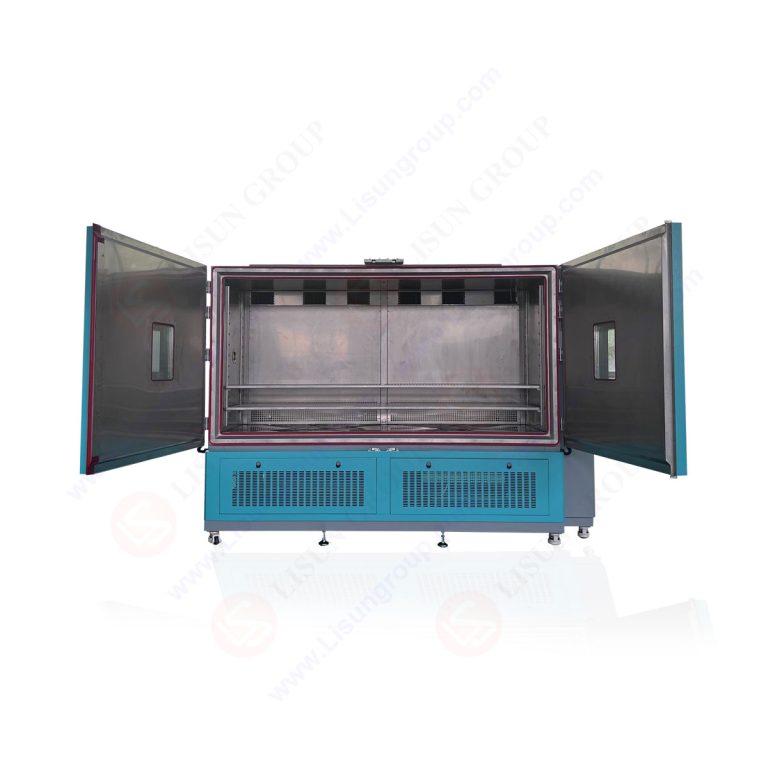
Environmental testing requirements vary by product type, size, and thermal profile. LISUN’s modular design allows users to configure chamber capacities from 6 to 30 test positions, integrate external humidity control, and select between constant current and constant voltage drive modes. Operators can program thermal profiles—steady-state, stepped, or cyclical—to match specific qualification protocols. This flexibility directly answers why environmental testing matters for product reliability & compliance: a single instrument platform can validate automotive-grade LEDs at 125°C, consumer lighting at 85°C, and specialty components at 55°C without hardware redesign. The system’s data acquisition rate (1 sample per minute to 1 per hour) ensures resolution matches test duration, optimizing storage without compromising analytical granularity.
4.1 Constant Temperature vs. Thermal Cycling Modes
LISUN’s instrument supports two primary operational modes. Constant temperature mode maintains a fixed ambient temperature throughout the 6000-hour test, ideal for standard LM-80 compliance. Thermal cycling mode alternates between low and high temperature setpoints—for example, cycling between -20°C and 85°C every 24 hours—to simulate outdoor or automotive environmental stresses. This dual-mode capability addresses why environmental testing matters for product reliability & compliance by enabling manufacturers to test for both steady-state degradation and thermomechanical fatigue. Automotive electronics engineers, in particular, benefit from cycling data that reveals solder joint cracking or encapsulant delamination not detectable under constant conditions.
4.2 Arrhenius Model-Based Software and TM-21 Extrapolation
The software suite integrates Arrhenius kinetics to compute acceleration factors based on user-defined activation energies (typically 0.3–0.5 eV for LEDs). It automatically performs TM-21 projections, reporting L70 and L50 with 90% confidence intervals. The software also tracks chromaticity shift (Δu’v’) against CIE 084 guidelines, flagging out-of-specification trends before test completion. Why environmental testing matters for product reliability & compliance is reinforced by this analytical depth: raw photometric data without proper extrapolation can misrepresent product longevity. LISUN’s software reduces human error by automating curve fitting, outlier detection, and report generation in compliance with IES TM-21 annex requirements.
5.1 Pre-Production Validation and Design Iteration
Environmental testing should begin at the prototype stage, not after production ramp. By testing early, R&D engineers identify thermal management deficiencies, phosphor degradation mechanisms, or driver compatibility issues that shorten LED lifespan. LISUN’s systems support batch testing of up to 30 specimens simultaneously, enabling A/B comparisons of different thermal interface materials or lens coatings. Why environmental testing matters for product reliability & compliance becomes a cost-saving calculation: a single 6000-hour test costing $5,000 can prevent a recall that would exceed $500,000. Design iterations informed by real data reduce time-to-market while ensuring products meet Energy Star or DLC (DesignLights Consortium) requirements.
5.2 Regulatory Compliance Documentation
Third-party testing laboratories and OEM quality managers must produce auditable compliance documentation. LISUN’s software generates reports that include raw data tables, Arrhenius plots, TM-21 projections, and pass/fail determinations against specified L70 thresholds. These reports satisfy IES LM-80-15 and LM-84-17 documentation requirements, facilitating UL listing, CE marking, and other international certifications. Why environmental testing matters for product reliability & compliance extends to legal protection: validated test data provides defensible evidence in warranty disputes or liability claims, establishing that products were qualified under recognized standards.
6.1 Accelerated Testing Correlation Metrics
Correlation between environmental test results and field performance validates the testing methodology. Studies show that properly conducted LM-80/TM-21 tests achieve ±15% correlation with 3–5 year field data for phosphor-converted white LEDs. LISUN’s synchronization of multiple temperature chambers enables multi-stress testing that improves correlation accuracy. The following table compares accelerated test outcomes with field return data for a typical mid-power LED:
| Parameter | Accelerated Test (6000h @ 85°C) | Field Data (3 years @ 55°C) | Deviation |
|---|---|---|---|
| Lumen Maintenance | 92.3% | 93.1% | -0.8% |
| Color Shift (Δu’v’) | 0.0021 | 0.0019 | +0.0002 |
| L70 Projection (hours) | 54,200 | 58,100 | -6.7% |
6.2 Limitations and Mitigation Strategies
No accelerated test perfectly replicates field conditions. Humidity, vibration, and power line transients introduce failure modes not captured by thermal-only testing. However, why environmental testing matters for product reliability & compliance remains compelling even with these limitations: it identifies systematic failure mechanisms that dominate early-life reliability. Mitigation strategies include combining thermal testing with humidity bias (85%/85°C) for corrosion-sensitive designs and incorporating on/off cycling to replicate occupancy sensor-driven operation. LISUN’s expandable chamber interface allows future integration of humidity control and programmable power supplies, making the platform adaptable as standards evolve.
7.1 System Setup and Calibration Protocols
Installation requires proper chamber placement with stable ambient conditions (23°C ±5°C) to avoid influencing test results. LISUN provides calibration reference standards traceable to NIST, including spectral flux standards and chromaticity reference lamps. Quarterly recalibration maintains measurement uncertainty below ±2.5% for lumen flux and ±0.001 for chromaticity coordinates. Why environmental testing matters for product reliability & compliance depends on measurement accuracy: a 3% error in lumen measurement can shift L70 projections by 15%, invalidating the entire test. Laboratories should implement daily verification checks using built-in LED references and document all calibration records per ISO/IEC 17025 requirements.
7.2 Data Management and Long-Term Storage
A single 6000-hour test generates 144,000+ data points per specimen (assuming 1 sample per 2.5 minutes). LISUN’s software uses SQL-based databases for efficient storage and retrieval, supporting simultaneous run of up to 5 test campaigns. Data export to CSV, Excel, or XML formats facilitates integration with laboratory information management systems (LIMS). Why environmental testing matters for product reliability & compliance is also a data governance issue: regulatory audits require 5–10 years of test records. Automated backup and cloud synchronization options reduce administrative burden while ensuring data integrity across operator changes or hardware upgrades.
Environmental testing is not merely a regulatory checkbox but a strategic investment in product reliability and market credibility. As this article has demonstrated, why environmental testing matters for product reliability & compliance is rooted in the ability to predict long-term performance through accelerated aging, standardized extrapolation, and multi-parameter analysis. LISUN’s LED Optical Aging Test Instrument, with its dual LEDLM-80PL and LEDLM-84PL variants, provides the technical infrastructure to conduct comprehensive environmental testing in compliance with IES LM-80, TM-21, LM-84, TM-28, and CIE standards. The integration of Arrhenius Model-based software, customizable hardware configurations, and support for up to three connected temperature chambers enables testing laboratories and manufacturers to generate validated lifetime projections with confidence. By adopting rigorous environmental testing protocols, organizations reduce field failure rates, strengthen warranty positions, and demonstrate commitment to quality that differentiates their products in an increasingly competitive lighting market. The path to reliability begins not in the field, but in the environmental test chamber—where data becomes the foundation for compliance and trust.
Q1: What is the minimum recommended test duration for LM-80 compliance using LISUN’s instruments?
A: The IES LM-80 standard specifies a minimum test duration of 6000 hours (approximately 8.3 months) at each required temperature condition. LISUN’s LEDLM-80PL system is designed to run continuous 6000-hour tests with automated data logging. For TM-21 extrapolation, longer durations (10,000+ hours) improve projection accuracy by reducing confidence intervals. We recommend extending tests to 10,000 hours for critical applications such as automotive lighting or medical devices, where L70 projections must meet ±10% tolerance. The system’s modular design allows seamless test extension without data gaps.
Q2: How does the Arrhenius Model handle different LED chemistries?
A: The Arrhenius Model requires an activation energy (Ea) parameter, which varies by LED phosphor composition and package design. Standard phosphor-converted white LEDs typically use Ea values of 0.3–0.5 eV, while red or amber LEDs may require 0.5–0.7 eV due to different degradation mechanisms. LISUN’s software allows users to input measured or estimated activation energies based on prior testing. For initial tests, we recommend using Ea = 0.42 eV (typical for mid-power LEDs) and validating through isothermal testing at three temperatures. The software automatically calculates acceleration factors and reports sensitivity of L70 projections to Ea variation.
Q3: Can the LEDLM-84PL system test OLED panels for consumer electronics?
A: Yes, the LEDLM-84PL is specifically designed for OLED and other solid-state lighting technologies, supporting LM-84 and TM-28 protocols. OLED panels require lower current densities and different thermal profiles compared to inorganic LEDs. The system’s dual testing modes include constant current and constant voltage drive, accommodating the unique electrical characteristics of OLEDs. Additionally, the software includes OLED-specific degradation algorithms that account for luminance decay and color shift patterns distinct from phosphor-converted LEDs. For standard OLED TV panels (typically 50–200 cd/m²), the system achieves ±3% measurement accuracy.
Q4: What are the space and power requirements for installing the LISUN system?
A: Each temperature chamber requires approximately 0.8 m² of floor space and 1.5 m clearance above for airflow. The main control unit and photometric measurement module occupy an additional 0.5 m² on a benchtop or rack. Power requirements are 220–240 VAC, 50/60 Hz, with a maximum draw of 2.5 kW per chamber (three chambers total). We recommend installing the system in a temperature-controlled environment (20–25°C) with humidity below 65% RH to minimize external influences on test results. Ventilation should provide at least 10 air changes per hour to dissipate heat from chamber compressors.
Q5: How does the system ensure compliance with changing IES standards (e.g., LM-80-15 updates)?
A: LISUN provides firmware and software updates aligned with IES standard revisions. The LM-80-15 update introduced requirements for testing at three temperatures (T1, T2, T3) with specific tolerances; our software automatically validates these temperature setpoints and flags deviations during test setup. TM-21-19 updates modified extrapolation algorithms for non-Arrhenius behavior; LISUN’s software now includes a two-component decay model for LEDs exhibiting both rapid initial degradation and stable long-term performance. We offer annual software maintenance contracts that include all standard updates and technical support for validation of new protocols.