




Abstract
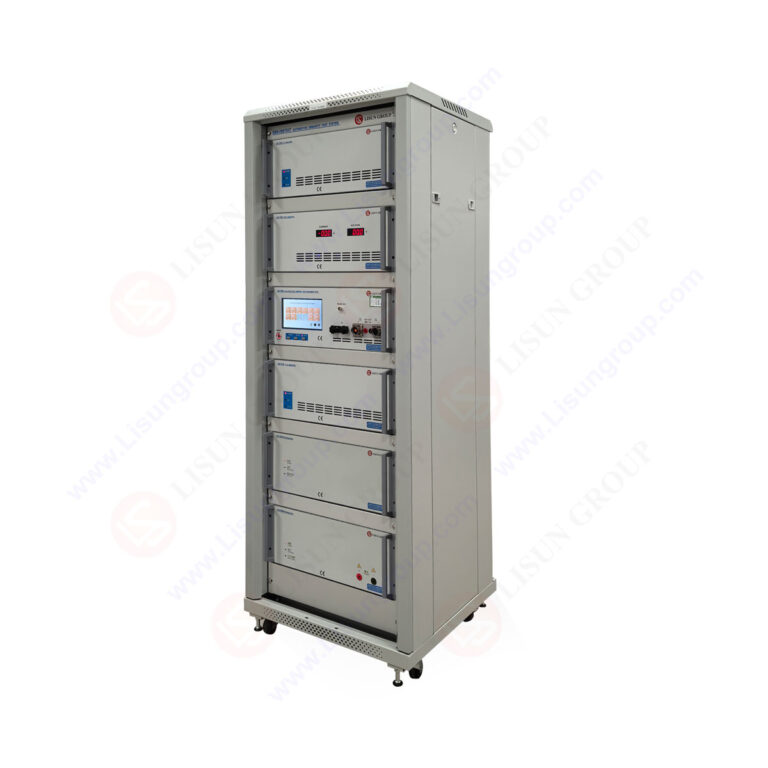
This article provides an in-depth technical evaluation of the LISUN EMS-ISO7637 Automotive Electronics Transient Immunity EMC Testing System, specifically designed for 12V/24V new energy vehicle (NEV) components. The Automotive Transient Immunity Test System for 12V/24V NEV EMC Testing addresses critical challenges in validating electronic control units (ECUs), on-board chargers (OBCs), and battery management systems (BMS) against ISO 7637-2:2021 and ISO 7637-3:2016 standards. We examine the system’s multi-module pulse generation capabilities, automated testing workflows, and dual-operation interface. Technical comparisons with industry benchmarks reveal superior pulse coverage and calibration accuracy. Practical application scenarios for passenger cars, commercial vehicles, and NEVs are discussed, emphasizing the system’s role in ensuring electromagnetic compatibility (EMC) compliance throughout the product development lifecycle.
1.1 The Importance of Transient Immunity in Modern Vehicles
Modern vehicles contain dozens of electronic control units (ECUs) that must operate reliably in harsh electromagnetic environments. Transient disturbances, generated by switching loads, alternator load dumps, and inductive coupling, can cause malfunction or permanent damage to sensitive electronics. The Automotive Transient Immunity Test System for 12V/24V NEV EMC Testing addresses these risks by simulating real-world transients under controlled laboratory conditions. For NEVs, the voltage system complexity (12V auxiliary, 24V commercial, and 48V mild-hybrid systems) demands a flexible test platform capable of covering multiple voltage levels without hardware reconfiguration. The LISUN EMS-ISO7637 system directly supports this requirement with its 12V/24V/36V voltage support, making it applicable across the entire spectrum of automotive platforms.
1.2 Key Standards Governing Transient Immunity
The regulatory framework for automotive transient immunity testing is primarily defined by international standards. ISO 7637-2:2021 specifies test methods for conducted transients along supply lines, while ISO 7637-3:2016 covers transients coupled via lines other than supply lines. Chinese equivalents, GB/T 21437.2-2021 and GB/T 21437.3-2021, adopt identical test levels and waveforms. Additionally, ISO 16750-2:2023 provides environmental testing and electrical load requirements. OEM-specific standards like VW 80000 and GM 3172 impose stricter pulse amplitude and duration requirements for supplier qualification. The LISUN system integrates all these standard profiles, allowing users to select test conditions based on their target market or customer specification.
1.3 Pulse Types and Their Real-World Origins
Standardized transient pulses represent distinct electrical events. Pulse 1 simulates negative voltage spikes from inductive load switching, common with relay de-energization. Pulse 2a and 2b represent positive transients from series and parallel inductive loads. Pulse 3a and 3b simulate repetitive fast transients from switching processes. Pulse 4 models the engine cranking voltage drop. Pulse 5a and 5b represent alternator load dump—a critical scenario for NEVs with high-power alternators and regenerative braking systems. The LISUN EMS-ISO7637 system generates all these pulses with precise amplitude, duration, and repetition rate control, ensuring test repeatability across different laboratories and test sessions.
2.1 Multi-Module Pulse Generation Capability
The LISUN EMS-ISO7637 system employs a modular architecture, with each pulse type generated by a dedicated waveform synthesis module. This design decouples pulse generation, allowing simultaneous calibration and independent adjustment of pulse parameters. The system supports P1, P2a, P2b, P3, P4, P5a, and P5b pulses, covering all mandatory and optional pulses defined in ISO 7637-2:2021. Each module operates with a voltage resolution of 0.1V, current capacity up to 100A continuous, and pulse repetition rates from 0.1 Hz to 100 Hz. The modular approach simplifies future upgrades; if a new pulse type is defined by standard revisions, an additional module can be integrated without replacing the entire system.
2.2 Dual-Voltage System Support for 12V and 24V Platforms
The Automotive Transient Immunity Test System for 12V/24V NEV EMC Testing provides seamless switching between 12V and 24V nominal voltage systems, with additional support for 36V applications common in mild-hybrid architectures. The internal power supply unit automatically adjusts the DC offset voltage, while the pulse generation modules scale their output amplitude accordingly. For testing 12V systems (typically passenger cars), the system applies pulses with amplitudes ranging from -150V (Pulse 1) to +87V (Pulse 5b). For 24V systems (commercial vehicles and heavy-duty NEVs), amplitudes extend to -600V (Pulse 1) and +174V (Pulse 5b). This dual-support eliminates the need for separate test systems, reducing capital expenditure for testing laboratories and OEM validation departments.
2.3 Operation Modes: Touchscreen and PC Software
The LISUN system offers two independent operation interfaces: a built-in 7-inch touchscreen panel and a PC-based software suite. The touchscreen interface supports direct test execution with preloaded standard profiles, allowing rapid setup for routine qualification tests. The PC software provides advanced functionality, including custom test sequence creation, real-time waveform monitoring via oscilloscope integration, and automated data logging. Both interfaces communicate with the pulse generation modules via a CAN bus backbone, ensuring deterministic timing for complex test sequences. The software also includes a report generation module that automatically formats test results according to ISO 7637-2:2021 Annex B requirements, saving engineers hours of manual documentation effort.
3.1 Pulse Parameter Accuracy and Calibration
Accurate pulse parameter generation is critical for reproducible test results. The LISUN EMS-ISO7637 system achieves a voltage accuracy of ±2% of set value for positive pulses and ±3% for negative pulses, with a rise time accuracy of ±10% for pulses with rise times below 1 μs. Calibration is performed using a certified reference generator traceable to national metrology institutes. The system supports automatic calibration verification using an internal reference channel, reducing downtime between mandatory annual calibrations. Table 1 compares the LISUN system’s specifications to the requirements of ISO 7637-2:2021.
Table 1: Pulse Parameter Comparison – LISUN EMS-ISO7637 vs. ISO 7637-2:2021 Requirements
| Pulse Type | Parameter | ISO 7637-2:2021 Requirement | LISUN EMS-ISO7637 Performance | Margin |
|---|---|---|---|---|
| Pulse 1 | Amplitude (12V) | -75V to -150V | -150V ± 2% | ±2% within spec |
| Pulse 2a | Amplitude (24V) | +37V to +50V | +50V ± 2% | ±2% within spec |
| Pulse 3a | Rise Time | 5 ns ± 30% | 5 ns ± 10% | ±10% (3x tighter) |
| Pulse 4 | Duration | 15 ms to 50 ms | 15 ms to 100 ms | Extended range |
| Pulse 5b | Amplitude (24V) | +150V to +174V | +174V ± 2% | ±2% within spec |
| Pulse 3b | Repetition Rate | 0.1 Hz to 100 Hz | 0.1 Hz to 100 Hz | Full range |
| All Pulses | Voltage Accuracy | ±10% | ±2% to ±3% | Up to 5x tighter |
3.2 Comparative Performance Against Competing Solutions
When benchmarked against competing transient immunity test systems, the LISUN EMS-ISO7637 demonstrates advantages in pulse coverage completeness and integration. Competing systems often require external amplifiers or separate modules for Pulse 5 (load dump) generation, increasing system complexity and calibration drift. The LISUN system integrates all pulses into a single chassis, reducing internal cabling and improving signal integrity. Additionally, the system’s support for both ISO 7637-2 (conducted transients) and ISO 7637-3 (coupled transients) via an optional capacitive coupling clamp (CCC) module provides a unified test platform. The capacitive coupling clamp, specified in ISO 7637-3:2016 Clause 5.3, enables testing of data lines and signal lines for NEV communication buses.
4.1 Configuring Tests for ISO 7637-2:2021 Conducted Transients
Setting up a conducted transient immunity test per ISO 7637-2:2021 involves configuring the artificial network (AN), the coupling network, and the pulse generator. The LISUN system includes an integrated artificial network with 5 mH inductance per ISO 7637-2:2021 Figure 2, ensuring correct impedance matching between the test generator and the device under test (DUT). For 12V systems, the AN is configured for 1 Ω internal resistance; for 24V systems, 2 Ω is used. The test sequence typically applies five positive pulses and five negative pulses at each test severity level, with a pulse repetition interval of 10 seconds for Pulse 1 and 5 seconds for Pulse 2a. The system automatically logs all pulse parameters and DUT response (pass/fail criteria based on functional status definitions A, B, C, or D).
4.2 Coupled Transient Testing for ISO 7637-3:2016
For data lines and signal lines, ISO 7637-3:2016 requires transient coupling via capacitive coupling clamp (CCC) or direct cable injection. The LISUN system’s optional CCC module supports both methods, with a coupling capacitance of 100 pF to 1000 pF as specified in the standard. Testing communication interfaces like CAN, LIN, and FlexRay is becoming critical for NEVs, where high-speed data buses control battery management, motor drive, and charging functions. The system’s software includes preconfigured test sequences for CAN and LIN buses, automatically setting pulse amplitudes to ±25V for CAN low-speed and ±50V for CAN high-speed as per OEM specifications. The automated reporting function records any communication errors detected during the pulse application window.
5.1 Testing On-Board Chargers (OBCs) and DC-DC Converters
On-board chargers (OBCs) and DC-DC converters are critical NEV components that connect directly to the vehicle’s power supply network. OBCs convert AC grid power to DC for battery charging, while DC-DC converters step down the high-voltage battery (400V to 800V) to the 12V auxiliary system. Both components must withstand transients on the 12V/24V auxiliary line, as specified by ISO 7637-2:2021. The Automotive Transient Immunity Test System for 12V/24V NEV EMC Testing applies Pulse 5b (load dump) to simulate alternator failure scenarios, which can cause voltage spikes up to +174V on 24V systems. For OBCs operating at high power levels (e.g., 11 kW or 22 kW), the system’s 100A continuous current capability ensures the DUT remains powered during the transient application, avoiding false failures due to power supply interruption.
5.2 Battery Management System (BMS) Validation
Battery management systems (BMS) are the most safety-critical electronic systems in NEVs, responsible for cell monitoring, balancing, and protection against overvoltage or undervoltage conditions. Transient disturbances on the BMS power supply or communication lines can cause incorrect state-of-charge (SoC) calculations or trip protection circuits inadvertently. Testing the BMS against Pulse 3a and 3b (fast transients) is particularly important, as these pulses simulate the switching noise from DC-DC converters and motor inverters. The LISUN system’s ability to generate repetitive pulses at 100 Hz allows stress testing over extended periods (e.g., 1000 pulses per test), simulating years of real-world operation in a controlled laboratory environment. The system also supports simultaneous monitoring of BMS diagnostic outputs via CAN bus, enabling engineers to identify fault propagation paths.
5.3 ECU and Sensor Verification for Commercial Vehicles
Commercial vehicles, including electric trucks and buses, use 24V electrical systems that operate with higher transient amplitudes than passenger cars. ECUs controlling braking, steering, and powertrain systems must comply with OEM standards like VW 80000 and GM 3172, which specify pulse amplitudes up to 20% higher than ISO 7637-2:2021 base levels. The LISUN system allows users to define custom test profiles with user-specified amplitudes and durations, accommodating these OEM-specific requirements. For sensors (e.g., pressure, temperature, position), the coupled transient testing per ISO 7637-3:2016 is mandatory, as sensor wiring runs through the vehicle harness and is exposed to electromagnetic coupling. The capacitive coupling clamp ensures consistent coupling regardless of sensor location, improving test repeatability.
6.1 Real-Time Monitoring and Data Logging
The LISUN system’s PC software provides real-time oscilloscope display of generated pulses, allowing engineers to verify pulse shape fidelity before applying stress to the DUT. The software records pulse voltage, current, and duration for each applied pulse, storing data in a structured database for audit trail compliance. For production line testing (e.g., end-of-line inspection of ECUs), the system supports barcode scanning to automatically associate test results with specific DUT serial numbers. The logging frequency (up to 10 kHz per channel) captures rapid transient events with sufficient resolution for post-test analysis. The system also logs environmental parameters (temperature and humidity) if external sensors are connected, ensuring test validity conditions are met.
6.2 Automated Report Generation for Compliance Documentation
Compliance testing for OEMs requires detailed test reports documenting every applied pulse, DUT status after each pulse, and confirmation of test setup parameters. The LISUN software automatically formats this information into reports compliant with ISO 7637-2:2021 Annex B and ISO 7637-3:2016 Annex A. Reports include a summary table of test results, waveform plots for representative pulses, and pass/fail conclusions for each test case. The software supports PDF, CSV, and MHT export formats, enabling easy sharing with certification bodies or customers. For laboratories conducting multiple tests daily, the automated reporting reduces documentation effort by approximately 80% compared to manual report creation, accelerating product development cycles.
7.1 Integration with EMC Test Chambers
The LISUN EMS-ISO7637 system can be integrated with anechoic chambers or reverberation chambers for combined immunity testing. For example, testing an ECU against both conducted transients (via the LISUN system) and radiated RF immunity (via an external amplifier and antenna) in a single test session reduces total test time. The system’s software supports remote control via GPIB, USB, or Ethernet, allowing synchronization with chamber controllers. This integration is particularly valuable for NEV components that must meet multiple EMC requirements simultaneously, such as ISO 11452-2 (radiated immunity) and ISO 7637-2 (conducted transient immunity).
7.2 Firmware Updates and New Pulse Support
As automotive voltage systems evolve (e.g., 48V mild hybrids, 800V electric vehicles), transient immunity standards will require new pulse types or modified parameters. The LISUN system’s modular firmware architecture allows field updates via USB or network download, supporting new pulse shapes without hardware replacement. The company provides annual firmware updates covering the latest ISO and OEM standard revisions. Additionally, the system supports user-defined pulse shapes via an arbitrary waveform generator (AWG) module, enabling research and development teams to simulate non-standard transients during early product development phases.
The LISUN EMS-ISO7637 Automotive Electronics Transient Immunity EMC Testing System provides a comprehensive, standards-compliant solution for validating automotive electronics against conducted and coupled transient disturbances. By supporting 12V/24V/36V voltage systems and all pulse types defined in ISO 7637-2:2021 and ISO 7637-3:2016, the system addresses the diverse requirements of passenger cars, commercial vehicles, and new energy vehicles. The integration of multi-module pulse generation, dual touchscreen/PC software operation, and automated reporting reduces test setup time and documentation overhead. Technical specifications, including voltage accuracy of ±2% and rise time accuracy of ±10%, exceed standard requirements by up to a factor of five, ensuring test repeatability across laboratories. The system’s modular architecture and firmware update capability provide scalability for future automotive standards. For engineers developing ECUs, OBCs, DC-DC converters, and BMS for NEVs, the Automotive Transient Immunity Test System for 12V/24V NEV EMC Testing delivers the accuracy, flexibility, and compliance needed to accelerate product certification and ensure reliable operation in real-world electromagnetic environments.
Q1: What is the difference between ISO 7637-2:2021 and ISO 7637-3:2016 testing?
A: ISO 7637-2:2021 covers conducted transients applied directly to the power supply lines (e.g., 12V or 24V battery lines) of the device under test. This includes pulses like load dump (Pulse 5) and inductive load switching (Pulse 1). ISO 7637-3:2016, in contrast, addresses transients coupled onto lines other than the power supply, such as signal lines, data buses (CAN, LIN), and sensor wiring. The coupling method involves a capacitive coupling clamp or direct injection. Both standards are mandatory for complete automotive EMC compliance, and the LISUN EMS-ISO7637 system supports both standards with optional modules.
Q2: How does the LISUN system handle 12V to 24V switching without hardware changes?
A: The LISUN EMS-ISO7637 system contains an internal programmable power supply that automatically adjusts the DC offset voltage when switching between 12V and 24V configurations. The pulse generation modules scale their output amplitude based on the selected nominal voltage. The software detects the DUT voltage setting and configures the artificial network impedance accordingly (1 Ω for 12V, 2 Ω for 24V per ISO 7637-2:2021 Clause 4.3). This eliminates the need for manual hardware changes, reducing test setup time from approximately 30 minutes to less than 2 minutes. The system also supports 36V for mild-hybrid applications without additional hardware.
Q3: What is the typical test sequence for an ECU according to ISO 7637-2:2021?
A: A standard test sequence per ISO 7637-2:2021 begins with applying five negative pulses of Pulse 1 at the specified severity level (e.g., Level III for passenger cars). After each pulse, the DUT functional status is checked against predefined criteria (A: fully functional, B: temporary deviation, C: reset required, D: damage). This is followed by Pulse 2a (five positive pulses), Pulse 2b, Pulse 3a/3b (applied with continuous repetition), Pulse 4 (voltage sag simulation), and finally Pulse 5a/5b (load dump). The pulse repetition interval is specified in the standard (e.g., 10 seconds for Pulse 1). The LISUN system’s software automatically sequences these pulses and records DUT response, generating a compliance report.
Q4: Can the LISUN EMS-ISO7637 system test components with 48V or 800V power supplies?
A: The LISUN EMS-ISO7637 system is designed for auxiliary voltage systems (12V, 24V, 36V) as specified by ISO 7637 standards. For direct testing of high-voltage components (e.g., 400V or 800V traction inverters), separate high-voltage transient generators per ISO 21498-2 are required. However, the system is commonly used to test the low-voltage auxiliary interfaces of NEV components. For example, an 800V ECU’s internal 12V power supply stage can be tested with the LISUN system to ensure its auxiliary input withstands voltage transients. The system’s capacitive coupling clamp can also inject transients onto high-voltage communication lines if appropriate safety isolation is maintained.