Abstract
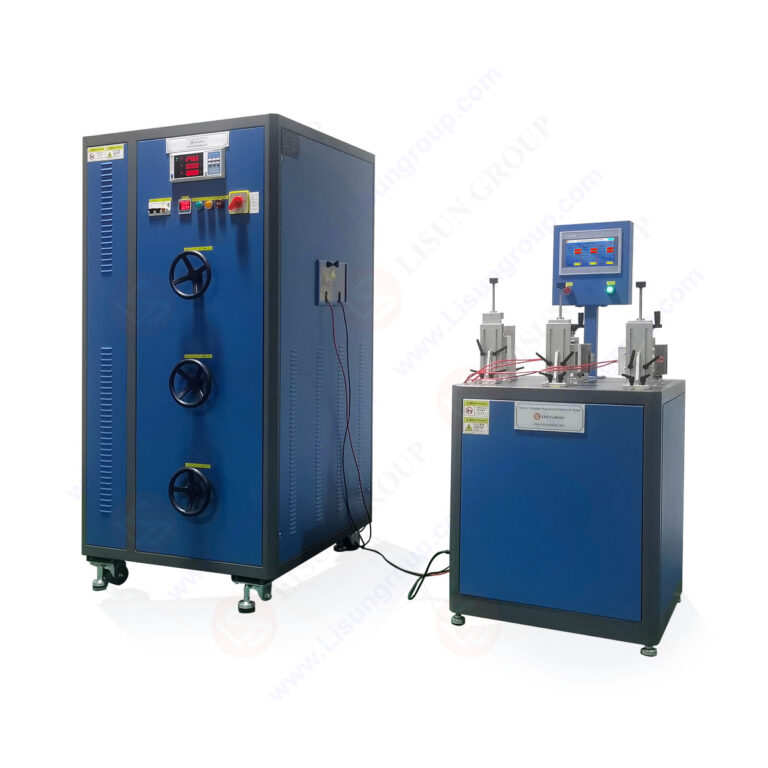
This technical article examines the critical role of automotive switch testing for compliance and reliability in modern electrical component manufacturing. The LISUN CZKS-3 series serves as a benchmark solution for verifying switch durability, plug/socket breaking capacity, and lifecycle performance against international standards. As automotive electronics systems demand higher reliability thresholds, testing engineers require automated systems capable of replicating millions of operational cycles under controlled electrical loads. This article provides a data-driven analysis of testing methodologies, standard compliance frameworks, and practical implementation strategies. Topics covered include mechanical endurance verification, electrical fatigue failure analysis, contact adhesion testing, and the integration of PLC-controlled actuation systems. The discussion emphasizes how precise parameter measurement and repeatable test conditions enable manufacturers to achieve certification for IEC 60884-1, IEC 60669-1, and other governing standards. Testing laboratories and quality control engineers will find actionable insights for designing robust validation protocols.
1.1 Defining Switch Durability and Lifecycle Requirements
Automotive switches must withstand extreme environmental conditions and high-frequency operation over vehicle lifespans exceeding 10 years. Switch durability testing evaluates mechanical wear, electrical contact degradation, and thermal stress accumulation through repeated actuation cycles. The LISUN CZKS-3 series provides programmable stroke lengths, actuation speeds, and electrical load profiles to simulate real-world usage patterns. Testing parameters include minimum of 100,000 cycles for interior switches and up to 500,000 cycles for critical safety components like ignition switches or brake light actuators.
1.2 Electrical Load and Breaking Capacity Considerations
Breaking capacity testing assesses a switch’s ability to safely interrupt current flow without arcing, welding, or excessive temperature rise. For automotive applications, typical test loads range from 0.1A at 12VDC for signal switches to 30A at 24VDC for power distribution components. The CZKS-3A variant integrates resistive, inductive, and capacitive load banks to replicate diverse circuit conditions. Clause 19.2 of IEC 61058-1 specifies that switches must interrupt rated current for a minimum of 50 operations without contact welding or insulation failure.
2.1 IEC 60884-1 and GB/T 2099.1: Plug and Socket Testing
These standards govern the safety and performance requirements for plugs and socket-outlets used in household and similar applications. Section 21 of IEC 60884-1 mandates mechanical endurance testing for 10,000 cycles of insertion and withdrawal at rated voltage and current. The LISUN CZKS-3P configuration includes precision force sensors and alignment guides to ensure consistent engagement angles during repeated mating cycles. Test parameters include contact resistance measurement below 50 mΩ after testing and temperature rise limited to 45°C above ambient.
2.2 IEC 60669-1: Switch Durability for Fixed Installations
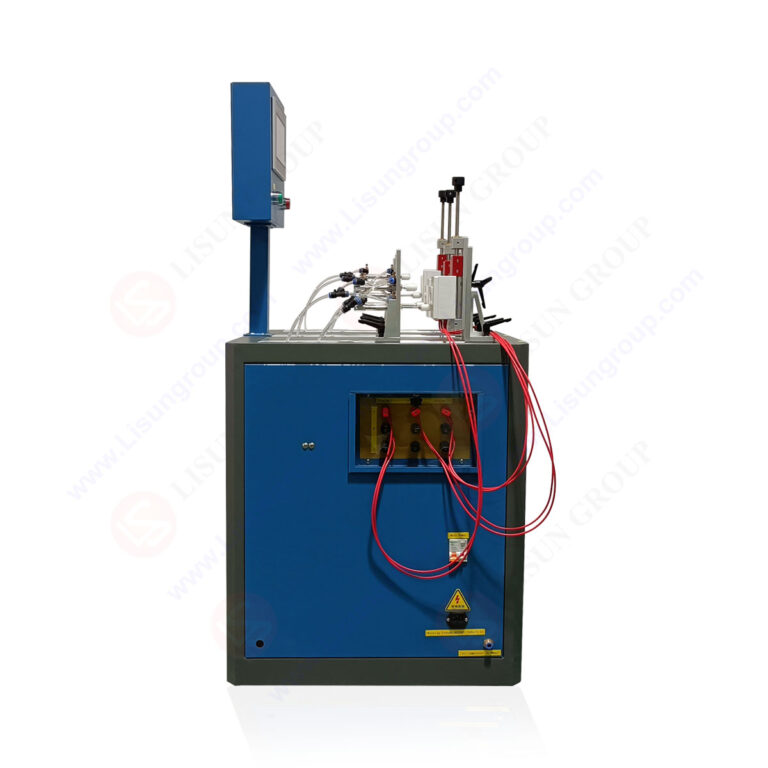
IEC 60669-1 applies to switches for fixed electrical installations, covering mechanical and electrical endurance requirements. Clause 19 requires switches to withstand 10,000 to 30,000 operating cycles depending on rated current, with no mechanical failure or electrical discontinuity exceeding 0.1 seconds. The CZKS-3S variant supports simultaneous testing of up to 6 samples with independent cycle counters and failure detection systems. This configuration enables accelerated life testing while maintaining individual sample traceability.
3.1 Model Variants and Capability Overview
The CZKS-3 series includes four primary configurations optimized for different testing scenarios. Below is a comparative specification table:
| Parameter | CZKS-3 | CZKS-3P | CZKS-3S | CZKS-3A |
|---|---|---|---|---|
| Test Stations | 2 | 4 | 6 | 4 |
| Max Actuation Force (N) | 50 | 100 | 150 | 100 |
| Stroke Length Range (mm) | 5-30 | 5-50 | 5-60 | 5-50 |
| Cycle Speed Range (ops/min) | 5-30 | 5-60 | 5-80 | 5-60 |
| Electrical Load Capacity (A) | 10 | 20 | 30 | 40 |
| Voltage Range (VDC) | 6-24 | 6-48 | 6-60 | 6-72 |
| Data Logging Channels | 4 | 8 | 12 | 8 |
3.2 Core Mechanical and Electrical Architecture
All CZKS-3 series testers utilize cylinder-driven actuation with servo-controlled position feedback. The mechanical system achieves positioning accuracy of ±0.1mm and force measurement resolution of 0.01N. PLC-based control architecture allows programming of complex test sequences including variable dwell times, multi-stage actuation profiles, and conditional branching based on contact resistance thresholds. The integrated data acquisition system samples voltage, current, and temperature at 1kHz per channel.
4.1 Mechanical Endurance Test Protocol
Mechanical endurance testing validates switch mechanism longevity without electrical load. The protocol involves:
- Pre-conditioning at 85°C for 96 hours per IEC 60068-2-2
- 100,000 cycles at maximum rated actuation speed
- Continuous monitoring of actuation force deviation (<20% from initial value)
- Post-test inspection for cracks, deformation, or material transfer
The LISUN CZKS-3 systems automatically pause testing when force deviation exceeds programmable thresholds, preventing catastrophic failure of test samples.
4.2 Electrical Endurance and Breaking Capacity Verification
Electrical endurance testing combines mechanical cycling with applied electrical loads. For automotive switch testing for compliance and reliability, test conditions follow IEC 61058-1 Clause 17:
- 50,000 cycles at rated resistive load
- 10,000 cycles at rated inductive load (power factor 0.6-0.7)
- 5,000 cycles at capacitive load (100μF parallel)
- Contact resistance measurement after every 1,000 cycles
Breaking capacity testing subjects switches to 1.5x rated current for 10 operations, verifying arc extinction within 5ms. The CZKS-3A model includes high-speed cameras (10,000 fps) for arc visualization and analysis.
5.1 Contact Adhesion and Welding Phenomena
Contact adhesion occurs when micro-welds form between mating surfaces due to high current density or inadequate contact pressure. Research indicates that silver-tin oxide contacts exhibit 60% lower adhesion rates compared to pure silver contacts under DC loads above 10A. The LISUN CZKS-3 series incorporates real-time contact resistance measurement at 4-wire Kelvin configuration, detecting adhesion events as resistance drops below 1mΩ during open-state conditions.
5.2 Material Transfer and Erosion Analysis
Material transfer between contacts accelerates surface degradation and alters gap distances. Testing protocols include before-and-after surface profilometry using integrated laser scanners in the CZKS-3S variant. Key metrics include:
- Anode erosion depth: typically 0.1-0.5mm after 10,000 cycles at 20A
- Cathode material buildup: limited to <0.3mm height per IEC 61058-1 Annex C
- Surface roughness change: Ra value increase <2μm from initial condition
Failure mode analysis reports generated by the test system include 3D surface maps and elemental composition data from optional EDX spectroscopy integration.
6.1 Automotive Interior Switch Validation
Interior switches for window lifts, seat adjustments, and infotainment systems require testing at 12VDC with current ratings from 0.5A to 5A. The CZKS-3P configuration enables simultaneous testing of four switch types, with individual load profiles per channel. Test parameters follow OEM-specific requirements derived from IEC 60669-1 and ISO 7637 for transient immunity. Temperature cycling from -40°C to 85°C during endurance testing ensures reliability across climatic extremes.
6.2 Power Distribution Component Testing
High-current switches for headlamps, cooling fans, and auxiliary power outlets demand 24VDC testing at 20-30A continuous rating. The CZKS-3A variant applies Class 2 automotive load profiles (resistive-inductive mixed loads) per LV124 specification. Breaking capacity verification includes 100 operations at 1.1x rated voltage and 3x rated current for overload conditions. Temperature rise measurement across 10 test points ensures compliance with ISO 8846 limiting surface temperature to 80°C maximum.
7.1 Real-Time Monitoring and Automated Alerts
The LISUN CZKS-3 series features Ethernet-connected data management with real-time dashboards displaying:
- Cycle count progress against target (graphical completion bar)
- Contact resistance trending (rolling average over 100 cycles)
- Force displacement curve deviation analysis
- Pass/fail status per test station with color coding
Automated alerts trigger via email or SMS when critical thresholds are breached, allowing remote monitoring of long-duration tests spanning weeks.
7.2 Comprehensive Test Report Generation
The integrated software generates certification-ready reports including:
- Summary tables with pass/fail determination per standard clause
- Statistical analysis of key parameters (mean, standard deviation, Cpk)
- Time-series plots with user-defined trend analysis windows
- Photographic documentation of test setup and post-test sample condition
Reports export to PDF, CSV, and XML formats compatible with laboratory information management systems (LIMS). The CZKS-3S variant supports barcode scanning for automated sample identification and traceability.
Automotive switch testing for compliance and reliability demands precision instrumentation capable of replicating millions of operational cycles under controlled electrical and environmental conditions. The LISUN CZKS-3 series addresses these requirements through modular architecture supporting up to six test stations, actuation force ranges from 50N to 150N, and electrical load capacities spanning 10A to 40A. Compliance with IEC 60884-1, IEC 60669-1, IEC 61058-1, and GB/T 2099.1 is systematically verified through automated test protocols that monitor contact resistance, actuation force, temperature rise, and arc characteristics in real-time. Manufacturers and testing laboratories benefit from reduced qualification cycles, enhanced repeatability, and comprehensive data management integration. The CZKS-3 series enables objective performance validation across diverse applications including interior switch assemblies and power distribution components. By implementing systematic testing methodologies with documented failure mode analysis, organizations can achieve certification faster while maintaining rigorous quality standards. The combination of PLC-controlled cylinder actuation, multi-channel data acquisition, and automated reporting positions the CZKS-3 series as a comprehensive solution for switch durability verification.
Q1: What is the difference between mechanical endurance and electrical endurance testing for automotive switches?
A: Mechanical endurance testing evaluates switch durability without applied electrical load, focusing exclusively on mechanical wear of actuation mechanisms, springs, and housing materials. This test typically runs for 100,000 cycles at maximum actuation speed to validate structural integrity. Electrical endurance testing combines mechanical cycling with rated electrical load, assessing contact degradation, arcing effects, and temperature rise. For automotive applications, electrical endurance testing requires 50,000 cycles minimum per IEC 61058-1, with continuous monitoring of contact resistance and arc duration. The LISUN CZKS-3 series can perform both test types sequentially on the same sample, with programmable load profiles that switch between mechanical-only and electrical-load modes within the same test sequence.
Q2: How does the CZKS-3 series detect contact welding during testing?
A: The CZKS-3 series implements real-time contact resistance monitoring using 4-wire Kelvin measurement at 1kHz sampling rate. When a switch is in the open state, the system applies a low-current sense signal (10mA at 5VDC) and measures voltage drop across the contacts. If resistance drops below 1mΩ while the actuator is in the open position, the system immediately flags a contact welding event, pauses testing on that channel, and records the cycle count at failure. The high-speed data acquisition allows detection of transient welding events lasting as little as 1ms. Post-detection, the system attempts to break the weld by applying increasing actuator force up to 200% of normal operating force, documenting the force required for separation. This data is critical for failure mode analysis and contact material optimization.
Q3: What international standards must automotive switches comply with, and how does testing address them?
A: Automotive switches must comply with multiple standards depending on application and region. IEC 61058-1 establishes general requirements for switches, including electrical endurance (Clause 17), mechanical endurance (Clause 18), and breaking capacity (Clause 19). IEC 60669-1 governs switches for fixed installations with additional requirements for thermal performance and insulation resistance. For plugs and sockets integrated with switch assemblies, IEC 60884-1 Section 21 specifies 10,000 insertion/extraction cycles at rated current. Regionally, GB/T 2099.1 applies to Chinese market products with modified temperature rise limits. The LISUN CZKS-3 series addresses all these standards through programmable test protocols that set appropriate cycle counts, electrical loads, and pass/fail criteria. The system’s data logging capability ensures complete traceability for certification audits, with reports organized per standard clause for efficient review by testing agencies.
Q4: Can the CZKS-3 series test switches with non-standard actuation profiles or custom force curves?
A: Yes, the CZKS-3 series supports fully programmable actuation profiles through its PLC control system. Test engineers can define multi-segment profiles with varying stroke lengths, dwell times, and actuation speeds within a single test cycle. For example, a push-push switch might require 10mm inward travel at 50mm/s, 500ms dwell in the latched position, then 10mm outward travel at 30mm/s. The system also supports force-limited actuation, where the stroke reverses when resistance exceeds a programmed threshold, simulating human actuation behavior. Custom profiles can be saved as templates and recalled for recurring test sequences. The CZKS-3A variant additionally includes force feedback control, allowing closed-loop adjustment of actuation parameters based on real-time force measurements, ensuring consistent testing across samples with varying mechanical characteristics.