




Here is the technical article generated according to your specifications.
Abstract
The LISUN DFX series Externally Ballasted Fluorescent Lamp Test Load Cabinet is a precision instrument designed for the rigorous testing of electrical accessories under simulated fluorescent lighting loads. This article explores its compliance with the critical requirements of GB/T 16915.1-2024, focusing on the load test cabinet’s ability to replicate complex electrical characteristics. For manufacturers and test laboratories, the DFX series provides a controlled environment to validate switch endurance and thermal performance. This discussion details the technical specifications, standard compliance, and workflow integration of the DFX series, establishing it as an essential tool for ensuring product reliability in accordance with international and Chinese national standards.
1.1 Defining the Test Requirements for Switching Endurance
Electrical accessories, such as switches and sockets, must withstand repetitive operational stress over their lifespan. Testing standards like IEC 60669-1 and GB/T 16915.1 mandate that switches be subjected to specific electrical loads to simulate real-world conditions. Clause 19.2 of IEC 60669-1 describes the necessity of testing with either resistive, inductive, or capacitive loads to verify contact durability and arc suppression. A dedicated load test cabinet is indispensable for generating these precise conditions, ensuring that devices do not fail prematurely due to contact welding or excessive temperature rise.
1.2 The Unique Challenge of Fluorescent Lamp Loads
Fluorescent lighting presents a difficult load profile due to its non-linear characteristics. The ballast introduces significant inductance and a high inrush current, often exceeding the steady-state current by multiple factors. This inductive component creates a low power factor, typically between 0.4 and 0.6, which stresses switch contacts differently than a pure resistive load. A standard resistive load bank is insufficient for these tests. Therefore, the LISUN DFX series is specifically engineered to simulate this ballasted lamp load, incorporating both a resistive element and a parallel inductive reactor to precisely replicate the current waveform and power factor required by clause 20 of IEC 60884-1.
2.1 Configurations and Current Ranges
The LISUN DFX series offers several models to accommodate different testing scales, from single-channel verification to high-current three-phase scenarios. The following table outlines the core specifications of the primary models.
| Model | Current Output Range (A) | Channel Count | Input Voltage (VAC) | Power Factor Range |
|---|---|---|---|---|
| DFX-20 | 0.1 – 20 | 1 | 220 | 0.3 – 1.0 |
| DFX-20-3CH | 0.1 – 20 (per ch) | 3 | 380 (3-phase) | 0.3 – 1.0 |
| DFX-40 | 0.1 – 40 | 1 | 220 | 0.3 – 1.0 |
| DFX-60 | 0.1 – 60 | 1 | 220 | 0.3 – 1.0 |
| DFX-80 | 0.1 – 80 | 1 | 220 | 0.3 – 1.0 |
All models feature a digital power factor adjustment with a resolution of 0.01 and a current measurement accuracy of ±(0.5% reading + 2 digits). The load capacitance is built-in and can be switched in parallel to simulate capacitive ballasts if required, expanding the testing flexibility beyond standard inductive loads.
2.2 Core Component Design for Precision Control
The heart of the load test cabinet is its variable inductive reactor. Unlike fixed inductors, the DFX series uses a tapped reactor combined with a fine-tune variac, allowing for continuous adjustment of the inductive impedance. This design enables the user to dial in precise power factors (PF) from 0.3 (highly inductive) to 1.0 (purely resistive) without needing to swap physical components. The system includes a built-in true RMS ammeter and voltmeter, providing real-time feedback to ensure the test conditions remain stable during the long-duration cyclic tests required by the standards.
3.1 Mapping DFX Capabilities to Standard Clause Requirements
GB/T 16915.1-2024, which is technically equivalent to IEC 60669-1, specifies the test loads for different lamp types. For fluorescent loads, the standard requires a circuit consisting of a ballast, a lamp (or equivalent resistive-inductive load), and a power factor correction capacitor in specific configurations. The LISUN DFX series directly meets these requirements. It provides the necessary inductive element to simulate the ballast and a resistive element to simulate the lamp preheating and steady-state current. The following table compares the minimum standard requirements against the DFX-40’s capabilities.
| Parameter | Standard Requirement (IEC 60669-1 Cl. 19.2) | LISUN DFX-40 Capability |
|---|---|---|
| Current Range (Inductive) | Up to 40A for industrial switches | 0.1 – 40A (continuous) |
| Power Factor (Inductive) | 0.6 ± 0.05 (typical for ballasts) | 0.3 – 1.0 (adjustable in 0.01 steps) |
| Test Cycles | 10,000 – 50,000 depending on device rating | Unlimited continuous operation |
| Crest Factor | High (1.6 – 1.8 for ballast load) | Achieved with inductive circuit design |
3.2 Specific Clause Fulfillment for Safety and Durability
Clause 19.101 of GB/T 16915.1-2024 specifically addresses the abnormal heat and fire resistance test conditions, which can be simulated using overload conditions on the load cabinet. Furthermore, the DFX series facilitates the verification of Clause 20.1 (temperature rise test) by maintaining a stable, predefined load current for one hour or more. The precise current control, with an accuracy of ±0.1A in the lower ranges, is critical for verifying that the temperature rise at the terminals of the switch does not exceed 45K above ambient, as mandated by the standard.
4.1 Synergy with the LISUN CZKS Series Life Testers
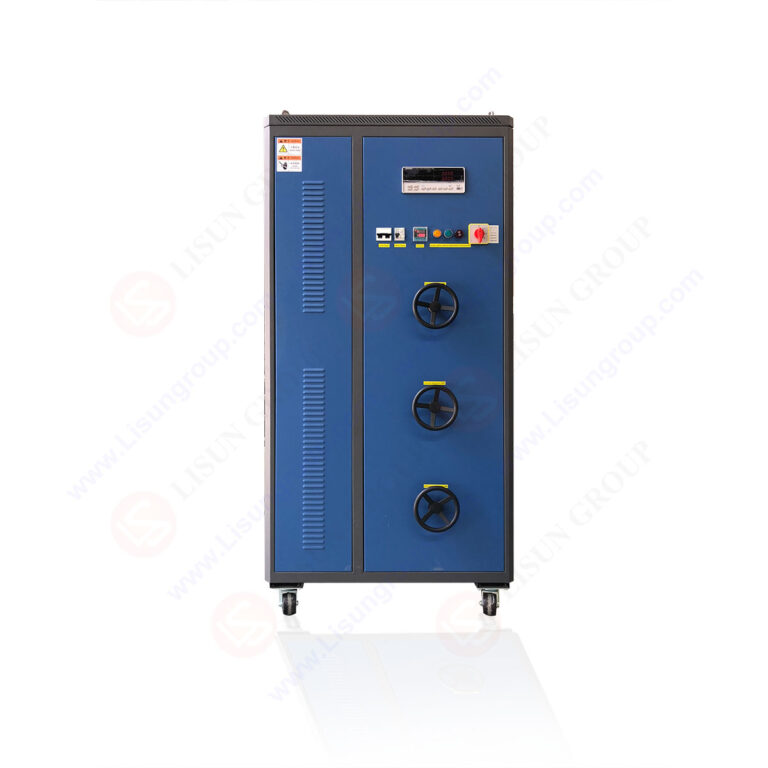
The DFX load test cabinet is not a standalone unit; it is designed to be the load source for automated life test systems, such as the LISUN CZKS series (e.g., CZKS-6 or CZKS-12). The CZKS provides the mechanical actuation to press the switch under test thousands of times. The DFX series provides the electrical stress. This integration creates a fully automated testing station. The user sets the voltage, current, and power factor on the DFX, connects the switch terminals, and programs the cycle count on the CZKS. The system then runs 24/7, providing reliable data on contact endurance and failure mechanisms like mechanical fatigue or electrical erosion.
4.2 Compatibility with Mechanical Endurance Tools
For complete switch testing compliance (e.g., GB/T 16915.1 Clause 24), a load test cabinet must work with tools that apply specific forces or bending moments. The DFX series can be easily integrated with the LISUN SW-6 bending tester for testing plugs and cable outlets. By connecting the SW-6 tester’s output to the DFX-20-3CH channel, engineers can simulate a loaded plug being repeatedly bent at its cord anchorage point. This combined setup verifies both the mechanical fatigue resistance of the cable clamp and the electrical conductivity under stress, ensuring the product meets all durability criteria.
5.1 Pre-Compliance and Type Testing
For quality control engineers, the DFX series serves as a critical tool for pre-compliance testing. Before sending samples to a third-party certification body, engineers can run a full GB/T 16915.1 voltage endurance test and temperature rise test in-house. The ability to quickly adjust the power factor from 0.5 to 0.8 allows for rapid re-testing with different ballast types. This process identifies design flaws early, significantly reducing the cost and time associated with final certification failures.
5.2 Troubleshooting Contact Degradation Modes
The load test cabinet provides valuable diagnostic data. By monitoring the voltage drop across the switch contacts during the test (via the DFX’s built-in display or an external oscilloscope), engineers can detect the early stages of contact degradation. An increase in contact resistance over thousands of cycles indicates material transfer or oxidation. The DFX’s stable load profile ensures that any change in measured parameters is due to the device under test, not the test equipment, making it a reliable diagnostic tool for R&D and failure analysis.
6.1 Simulating Different Ballast Technologies
Different ballast technologies (magnetic core/coil vs. electronic) produce different load characteristics. Magnetic ballasts are highly inductive with a low PF, while electronic ballasts have a higher PF but often a higher crest factor. The DFX series, with its continuous PF adjustment from 0.3 to 1.0, allows users to simulate both ranges. This is crucial because the standard (IEC 60669-1 Clause 19.2.1) requires testing with the most onerous load. Testing at a PF of 0.5 (simulating a magnetic ballast) may be more stressful on switch contacts than a test at PF 0.9 (simulating an electronic ballast).
6.2 Setting Up a Standard Resistive-Inductive (R-L) Load
The setup for a standard test involves entering the test current (e.g., 10A) and the target power factor (e.g., 0.6). The engineer first sets the current with the switch contacts closed, adjusting the variac to achieve 10A. Then, by adjusting the inductive reactor tap and fine-tune control, the PF is dialed down to 0.6. The DFX’s digital display shows the PF value, true current, and voltage in real-time. This precision ensures reproducibility, meaning a test run in China will yield the same electrical stress as one run in Europe, a fundamental requirement for global product compliance.
7.1 Overload and Over-Temperature Protection
Operating a load test cabinet at high currents (e.g., 60A or 80A) generates significant heat. The DFX series incorporates forced air cooling and thermal overload protection. If the internal temperature of the resistors or inductors exceeds a safe threshold, a relay disconnects the power supply to prevent damage. This safety feature is vital for unattended, long-duration life tests that may run for several weeks. Additionally, the unit includes a circuit breaker for input line protection and emergency stop buttons for immediate shutdown.
7.2 Isolation and Grounding for Test Integrity
To meet the safety requirements of IEC 61010-1 (safety requirements for electrical equipment for measurement, control, and laboratory use), the DFX series provides a floating output. This means the load terminals are isolated from earth ground, preventing ground loops that could distort test results or create a shock hazard. Proper grounding of the chassis and the test station is emphasized. The cabinet also includes clear, high-voltage warning labels and interlock circuits that can be connected to external safety cages for enhanced operator protection.
The LISUN DFX series Externally Ballasted Fluorescent Lamp Test Load Cabinet is a precise, standards-compliant solution for verifying the durability and thermal performance of electrical switches and accessories. By offering a wide current range (20A to 80A) and a granular power factor adjustment from 0.3 to 1.0, this load test cabinet directly addresses the stringent requirements of GB/T 16915.1-2024 and IEC 60669-1. Its integration with LISUN mechanical testers, such as the CZKS series and SW-6 bending tester, enables a complete, automated testing workflow from pre-compliance verification to full type testing. For quality control engineers and test laboratories, the DFX series provides the technical depth, safety features, and repeatability necessary to ensure products meet global safety standards, reducing certification timelines and improving product reliability in the field.
Q1: How do I determine the correct DFX model (20, 40, 60, 80) for my switch testing application?
A: Selecting the correct model depends on the maximum current rating specified in the product standard for your device under test (DUT). For residential switches, testing up to 10A or 16A is common, making the DFX-20 sufficient. However, for industrial or commercial switches rated at 20A or 32A, the DFX-40 or DFX-60 is required. You must choose a model that can supply a current at least equal to the rated current of your DUT, as specified in IEC 60669-1 Clause 19.2. Also, consider future testing needs; a DFX-40 offers headroom for testing larger samples without the need for a new cabinet. The DFX-80 is reserved for the highest power industrial controls and dimmers.
Q2: Can the LISUN DFX series simulate the load of an LED driver or an electronic ballast?
A: Yes, but the simulation is limited to the resistive and inductive components of the load. For electronic ballasts and LED drivers, which are capacitive and have high crest factors, the standard (IEC 60669-1) often requires testing with a resistive-capacitive (R-C) load or a specific electronic load bank. The DFX series, with its built-in switchable capacitance, can simulate some aspects of this load. For a purely electronic load simulation with high-frequency switching transients, a dedicated electronic load simulator is recommended. However, for 90% of standard inductive ballast tests (PF 0.5-0.6), the DFX series is the ideal, most cost-effective solution.
Q3: How do I connect the DFX load cabinet to the LISUN CZKS life tester for an automated test?
A: The connection is straightforward. First, ensure both units are powered off. The output terminals of the DFX series (e.g., the “Load Output” jacks) are connected directly to the contacts of the switch under test, which is mounted in the CZKS. The CZKS’s internal wiring is typically pass-through; you connect your load wires to its input terminals and then to the DUT. Second, the DFX requires a control signal to synchronize with the CZKS. Use a BNC or DB9 cable from the “External Control” port on the DFX to the “Load Trigger” output on the CZKS. This allows the life tester to command the load onto the switch only when its contacts are closed, preventing arc damage to the life tester itself.
Q4: What is the significance of the power factor (PF) setting in a switch endurance test?
A: The power factor determines the phase relationship between voltage and current. A low PF (e.g., 0.4) indicates a highly inductive load, causing the current zero-crossing to lag the voltage zero-crossing. This makes the arc on opening more difficult to extinguish, leading to greater contact erosion. Testing at a low PF is often a worst-case condition. For fluorescent lamp loads, the PF simulates the inductive reactance of the magnetic ballast. Setting the PF correctly per the standard (typically 0.6 for ballast loads) is mandatory to pass certification. A high PF (0.95-1.0) simulates a resistive load, which is less stressful on the contacts.