


Abstract
In the rigorous world of automotive electronics, ensuring immunity to electrical transients is paramount for functional safety and reliability. This article provides a comprehensive technical analysis of the EMS-ISO7637 Automotive Electronics Transient Immunity EMC Testing System: 7 Pulse Types, designed to validate component robustness against the harsh electrical environment of modern vehicles. We delve into the system’s architecture, its precise generation of the seven critical transient pulses defined by ISO 7637, and its application across 12V, 24V, and 36V vehicle platforms. Tailored for engineers and laboratories, the discussion covers standard compliance, testing methodologies for components like ECUs and OBCs, and the system’s role in R&D, quality control, and certification workflows for both conventional and new energy vehicles.
1.1 The Electrical Threat Landscape in Modern Vehicles
The automotive electrical network is a hostile environment characterized by continuous and transient disturbances. These transients, with durations from nanoseconds to hundreds of milliseconds, originate from inductive load switching (e.g., relays, motors), load dump events when alternator field excitation collapses, and coupling from adjacent high-current cables. Such pulses can induce latch-up, software glitches, or permanent damage in sensitive electronic control units (ECUs), battery management systems (BMS), and power converters. Consequently, standardized immunity testing is not merely a compliance checkbox but a fundamental pillar of functional safety, directly impacting vehicle reliability and user safety.
1.2 ISO 7637: The Global Benchmark for Conducted Transient Testing
The ISO 7637 series, particularly parts 2 and 3, establishes the definitive international framework for testing electrical disturbances by conduction and coupling. ISO 7637-2:2021 specifies immunity requirements for electrical transients conducted along supply lines, while ISO 7637-3:2016 details methods for electrical transient transmission by capacitive and inductive coupling via lines other than supply lines. These standards define a suite of standardized pulse waveforms—P1, P2a, P2b, P3a, P3b, P4, P5a, and P5b—each simulating a specific real-world disturbance scenario. Compliance with ISO 7637 is a prerequisite for component approval by most global OEMs and is often referenced in their specific corporate standards, such as VW 80000 and GM 3172.
1.3 The Role of the EMS-ISO7637 Testing System
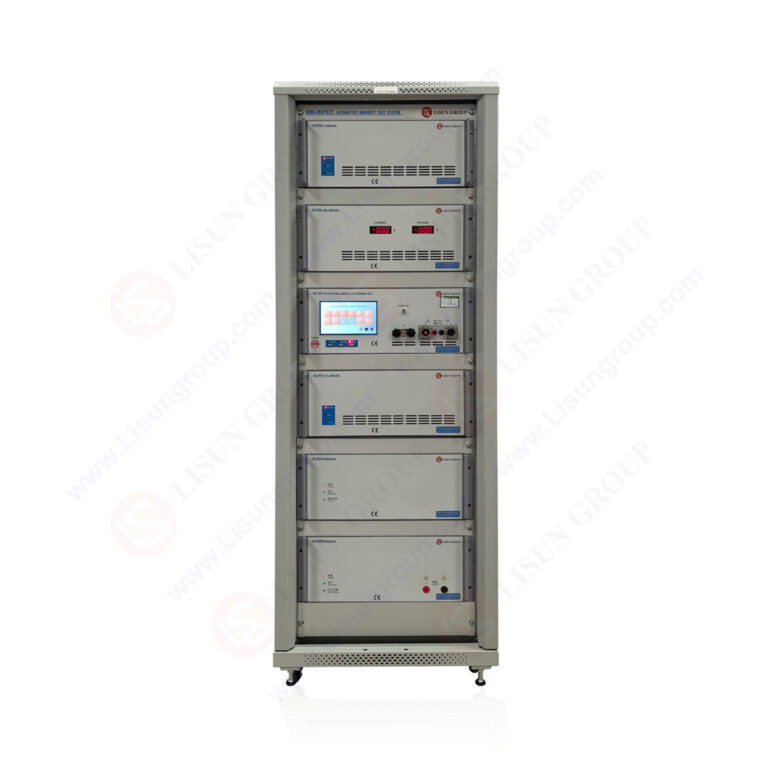
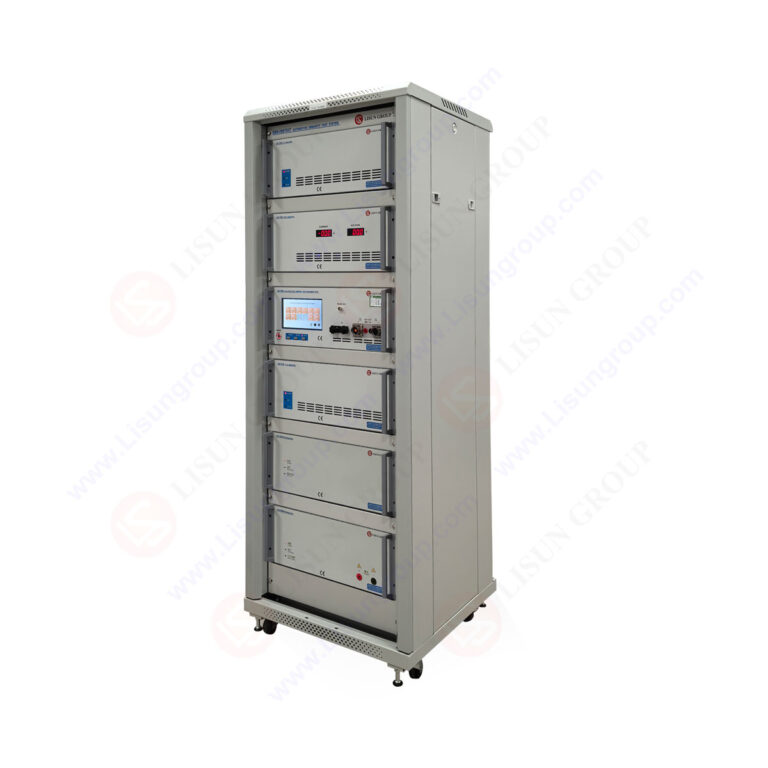
The LISUN EMS-ISO7637 system is engineered as a turnkey solution to execute these complex tests with precision and repeatability. It integrates the pulse generators, coupling/decoupling networks (CDNs), artificial networks (ANs), and control software required to apply the standardized transients to the device under test (DUT). By automating the generation, application, and monitoring of all seven pulse types, the system eliminates manual configuration errors, enhances test efficiency, and provides auditable data trails essential for certification. Its design supports the entire workflow from early R&D robustness validation to final production batch acceptance testing.
2.1 Pulse P1, P2a, P2b: Transients from Inductive Load Switching
These pulses simulate voltage transients generated by the interruption of current in inductive loads connected in parallel to the DUT. Pulse P1 is a negative spike simulating transients caused by the disconnection of devices while the ignition is on. Pulse P2a is a fast, high-energy positive transient occurring when a current in an inductance is interrupted by a device in parallel with the DUT, with the ignition switched off. Pulse P2b is similar to P2a but simulates the condition with the ignition switched on. Testing for these pulses, as per clause 5 of ISO 7637-2:2021, verifies a component’s resilience to common switching noise in the 12V/24V boardnet.
2.2 Pulse P3a, P3b: Transients from Switching Processes
These pulses represent transients caused by switching processes that generate rapid voltage changes. They are characterized by their fast rise and fall times. The distinction between P3a and P3b lies in their internal impedance and application scenario, simulating different source characteristics within the vehicle’s wiring harness. Their testing validates the immunity of electronic systems to high-frequency noise coupling from adjacent high-speed switches, a critical consideration for communication modules and sensor interfaces.
2.3 Pulse P4: The Load Dump Transient
Pulse P4 simulates the most severe and energetic transient in the automotive environment: the load dump. This occurs when the alternator is delivering a high current and the battery connection is suddenly disconnected (e.g., due to a corroded terminal). The resulting voltage spike can exceed 100V in a 12V system. Clause 6 of ISO 7637-2:2021 defines the test parameters, which the EMS-ISO7637 system must replicate with high energy fidelity. Immunity to P4 is mandatory for all components connected directly to the vehicle’s power supply.
2.4 Pulse P5a, P5b: Superimposed Alternating Voltage
Unlike the unidirectional pulses, Pulses P5a and P5b test immunity to alternating voltages (ripple) superimposed on the DC supply. This simulates noise from generators or other AC sources. P5a is applied to components connected to the supply line after the ignition switch, while P5b is for those connected directly to the battery. This test, detailed in ISO 7637-2:2021, is crucial for audio systems, infotainment units, and any analog circuitry susceptible to low-frequency noise injection.
3.1 Core Hardware Modules: Pulse Generators and Networks
The LISUN EMS-ISO7637 is a modular system comprising dedicated hardware for each test category. It features independent generator modules for high-energy pulses (P1, P2a/b, P3a/b, P4) and for ripple testing (P5a/b). The system integrates ISO-specified Coupling/Decoupling Networks (CDNs) to apply pulses to the DUT while isolating the test generator from the supply. A 5µH Artificial Network (AN) provides a standardized impedance for the supply line, as mandated by ISO 7637-2. For coupling tests per ISO 7637-3, the system includes capacitive coupling clamps (CCCs) to induce transients onto signal/control lines.
3.2 Multi-Voltage Platform Support and Automation
A key feature is its native support for 12V, 24V, and emerging 36V/48V mild-hybrid systems. This is achieved through programmable power supplies and automatically scaled pulse parameters, ensuring compliance across different vehicle architectures. Operation is facilitated via a dual-touchscreen local interface or comprehensive PC software. The software enables fully automated test sequencing, real-time waveform monitoring, pass/fail judgment based on DUT performance criteria, and generation of detailed test reports in PDF or Excel format, streamlining audit and certification processes.
*Table: LISUN EMS-ISO7637 System Specification vs. ISO 7637-2:2021 Requirements***
| Test Parameter | ISO 7637-2:2021 Requirement | LISUN EMS-ISO7637 System Capability | Technical Advantage |
|---|---|---|---|
| Pulse Coverage | P1, P2a, P2b, P3a, P3b, P4, P5a, P5b | Full coverage of all 7 pulse types | Comprehensive, single-system solution |
| Supply Voltage | 12V & 24V systems | 12V, 24V, 36V system support | Future-proof for new energy vehicle platforms |
| P4 Pulse Energy | Defined by Vs, Ri, td | High-fidelity generation up to >100V, <2Ω source impedance | Accurate simulation of severe load dump |
| Test Automation | Manual procedure defined | Fully automated sequencing & reporting via software | Reduces human error, increases lab throughput |
| Calibration Accuracy | Per IEC 61000-4-4 guidance | Integrated calibration jig & traceable verification | Ensures long-term measurement traceability |
4.1 Standard-Compliant Test Setup and Execution
A proper test setup is critical for valid results. The DUT is powered through the system’s Artificial Network (AN). Pulses are coupled onto the supply lines via the CDN. For coupling tests per ISO 7637-3:2016, the capacitive coupling clamp is placed around the harness bundle. The DUT’s functional performance is monitored throughout the test according to its performance criteria (e.g., Class A: normal performance; Class B: temporary loss recoverable automatically). The EMS-ISO7637 software allows engineers to define these criteria, the number of pulse applications, and the test levels (e.g., Level I-IV as per GB/T 21437.2-2021, the Chinese national standard equivalent to ISO 7637-2).
4.2 Application in Passenger & Commercial Vehicle Component Validation
The system is indispensable for testing a wide array of components. For ECUs (Engine, Transmission, Body Control), immunity to P1, P2, and P3 pulses ensures reliable operation amidst everyday electrical noise. Sensors and actuators must withstand coupled transients (P3). Lighting systems and infotainment units require validation against ripple (P5). For commercial vehicles with higher-power 24V systems and more inductive loads, rigorous testing at elevated levels is essential, often referencing OEM-specific standards like VW 80000 or GM 3172 which build upon ISO 7637 foundations.
4.3 Critical Role in New Energy Vehicle (NEV) Development
In NEVs, the stakes are higher due to increased electronic content and high-voltage systems. The EMS-ISO7637 system is vital for testing On-Board Chargers (OBCs) and DC-DC Converters, which interface between the HV battery and the 12V/24V network and must be immune to transients from both sides. Battery Management Systems (BMS), the brain of the traction battery, require exceptional immunity to ensure accurate cell monitoring and safety interlock integrity. Testing according to ISO 16750-2:2023, which references ISO 7637 for electrical loads, is a cornerstone of NEV component qualification.
5.1 R&D Phase: Design Robustness and Fault Diagnosis
During the design phase, engineers use the system for design margin exploration and troubleshooting. By applying pulses at increasing severity, the failure threshold of a prototype is identified. The system’s precise waveform control and monitoring help pinpoint weak points in power supply conditioning, input filtering, or PCB layout. This iterative “test-fix-retest” process, enabled by the automated EMS-ISO7637 Automotive Electronics Transient Immunity EMC Testing System, leads to more robust designs before costly tooling or production begins.
5.2 Compliance & Certification Testing for Third-Party Labs
For independent testing laboratories, accuracy, repeatability, and auditability are paramount. The system’s traceable calibration, strict adherence to standard waveforms, and automated data logging provide the defensible evidence required for issuing compliance reports. Its ability to handle the full suite of pulses for multiple voltage systems makes it a cost-effective and versatile asset for labs serving a global clientele needing certification to ISO, GB/T, and various OEM standards.
5.3 Production Line: Incoming Quality Control (IQC) and Batch Sampling
In manufacturing environments, a simplified version of the test regimen can be deployed for high-speed IQC or periodic batch audits. While not replacing full compliance testing, it screens for gross manufacturing defects or component drift. The system’s programmable “quick test” modes and clear pass/fail indicators allow quality technicians with limited EMC expertise to perform effective checks, ensuring consistent product quality from the production line.
6.1 Defining Relevant Test Levels and Performance Criteria
Blindly applying the highest test level is inefficient. Engineers must define the appropriate test severity based on the component’s installation location (e.g., engine compartment vs. passenger cabin) and its function (safety-critical vs. comfort). This decision should be guided by the OEM’s specification, which often references ISO 16750-2:2023 for environmental conditions. Similarly, defining realistic performance criteria (Class A, B, C, D) is crucial for a meaningful assessment rather than an overly restrictive pass/fail judgment.
6.2 Ensuring Measurement Accuracy and System Maintenance
The fidelity of transient testing hinges on precise measurement. The use of appropriate high-voltage differential probes and ensuring proper grounding of the test setup are non-negotiable. Regular system calibration, as per the guidance in IEC 61000-4-4 (for EFT, but the principle applies), is essential to maintain waveform parameter integrity over time. The built-in verification tools in the EMS-ISO7637 system facilitate routine performance checks, guaranteeing that test results remain reliable and comparable across different test sessions and years.
The EMS-ISO7637 Automotive Electronics Transient Immunity EMC Testing System: 7 Pulse Types represents a critical engineering tool for navigating the complex landscape of automotive EMC compliance. Its comprehensive coverage of the ISO 7637 pulse suite, combined with multi-voltage support and advanced automation, addresses the core challenges faced by automotive electronics developers. From simulating the abrupt collapse of an alternator field during a load dump (Pulse P4) to injecting supply-line ripple (Pulse P5), the system provides a controlled, repeatable, and standard-aligned environment to probe a component’s weaknesses and validate its strengths.
The technical value extends beyond mere standard checking. It enables a proactive design-for-robustness philosophy in R&D, provides auditable data for certification bodies, and offers a means of quality assurance in manufacturing. For the industry’s shift towards electrification and increased autonomy, where electronic system reliability is synonymous with vehicle safety, such rigorous transient immunity validation is indispensable. Implementing a capable and precise testing regimen with the LISUN EMS-ISO7637 system is therefore not just a compliance activity, but a fundamental investment in product quality, brand reputation, and ultimate end-user safety.
Q1: What is the key difference between testing according to ISO 7637-2 and ISO 7637-3, and does the EMS-ISO7637 system cover both?
A: The key difference lies in the coupling method of the transient to the Device Under Test (DUT). ISO 7637-2:2021 deals with conducted transients, where pulses are directly injected onto the DUT’s supply lines via a Coupling/Decoupling Network (CDN). ISO 7637-3:2016 covers coupled transients, where pulses are induced via capacitive coupling onto signal or control lines other than supply lines using a Capacitive Coupling Clamp (CCC). The LISUN EMS-ISO7637 system is a complete solution that includes the hardware generators, CDNs for ISO 7637-2 testing, and the necessary CCCs for ISO 7637-3 coupling tests, allowing comprehensive immunity assessment of all device ports.
Q2: For testing a 48V mild-hybrid system component, can the standard 12V/24V EMS-ISO7637 system be used, or is a different configuration needed?
A: This depends on the specific voltage rating of the component’s low-voltage side. Many 48V architecture components still feature a 12V or 24V interface for communication and control. The standard LISUN EMS-ISO7637 system, with its support for 12V, 24V, and 36V systems, is perfectly suited for testing these low-voltage ports according to ISO 7637. If the component requires testing on a 48V supply line, the system’s pulse generators and CDNs may need to be specified for a higher voltage range. It is critical to consult the test plan (e.g., per VW 80000 or other OEM specs) and confirm the system’s voltage capability for the specific DUT port under test.
Q3: How does automated testing with the EMS-ISO7637 software improve accuracy and efficiency compared to manual operation?
A: Manual testing is prone to configuration errors, inconsistent timing, and subjective result recording. The automated PC software eliminates these issues by: 1) Precision: It programs pulse parameters (amplitude, width, repetition) exactly per the standard, ensuring waveform consistency for every test. 2) Sequence Control: It automatically executes complex test sequences (e.g., applying P1, then P3a, then P5b at multiple levels) without operator intervention, removing timing mistakes. 3) Objective Judgement: The software continuously monitors the DUT’s response against predefined performance criteria (Class A-D), making a binary pass/fail determination, which removes human bias. 4) Data Integrity: It automatically generates detailed reports with all test parameters, applied waveforms, and results, creating an unalterable audit trail essential for compliance with standards like GB/T 21437.2-2021.
Q4: Why is Pulse P4 (Load Dump) considered the most severe test, and what special capabilities does the system need to generate it correctly?
A: Pulse P4 simulates the disconnection of a heavily loaded battery, causing the alternator’s output voltage to spike to over 100V in a 12V system. It is the most severe due to its very high energy content (high voltage and long duration). Correct generation requires a pulse generator with a very low internal impedance (typically <2Ω) to deliver the high peak current specified in ISO 7637-2:2021, Clause 6. The LISUN EMS-ISO7637 system incorporates a dedicated high-energy P4 module designed with this low source impedance and sufficient energy storage capacity to accurately replicate the standardized waveform’s shape, amplitude, and duration, which is critical for a valid and meaningful test.