









Abstract
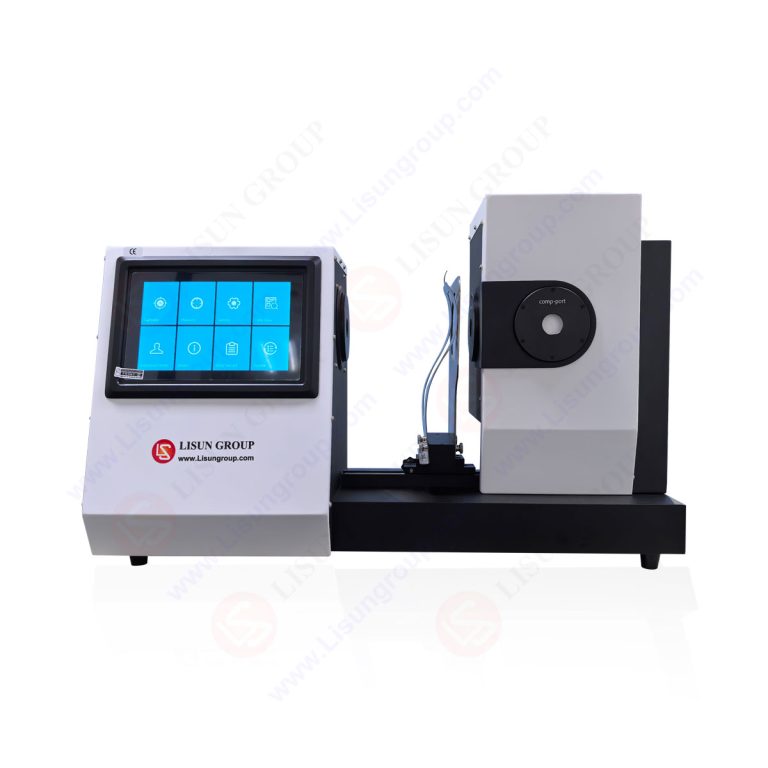
In the demanding fields of automotive electronics, display manufacturing, and high-performance plastics, precise optical characterization of transparent and translucent materials is non-negotiable for quality, safety, and compliance. The LISUN HM-700 Haze Meter and Spectrophotometer represents a critical tool for quality control and R&D, integrating advanced spectral analysis with standardized haze and transmittance measurement. This article provides a technical deep dive into the HM-700, exploring its 0/d optical geometry, compliance with international standards like ASTM D1003, and its application in measuring key parameters such as total/diffuse transmittance, haze, and color coordinates. Readers will gain actionable insights into how this instrument enhances material specification, process control, and regulatory adherence across multiple industries.
1.1 Understanding 0/d (Integrating Sphere) Geometry
The foundational accuracy of the LISUN HM-700 is built upon a precisely engineered integrating sphere operating in 0/d (zero-degree/diffuse) geometry. In this configuration, a collimated light beam strikes the sample at normal (0°) incidence. The integrating sphere, coated with a highly reflective and spectrally neutral material (e.g., BaSO₄), then collects all transmitted light—both the directly transmitted beam and the forward-scattered diffuse component. This geometry, mandated by standards such as ASTM D1003 and ISO 13468, is essential for separating total transmittance (τt) from diffuse transmittance (τd), which is the direct precursor to calculating haze (τd/τt * 100%). The sphere’s design minimizes errors from directional sensitivity and ensures measurements are representative of the material’s true visual appearance under diffuse illumination conditions.
1.2 Spectral Analysis vs. Filter-Based Systems
Unlike traditional filter-based haze meters that rely on broad-band CIE photopic filters, the HM-700 employs a high-resolution spectrophotometer. It measures the complete spectral transmittance of a material across the visible spectrum (typically 360-780nm). This allows for the precise calculation of photopically-weighted values that accurately match the human eye’s spectral response, as defined by the CIE standard observer functions (CIE No.15). This spectral approach eliminates errors inherent in filter mismatch and enables the simultaneous derivation of colorimetric data (CIE Lab, LCh, YI) from the same fundamental measurement, providing a comprehensive optical fingerprint of the sample.
2.1 Measurement Parameters and Capabilities
The HM-700 is engineered to deliver a comprehensive suite of optical properties from a single measurement cycle. Its core outputs include Total Transmittance (Tt), Diffuse Transmittance (Td), and Haze. Critically, it calculates these parameters in strict accordance with standard formulae. Furthermore, its spectrophotometric core enables the precise determination of Luminous Transmittance (Y value), chromaticity coordinates (x, y, u’, v’), and full CIE Lab color space values (L, a, b*). For materials like polymers and packaging films, it also computes key indices such as Yellowness Index (YI) and Whiteness Index (WI), which are vital for monitoring degradation and batch consistency.
2.2 Accuracy, Repeatability, and Instrument Validation
Instrument performance is quantified by stringent metrics. The HM-700 typically exhibits exceptional repeatability, with standard deviations for haze measurements as low as 0.01% and for transmittance as low as 0.1% on stable reference standards. This level of precision is paramount for detecting subtle material variations in high-tolerance applications. The instrument’s validation is ensured through traceable calibration standards, including haze and transmittance reference plates, and its optical system is designed to meet the stringent geometric and spectral requirements of international standards, guaranteeing that data is both accurate and legally defensible in compliance scenarios.
Table: Performance Comparison of Haze & Transmittance Measurement Systems
| Feature / Metric | Basic Filter-Based Haze Meter | LISUN HM-700 Spectrophotometer | Key Advantage of HM-700 |
| —————————– | ——————————— | ———————————- | ————————— |
| Measurement Principle | Broadband photopic filter | Full spectral analysis (360-780nm) | Enables color measurement; eliminates filter mismatch error |
| Compliance Standards | ASTM D1003, ISO 13468-1 | ASTM D1003, ISO 13468, CIE No.15, JIS K7105 | Broader regulatory acceptance |
| Haze Repeatability (SD) | ~0.1% | ≤ 0.01% | 10x better detection of subtle material changes |
| Data Output | Haze, Tt only | Haze, Tt, Td, CIE Lab, YI, WI, Spectra | Comprehensive material characterization |
| Light Source | Single CIE Source (e.g., C) | Programmable multi-source (A, C, D65) | Color evaluation under different illuminants |
3.1 Adherence to ASTM and ISO Methodologies
The design and software algorithms of the HM-700 are explicitly crafted to conform to the test methodologies outlined in leading global standards. For haze and luminous transmittance, it complies with ASTM D1003 – “Standard Test Method for Haze and Luminous Transmittance of Transparent Plastics” and its international counterpart, ISO 13468 – “Plastics — Determination of the total luminous transmittance of transparent materials.” This compliance ensures that test results are reproducible and can be directly compared with supplier specifications or customer requirements worldwide, forming a common language for material quality.
3.2 Conformance to Colorimetric and National Standards
Beyond haze, the instrument’s spectral engine ensures conformity to CIE No.15 – “Colorimetry,” which defines the foundational mathematics for calculating tristimulus values and derived color coordinates. For specific regional requirements, the HM-700 also supports test conditions and formulae prescribed by JIS K 7105 – “Testing methods for optical properties of plastics” and JIS K 7373 – “Plastics — Determination of total luminous transmittance and haze.” This multi-standard capability makes the HM-700 an indispensable tool for companies operating in or exporting to global markets with diverse regulatory landscapes.
4.1 Programmable Multi-Light Source System
A significant advancement in the HM-700 is its programmable multi-light source system. It can simulate various standard illuminants, such as CIE Illuminant A (tungsten), C (average daylight), and most importantly, D65 (standard daylight). This allows users to evaluate material color and transmittance under different lighting conditions critical for specific applications. For instance, automotive interior components can be assessed under both daylight (D65) and interior lighting (A) to ensure consistent visual quality, a feature beyond the scope of single-source instruments.
4.2 Automated Transmittance Compensation and Data Management
The instrument incorporates intelligent software algorithms for automatic transmittance compensation. This corrects for potential errors due to the instrument’s own baseline drift or minor sphere coating degradation over time. Furthermore, the HM-700 is equipped with robust data management capabilities, allowing for the storage of thousands of spectral curves and measurement results. This facilitates trend analysis, batch-to-batch comparison, and the creation of comprehensive digital quality records essential for ISO documentation and traceability.
5.1 Automotive Electronics and Interior Components
In the automotive sector, optical clarity and color consistency are critical for safety and aesthetics. The HM-700 is used to test polycarbonate lenses for interior indicator lights, ensuring high total transmittance for brightness and controlled haze for diffusion. It characterizes touchscreen display cover lenses for low haze (maximizing clarity) and specific color neutrality. For interior trim plastics and films, it monitors yellowness index (YI) to prevent UV degradation from appearing as undesirable color shifts over the vehicle’s lifespan.
5.2 Plastics, Films, and Packaging Manufacturing
For producers of optical films (e.g., brightness enhancement, diffuser films), PET bottles, food packaging, and protective films, the HM-700 is a central QC tool. It quantifies haze to control light diffusion properties, measures transmittance to ensure material efficiency (e.g., maximizing light output in displays), and tracks color and YI to guarantee batch-to-batch consistency and food-grade aesthetic appeal. This data directly correlates to product performance in end-use applications and brand perception.
6.1 Incoming QC and Supplier Material Validation
Quality control managers utilize the HM-700 to validate incoming raw materials like resin pellets, extruded films, or coated glass. By establishing strict specification limits for haze, transmittance, and color coordinates in the QC software, the instrument provides a rapid pass/fail assessment. This objective data replaces subjective visual checks, reduces disputes with suppliers, and prevents non-conforming material from entering the production line, thereby avoiding costly rework or product failures.
6.2 Process Optimization and New Material Development
In R&D and process engineering, the HM-700 serves as a diagnostic tool. Engineers can correlate changes in extrusion temperature, injection molding parameters, or coating thickness with precise changes in optical properties. When developing new polymer blends, nanocomposites, or anti-reflective coatings, the spectrophotometer provides the detailed spectral data needed to understand structure-property relationships and optimize formulations for target optical performance, accelerating innovation cycles.
7.1 Sample Preparation and Measurement Protocol
Accurate results require proper sample handling. Samples must be clean, free of fingerprints, scratches, and internal stresses that could cause birefringence. They should be flat and of adequate size to completely cover the instrument’s sample port. The measurement protocol should include regular calibration with certified reference standards, including a zero calibration (with light trap) and a calibration with a standard reference plate of known haze and transmittance value to validate the instrument’s baseline response.
7.2 Maintaining Measurement Integrity and Traceability
Long-term measurement integrity is maintained through a rigorous calibration schedule using NIST-traceable standards. The instrument’s internal self-diagnostic checks and stable LED/spectrometer design ensure minimal drift. All calibration dates, standard values, and measurement results should be logged to create an auditable trail. This traceability is essential for ISO/IEC 17025 accredited laboratories and for providing certification documents to customers in regulated industries like medical devices or aerospace.
The LISUN HM-700 Haze Meter and Spectrophotometer transcends the function of a simple pass/fail gauge by providing a complete, standards-compliant optical analysis system. Its core strength lies in the fusion of precise 0/d integrating sphere geometry with full-spectrum spectrophotometry, enabling the simultaneous, accurate determination of haze, total/diffuse transmittance, and comprehensive color data. This technical capability directly addresses the critical needs of quality control and R&D professionals across automotive, display, plastics, and packaging industries, where material optical properties are inextricably linked to product performance, safety, and consumer perception. By ensuring strict adherence to ASTM, ISO, CIE, and JIS standards, the HM-700 delivers legally defensible data that enhances supplier validation, tightens process control, and streamlines compliance. Ultimately, integrating this instrument into a quality workflow empowers organizations to move from subjective visual assessment to objective, data-driven material specification and innovation.
Q1: How does the HM-700’s spectral measurement differ from a standard haze meter, and why is it important for color-critical applications?
A: A standard haze meter uses a broadband filter that approximates the human eye’s sensitivity (photopic response) to measure total and diffuse light, outputting only haze and total transmittance values. The HM-700 uses a diffraction grating and sensor array to measure transmittance at each wavelength across the visible spectrum (e.g., 360-780nm). This spectral data is then mathematically weighted using the precise CIE standard observer functions to calculate not only accurate photopic haze and transmittance but also full colorimetric data (CIE Lab, chromaticity). For color-critical applications like display cover glass or automotive lenses, this reveals subtle color casts (shifts in a, b) and metamerism (color change under different lights) that a filter-based meter cannot detect, ensuring absolute color fidelity and consistency.
Q2: Can the HM-700 be used to test highly transparent, low-haze materials like optical glass or display cover lenses, and what level of precision can we expect?
A: Yes, the HM-700 is specifically designed for high-precision measurement of low-haze materials. Its advanced integrating sphere design, stable light source, and high-resolution spectrometer provide exceptional measurement repeatability. For such materials, the instrument typically achieves a haze measurement repeatability with a standard deviation (SD) of ≤ 0.01% and a transmittance repeatability of ≤ 0.1%. This level of precision is essential for reliably distinguishing between, for example, a cover lens with 0.5% haze and one with 0.55% haze, a difference that can impact display clarity and contrast in high-end consumer electronics. The instrument’s compliance with ASTM D1003 ensures the methodology is correct for these demanding applications.
Q3: We need to comply with multiple international standards for different customers. Which specific standards does the HM-700 conform to, and how is this implemented in the software?
A: The HM-700 is engineered to meet the geometric, spectral, and computational requirements of several key international standards. These include ASTM D1003 (USA), ISO 13468 (International), JIS K 7105 and JIS K 7373 (Japan), and the colorimetric principles of CIE No.15. Implementation occurs at both hardware and software levels. The optical geometry (0/d sphere) meets the standard’s physical requirements. The software contains built-in calculation modules that apply the exact formulae specified by each standard. The user simply selects the desired standard (e.g., ASTM D1003 Procedure A) from a menu, and the instrument automatically performs the correct measurements, applies the proper spectral weighting, and outputs the results in the specified format, ensuring compliance for any reporting requirement.