









Abstract
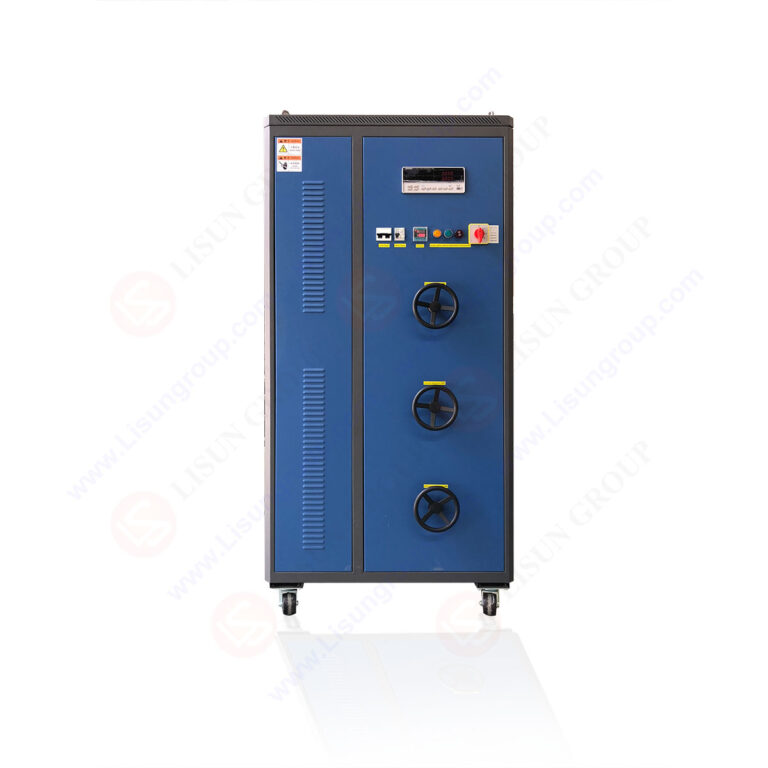
For manufacturers and testing laboratories of electrical accessories like switches, sockets, and connectors, ensuring product durability and safety under real-world load conditions is paramount. The LISUN DFX series Externally Ballasted Fluorescent Lamp Test Load Cabinet provides a critical, standardized solution for this challenge. This specialized equipment simulates the demanding inrush and steady-state currents of fluorescent lamp loads, enabling precise compliance testing per international IEC and GB standards. Its core capabilities include adjustable power factor, configurable load channels, and programmable test cycles, delivering reliable, repeatable data for validating the electrical endurance and safety of accessories. This article details its technical operation, compliance alignment, and integration into a complete quality assurance workflow for engineers and compliance experts.
1.1 The Challenge of Ballasted Load Testing
Electrical accessories are routinely subjected to resistive load tests, but fluorescent lamp circuits present a more complex challenge. The ballast (inductive or electronic) introduces significant inrush currents during startup and a lagging power factor during operation. Testing with simple resistive loads fails to replicate these stresses, potentially allowing products that overheat or fail prematurely in the field to pass. A dedicated load test cabinet like the DFX series is essential to simulate these real-world electrical conditions accurately.
1.2 Role of the DFX Series in Compliance Verification
The primary function of the LISUN DFX series is to provide a standardized, compliant load for endurance and temperature rise tests specified in key safety standards for electrical accessories. It replaces actual fluorescent lamp fixtures in the test circuit, offering superior consistency, safety, and measurement control. By generating the specified non-resistive load profile, it allows laboratories to verify that switches, dimmers, and other controls can withstand the electrical stress of fluorescent lighting over their rated lifetime, a fundamental requirement for global market access.
2.1 Key Performance Parameters
The DFX series is engineered for precision and flexibility. Core specifications include a wide current output range, typically from 0.10A to 40.0A per channel, accommodating various accessory ratings. The power factor is adjustable from 0.3 to 1.0, with a high resolution of 0.01, allowing exact simulation of both highly inductive ballast loads and purely resistive loads. Measurement accuracy is critical, with current measurement precision within ±(0.5% of reading + 0.1% of range). The load utilizes high-stability, non-inductive wire-wound resistors and high-quality compensation capacitors to ensure waveform fidelity.
2.2 DFX Series Model Comparison
The series offers several models to suit different laboratory throughput and testing requirements. The key differentiators are the maximum output current and the number of independent test channels.
| Model | Max. Output Current per Channel | Number of Channels | Typical Input Power Requirement | Primary Application Scope |
|---|---|---|---|---|
| DFX-20 | 20.0 A | 1 | 220VAC, 50/60Hz | Single-item endurance testing of standard accessories. |
| DFX-20-3CH | 20.0 A | 3 | 220VAC, 50/60Hz | High-efficiency simultaneous testing of three samples. |
| DFX-40 | 40.0 A | 1 | 220VAC, 50/60Hz | Testing of higher-current accessories or grouped circuits. |
| DFX-60 | 60.0 A | 1 | 220VAC, 50/60Hz | Heavy-duty commercial and industrial accessory testing. |
| DFX-80 | 80.0 A | 1 | 380VAC, 50/60Hz | Maximum-capacity testing for high-power control devices. |
3.1 Alignment with IEC and GB Standards
The design and calibration of the LISUN DFX series are explicitly tailored to meet the load simulation requirements outlined in major international and national standards. It is the prescribed load apparatus for clauses mandating tests under “ballasted lamp load” or “fluorescent lamp load” conditions.
3.2 Specific Standard Clause Applications
- IEC 60669-1 (Switches for Household & Similar Purposes): Clause 19.2, “Endurance test,” specifies the test circuit and load characteristics for switches controlling fluorescent lamps. The DFX cabinet provides the exact non-resistive load required.
- IEC 60884-1 (Plugs & Socket-Outlets): Clause 20, “Temperature rise test,” and Clause 21, “Normal operation,” require testing socket-outlets with the appropriate lamp load. The DFX series supplies this load with adjustable power factor.
- GB/T 2099.1 & GB 16915.1: These are the Chinese national standards equivalent to IEC 60884-1 and IEC 60669-1, respectively. The DFX series is fully compliant with their identical load requirements for the Chinese certification (CCC) process.
- IEC 61058-1 (Switches for Appliances): Clause 17, “Endurance test,” details test conditions for various load types, including fluorescent lamp loads. The DFX enables compliant testing for appliance switches.
4.1 Configuring Test Parameters
Operation begins with configuring the test parameters on the unit’s digital controller. The user sets the target test current (e.g., the rated current of the device under test), the desired power factor (e.g., 0.9 lagging for a specific electronic ballast simulation), and the test cycle count. The system automatically calculates and engages the correct combination of resistive and reactive components to achieve the specified load profile.
4.2 Executing and Monitoring Tests
Once configured, the Device Under Test (DUT) is connected in series with the load cabinet. The test initiates, and the DFX applies the load. The controller provides real-time monitoring of actual output current, voltage, power, and power factor. For endurance tests, it counts the number of operational cycles completed. This closed-loop control ensures the load conditions remain stable and within specification throughout the entire test duration, which can be thousands of cycles.
5.1 End-to-End Laboratory Solution
The DFX series is designed as a core component within a broader LISUN testing ecosystem. Its outputs and control logic are compatible with other specialized testers, enabling automated, comprehensive evaluation workflows.
5.2 Key System Integrations
- CZKS Series Life Testers: The DFX load cabinet acts as the electrical load source for mechanical life testing. A CZKS life tester automates the physical actuation (ON/OFF) of a switch or connector, while the DFX simultaneously applies the standardized electrical load. This integration is essential for performing the complete endurance test per standards.
- SW-6 Bending Tester: For cord-connected accessories, the SW-6 performs mechanical flexing tests on cables. While primarily mechanical, validating the electrical continuity under flexing stress can involve connection to a monitoring circuit, where a low-current load from the DFX could be applied to detect intermittent failures.
6.1 Comparison to Minimum Standard Requirements
Using actual fluorescent lamp fixtures for testing, while conceptually simple, introduces significant variability and operational burden. The DFX series provides a superior, standardized alternative.
| Test Aspect | Traditional Fluorescent Lamp Rack | LISUN DFX Load Test Cabinet |
|---|---|---|
| Load Consistency | Varies with lamp age, temperature, and ballast tolerance. | Highly stable and repeatable; independent of component aging. |
| Parameter Control | Fixed by physical components; difficult to adjust PF or current precisely. | Digitally adjustable current (0.10-80.0A) and power factor (0.3-1.0). |
| Safety & Maintenance | High voltage, risk of breakage, frequent lamp replacement. | Enclosed, safe design; no consumable parts. |
| Measurement | Requires external meters; indirect. | Built-in high-accuracy digital metering with real-time display. |
| Standard Compliance | Meets basic requirement but with poor reproducibility. | Ensures precise, auditable compliance with standard clauses. |
6.2 Operational Efficiency and Data Integrity
The digital programmability of the DFX eliminates manual calculations and component switching. Test setups can be saved and recalled, ensuring identical conditions for repeat tests or different product batches. The integrated digital readout provides direct, reliable data for test reports, enhancing traceability and reducing potential for human error in data recording.
7.1 For Electrical Accessory Manufacturers
In-house R&D and QC labs use the DFX to validate new designs and perform batch acceptance testing. It helps identify potential weaknesses in contact materials, thermal management, or arc suppression under realistic lamp loads before production, reducing field failure rates and liability.
7.2 For Third-Party Testing Laboratories
Certification bodies and independent labs rely on the DFX to perform standardized compliance tests for clients seeking CE, CCC, or other marks. Its demonstrable accuracy and alignment with standard clauses are critical for generating accepted test reports and maintaining laboratory accreditation.
7.3 For Quality Control Engineers
QC engineers implement the DFX for routine production line audits and failure analysis. Its ability to precisely replicate the stress condition described in a standard makes it an authoritative tool for root-cause investigation of returned or failed components.
The LISUN DFX series Externally Ballasted Fluorescent Lamp Test Load Cabinet is an indispensable instrument for ensuring the safety, durability, and compliance of electrical accessories destined for global markets. By providing a precise, programmable, and fully compliant simulation of real-world fluorescent lamp loads, it addresses a critical gap in traditional resistive-only testing. Its technical design, featuring adjustable power factor, wide current range, and high-accuracy metering, directly translates to reliable and repeatable test data. Integration with complementary equipment like life testers creates a complete, automated endurance testing workstation. For manufacturers, laboratories, and engineers, the DFX series is not merely a test tool but a foundational component of a robust quality assurance strategy, mitigating risk and providing unequivocal evidence of product compliance with international IEC and GB standards.
Q1: Can the DFX series simulate loads for LED drivers or electronic transformers, not just magnetic ballast fluorescent loads?
A: Yes, while designed to the specific parameters in standards for fluorescent loads, the adjustable power factor (0.3 to 1.0) and pure resistive mode of the DFX series make it highly versatile. Many modern electronic drivers, including those for LEDs, present a capacitive or complex non-linear load. The DFX can be set to a unity (1.0) or leading power factor to better approximate these conditions for comparative or development testing. However, for standards that specifically call for a “ballasted lamp load” as defined in IEC clauses, its standard lagging PF range is the compliant configuration.
Q2: How does the DFX-20-3CH’s 3-channel operation differ from using three separate single-channel units?
A: The DFX-20-3CH integrates three independent load channels into a single cabinet with one master control unit. This offers significant space and cost efficiency. Crucially, all three channels share the same calibrated control system, ensuring consistent parameter application across all samples under test. This is ideal for high-throughput quality control or comparative testing where identical conditions are mandatory. Using three separate units introduces potential for minor calibration drift between them and requires more complex setup and monitoring.
Q3: What are the critical calibration and maintenance requirements for the DFX load cabinet to ensure ongoing accuracy?
A: The DFX series is built with stable, non-inductive wire-wound resistors and high-quality capacitors, requiring minimal routine maintenance beyond keeping the unit clean and ventilated. The primary requirement is periodic calibration of its current measurement and power factor control circuitry. It is recommended to follow a yearly calibration schedule traceable to national standards, as would be required for any accredited laboratory instrument. The calibration verifies that the displayed current, voltage, and calculated power factor match the actual output within the specified ±0.5% accuracy band.