









Abstract
Accurately predicting the long-term lumen maintenance of LED products is a cornerstone of quality assurance and market credibility. This comprehensive technical article delves into the critical methodologies and equipment required for LED L70 Testing Equipment for LED Lifespan & Reliability Analysis. We explore the scientific principles behind accelerated aging tests, the rigorous compliance with IES and CIE standards, and the practical implementation of systems like the LISUN LEDLM series. The focus is on providing technical professionals with actionable insights into validating L70/L50 metrics, performing TM-21/TM-28 extrapolations, and leveraging advanced hardware-software integrations to ensure product reliability and compliance in a competitive global market.
1.1 Defining L70, L50, and Lumen Depreciation
Lumen maintenance, expressed as a percentage of initial light output, is the primary metric for LED lifespan. The industry-standard L70 point denotes the elapsed operating time at which an LED’s luminous flux has depreciated to 70% of its initial value, often considered the end of useful life for general lighting. Similarly, L50 (50% depreciation) is critical for applications where light loss is more tolerable. This depreciation is a non-linear process influenced by junction temperature, drive current, and material degradation. Precise measurement of this curve is not merely a performance indicator but a fundamental requirement for product warranties, energy-saving calculations, and compliance with international energy programs like ENERGY STAR and DLC.
1.2 Economic and Compliance Drivers for Standardized Testing
The shift from traditional lamp life testing to LED lumen maintenance prediction represents a significant economic and technical evolution. Manufacturers and specifiers require reliable lifespan data to calculate total cost of ownership, validate warranty claims, and meet stringent regulatory requirements. Standards such as IES LM-80 and LM-84 provide the mandated framework for collecting lumen maintenance data, while TM-21 and TM-28 offer the mathematical tools for projection. Without standardized LED L70 Testing Equipment for LED Lifespan & Reliability Analysis, data becomes non-comparable, risking product failures, financial liabilities, and damage to brand reputation in sectors ranging from architectural lighting to automotive electronics.
2.1 IES LM-80 & LM-84: The Data Collection Foundation
The IES LM-80-20 standard, “Approved Method for Luminous Flux Maintenance of LED Light Sources,” is the bedrock for in-situ LED package, array, and module testing. It prescribes controlled conditions (typically 55°C, 85°C, and a third case-specific temperature) over a minimum of 6000 hours. IES LM-84-21, “Measuring Luminous Flux and Color Maintenance of LED Lamps, Light Engines, and Luminaires,” extends this methodology to complete, integrated products. Both standards mandate precise control of temperature and drive current, along with periodic optical measurements using an integrating sphere or goniophotometer, as referenced in IES LM-79-19. Compliance ensures the collected dataset is valid for subsequent lifespan projection.
2.2 TM-21 & TM-28: From Data to Projection
Collected LM-80/LM-84 data alone is insufficient for a marketable lifetime claim. IES TM-21-11, “Projecting Long-Term Luminous Flux Maintenance of LED Light Sources,” provides the mathematical protocol (using an exponential decay model) to extrapolate data, typically up to 6 times the test duration (e.g., a 6000-hour test can support a 36,000-hour projection). IES TM-28-21, “Projecting Long-Term Luminous Flux and Color Maintenance of LED Lamps, Light Engines, and Luminaires,” applies similar projection techniques to LM-84 data for complete systems. These projections are where critical L70 and L50 values are derived, forming the basis of product lifetime labels.
2.3 Complementary CIE Standards for Measurement Integrity
Underpinning the IES standards are critical CIE publications that ensure measurement accuracy. CIE 127:2007, “Measurement of LEDs,” standardizes the photometric conditions for measuring individual LEDs, crucial for package-level LM-80 testing. CIE 70:1987, “The Measurement of Absolute Luminous Intensity Distributions,” and CIE 84:1989, “Measurement of Luminous Flux,” define the fundamental principles applied in modern integrating spheres and goniophotometers used in LM-79 and, by extension, LM-84 testing. Adherence to these metrology standards is essential for generating reliable, traceable data for lifespan analysis.
3.1 The Dual-System Paradigm: LEDLM-80PL vs. LEDLM-84PL
A comprehensive testing laboratory requires flexibility to address both component and finished product standards. Modern systems like the LISUN LEDLM series embody this through dedicated variants. The LEDLM-80PL is engineered specifically for IES LM-80 and TM-21 compliance, testing LED packages, arrays, and modules. Its counterpart, the LEDLM-84PL, is configured for IES LM-84 and TM-28 compliance, designed to handle the larger form factors and electrical inputs of complete LED lamps, light engines, and luminaires. This dual-paradigm approach ensures optimal hardware compatibility and software processing for the distinct requirements of each testing tier.
3.2 Integrated Hardware Ecosystem: Chambers, Spheres, and Switching
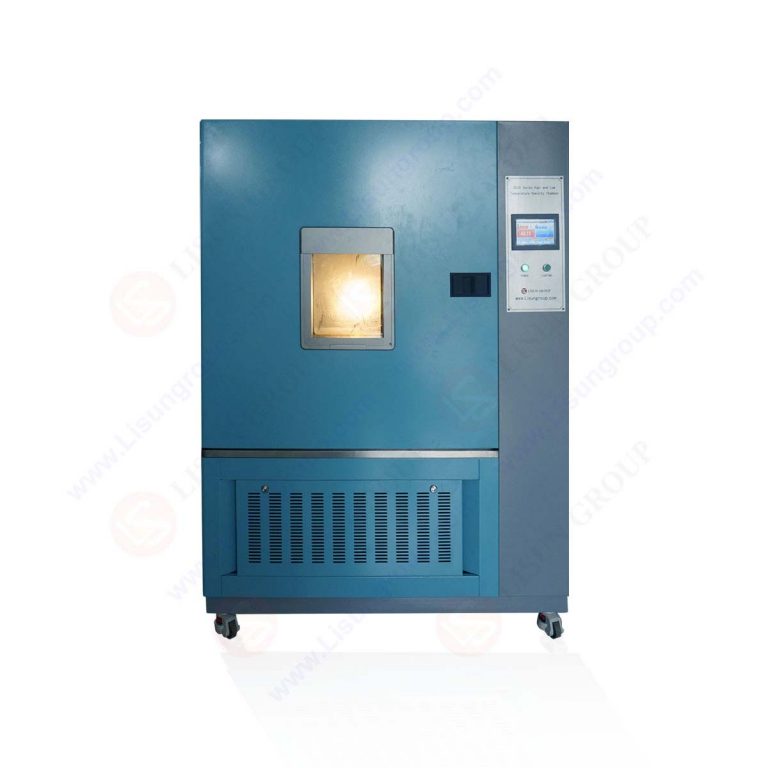
The core hardware ecosystem integrates several key components. A precision temperature chamber (or multiple chambers, with support for up to 3 connected units) provides the controlled ambient environments mandated by LM-80/LM-84. An optical measurement system, typically a high-accuracy integrating sphere coupled with a spectroradiometer or photometer, performs the periodic luminous flux and chromaticity measurements. A programmable multi-channel constant current/voltage power supply and switching matrix automates the powering and sequencing of hundreds of test samples simultaneously. This integration enables uninterrupted, long-duration testing with minimal manual intervention.
4.1 Automated Data Acquisition & Real-Time Monitoring
Specialized software is the central nervous system of LED L70 Testing Equipment for LED Lifespan & Reliability Analysis. It automates the entire test cycle: scheduling temperature setpoints, controlling the power switching matrix to cycle through samples, triggering the optical measurement system at defined intervals (e.g., every 1000 hours), and logging all resultant data (flux, CCT, CRI, power, etc.). Real-time dashboards provide visual monitoring of depreciation curves and system status, allowing engineers to identify sample failures or system anomalies immediately, ensuring the integrity of the long-term 6000+ hour test.
4.2 Arrhenius Model Integration and Advanced Projection Algorithms
Beyond simple data logging, advanced software incorporates physical failure models. The Arrhenius Model, which describes the temperature dependence of chemical degradation rates, is used to analyze failure mechanisms and can support accelerated life testing analysis. Most critically, the software embeds the algorithms defined in TM-21 and TM-28. It automatically processes the collected lumen maintenance data, performs the exponential curve fitting, calculates the projection limits, and generates the key outputs: the projected L70 and L50 lifetimes with associated confidence intervals. This transforms raw data into a compliant, actionable lifetime report.
5.1 Dual Testing Modes: Normal Aging vs. Accelerated Stress
Sophisticated systems offer dual testing modes to fulfill different R&D and validation goals. The Normal Aging Mode strictly adheres to LM-80/LM-84 protocols, maintaining samples at constant prescribed temperatures and rated current for the full duration. The Accelerated Stress Mode applies elevated stress conditions—higher temperature and/or current—to induce faster degradation. This mode is invaluable for rapid product design validation, failure mode analysis, and generating comparative data, though its results are typically used for internal benchmarking rather than standard-compliant lifetime claims.
5.2 Customizable Sample Capacity and Chamber Integration
To accommodate diverse laboratory throughput needs, hardware configurations are highly customizable. The system core can manage a high-density switching matrix for hundreds of samples. A key feature is the ability to synchronize with up to three independent temperature chambers. This allows simultaneous testing at the three different temperature setpoints required by LM-80 (e.g., 55°C, 85°C, and 105°C), dramatically improving testing efficiency and data consistency by using a single, unified measurement and control platform across all chambers.
Table 1: Comparison of LISUN LEDLM System Configurations for LED L70 Testing
| Feature | LEDLM-80PL (LM-80/TM-21 Focus) | LEDLM-84PL (LM-84/TM-28 Focus) |
| :— | :— | :— |
| Primary Standard | IES LM-80-20, IES TM-21-11 | IES LM-84-21, IES TM-28-21 |
| Test Sample Type | LED Packages, Arrays, Modules | Complete Lamps, Light Engines, Luminaires |
| Optical System | Typically paired with a smaller integrating sphere for component-level measurement. | Configured for larger spheres or goniophotometers for full luminaire measurement. |
| Power Supply | Multi-channel constant current source (low to medium current). | Multi-channel constant current/voltage source, handles higher wattages and standard lamp voltages. |
| Key Output | Lumen maintenance curve for components; TM-21 projection to L70/L50. | Lumen & color maintenance curve for systems; TM-28 projection to L70/L50. |
6.1 Pre-Test Calibration and Sample Conditioning
A compliant workflow begins with rigorous calibration. The spectroradiometer/photometer must be calibrated to a NIST-traceable standard lamp per CIE and LM-79 guidelines. The temperature chambers require validation with calibrated sensors to ensure spatial temperature uniformity meets standard requirements. Test samples undergo an initial stabilization and seasoning period (often 100-300 hours) at rated conditions before official “time zero” measurements are recorded, ensuring stable initial performance data as mandated by the standards.
6.2 Execution, Data Management, and Report Generation
During the extended test (minimum 6000 hours), the automated system executes the predefined plan. Data integrity is paramount; the software should maintain a secure, time-stamped database. Upon test completion, the engineer utilizes the software’s TM-21/TM-28 module to select the appropriate data set (e.g., the 55°C case data for a typical use condition projection). The software generates a comprehensive report including the measured data plot, the fitted exponential decay curve, the projected L70/L50 values, and a clear statement of the projection multiplier used, ensuring full transparency and compliance.
7.1 Color Maintenance (TM-30) and Spectral Shift Analysis
While L70 focuses on luminous flux, color shift can also define product failure. Modern LED L70 Testing Equipment for LED Lifespan & Reliability Analysis often integrates full spectral measurement. This allows tracking of chromaticity coordinates (CIE 1931, CIE 1976) and calculation of metrics like ANSI/IES TM-30-20 (Rf, Rg) over time. Analyzing spectral power distribution shifts provides R&D teams with insights into phosphor degradation and package discoloration, enabling improvements in material science and product design beyond simple lumen maintenance.
7.2 Automotive, Horticultural, and UV LED Testing
Specialized applications impose unique demands. Automotive LEDs require testing under extreme temperature cycles and vibration profiles. Horticultural LEDs demand analysis of photosynthetic photon flux (PPF) maintenance rather than just visual lumens. UV LEDs require radiometric measurement of UV irradiance maintenance. A versatile testing platform must accommodate these needs through customizable test profiles, appropriate optical detectors (e.g., quantum sensors for horticulture), and software capable of calculating application-specific maintenance metrics, extending the core L70 principle to a wider electromagnetic spectrum.
The rigorous analysis of LED lifespan via L70 and L50 metrics is an indispensable engineering discipline, bridging the gap between initial product performance and long-term field reliability. As demonstrated, this process is governed by a robust framework of IES and CIE standards, from data collection (LM-80, LM-84) to scientific projection (TM-21, TM-28). Implementing this framework requires more than basic environmental chambers; it demands an integrated ecosystem of LED L70 Testing Equipment for LED Lifespan & Reliability Analysis, featuring precise thermal control, automated optical measurement, and intelligent software with Arrhenius and projection algorithms. Solutions like the LISUN LEDLM series, with their dual-system design, support for multi-chamber integration, and standard-specific workflows, provide the technical foundation for manufacturers and testing labs to generate credible, compliant lifetime data. This capability is crucial for driving innovation, ensuring quality, and maintaining competitiveness in the global lighting market, where proven longevity is a key determinant of value and trust.
Q1: What is the minimum required test duration under IES LM-80 to make a TM-21 projection, and what are the projection limits?
A: IES LM-80-20 mandates a minimum test duration of 6000 hours. IES TM-21-11 then provides strict limits for extrapolation. The projection cannot exceed 6 times the total tested duration. Therefore, with a 6000-hour dataset, the maximum allowable projection is to 36,000 hours. Furthermore, TM-21 stipulates that the projection must stop at the L70 point or the 6x limit, whichever comes first. For example, if the curve indicates L70 at 50,000 hours based on a 6000-hour test, the reported value must be capped at 36,000 hours. This conservative rule ensures projections remain within a reasonable extrapolation range.
Q2: Can a single testing system handle both LM-80 for LED components and LM-84 for finished luminaires?
A: While the core software principles for data acquisition and TM-21/TM-28 analysis are similar, the hardware requirements differ significantly, making a single universal hardware configuration challenging. LM-80 testing of components typically uses a smaller integrating sphere and low-current DC power supplies. LM-84 testing of luminaires often requires a large integrating sphere or goniophotometer and AC/DC power supplies capable of handling higher voltages and wattages. This is why manufacturers like LISUN offer dedicated variants (e.g., LEDLM-80PL and LEDLM-84PL). However, a laboratory can operate both systems under a unified software platform for streamlined data management.
Q3: How does the Arrhenius Model function within LED lifespan testing software, and is it required for LM-80/TM-21 compliance?
A: The Arrhenius Model describes how the rate of a chemical reaction (like LED degradation) exponentially increases with temperature. In testing software, it can be used to analyze data from multiple temperature bins (e.g., 55°C, 85°C from LM-80) to model the activation energy of the failure mechanism. This is powerful for internal R&D for accelerated test planning and failure analysis. However, it is not part of the mandatory TM-21 projection method for compliance. TM-21 uses a simple exponential decay model on a single-temperature dataset. The Arrhenius analysis is an advanced, complementary tool provided by sophisticated systems for deeper engineering insight beyond standard reporting.
Q4: Why is controlling ambient temperature around the test sample critical, as opposed to just monitoring the LED’s junction temperature (Tj)?
A: While junction temperature (Tj) is the ultimate driver of LED degradation, it is extremely difficult to measure directly in a long-term, multi-sample aging test without invasive and unreliable methods. IES LM-80 and LM-84 solve this by standardizing on controlled ambient temperature (Ta) or case temperature (Tc) as a practical and repeatable proxy. By strictly controlling the ambient environment and using a known thermal path (defined by the standard’s test conditions), a consistent correlation between Ta and Tj is established. This allows for comparable, reproducible data across different labs and products, which is the primary goal of the standard.
Q5: What are the consequences of not using standard-compliant LED L70 testing equipment for product development and marketing?
A: Non-compliant testing carries significant technical and commercial risks. Technically, data may be inaccurate or irreproducible, leading to flawed lifetime predictions and potential field failures. Commercially, marketing lifetime claims without IES-standard-compliant test reports can lead to rejection from key certification bodies like DLC or ENERGY STAR, blocking access to major markets. It also exposes the company to warranty claim liabilities and reputational damage if products fail prematurely. Using compliant LED L70 Testing Equipment for LED Lifespan & Reliability Analysis provides defensible data that builds trust with specifiers, regulators, and end-users.